Some cool large machining images:
Catch U
Image by Thanwan Singh
Verify out these cnc machining images:
20% MacBook
Image by failing_angel
CNC machined aluminium
Paused at 20%
"It was an inspried move to machine laptops from billets of aluminium as opposed to multi-portion plastic mouldings.
The approach has been paused following the second reduce, with the signature rounded corners and the adverse space for the hinge fixing. The rawness of the aluminium has an elemental tactility and unrefined beauty."
– Edward & Jay
Component of ‘In The Making’ exhibition – much more than twenty objects throughout the manufacturing stage of their construction…curated by Edward Barber and Jay Osgerby, the design duo who are maybe greatest known for designing the 2012 London Olympic torch.
The pair commented on the exhibition “‘We have usually been fascinated by the creating approach as it is an integral portion of our function. We have curated an exhibition that will offer a platform to capture and reveal a frozen moment in the manufacturing process and unveils an daily object in its unfinished state. Often the object is as beautiful, if not more so, than the finished solution!”
Lamp driver pcb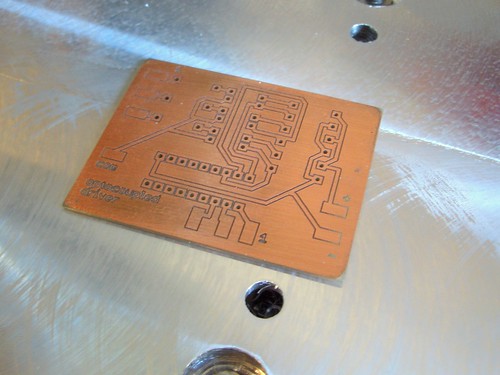
Image by jiskar
This is 1 of the 1st pcb’s i created. It is made with a 60 degree carbide v-cutter. The traces are .2mm wide and .1mm deep. The holes are 1mm dia. The layout is made with eagle and the pcb-gcode script.
MakerBot Assembly
Image by luccawithcheese
Verify out these metal machining solutions photos:
San Francisco – Alcatraz: Cellhouse – Escape from Alcatraz – vent
Image by wallyg
Frank Lee Morris and brothers Clarence and John Anglin attempted one of the most intricate escapes from Alcatraz prison on June 11, 1962. Over a period of months, the 3 inmates chiseled through the moisture damaged concrete with metal spoons soldered with silver from a dime and an electric drill improvised from a stolen vacuum cleaner motor to enlarge the wall vents in their cells. After the 9:35pm cell count, they climbed inside an unguarded three-foot wide utility corridor behind Cell Block "B" to the roof, and scrambled more than the perimeter wall to the water’s edge exactly where they attempted escape on a raft created of the prison’s normal situation raincoats and get in touch with cement. To avoid detection, they left very carefully produced papier-mâché heads of themselves, produced of soap, cement and scraps of hair from the barbershop, in their bunks. Although they had been never heard of once again, it was lengthy believed that they drowned in the bay. In the initial season of tv system, Mythbusters, the feasibility of escaping Alcatraz on a makeshift raft was tested and judged to be possible. Uncovered official records later showed a raft, with footprints major away, was discovered on Angel Island and reports of a stolen automobile had been made in the region that night.
The major cell residence on Alcatraz Island was the biggest steel-reinforced concrete building in the planet when it was constructed in 1912. Made to hold up to 600 prisoners, it was the brainchild and pride of Main Reuben B. Turner, building engineer and very first commandant of the military. Central steam heat, skylights and electricity contributed to its reputation as a model, contemporary, facility.
Like any other structure on the island, building presented challenges. Material and equipment had to be shipped in on barges. Mixing cement, the main developing element, required fresh water not naturally obtainable on the land. Labor was largely offered by unskilled inmates.
Like prisons inside a prison, four cost-free standing cellblocks stood within the cellhouse so that no cell adjoined an outside wall or ceiling that a prisoner may well tunnel via. Prior to it assumed its function as a maximum-security lockup, tool-proof bars replaced the flat, soft-steel barriers of the military prison and gun galleries have been constructed at either end of the two principal cell blocks.
Alcatraz Island, a 22-acre island located 1.5 miles offshore in San Francisco Bay, has served as a lighthouse, a military fortification, and a prison. In 1972, the island often referred to as The Rock, became a national recreation area operated by the National Park Service as portion of the Golden Gate National Recreation Location (GGNRA) and is at present open to tours.
The island was initial discovered in 1775 by Spaniard Juan Manuel de Ayala, who charted the bay and named it "La Isla de los Alcatraces," or "The Island of the Pelicans." The island’s earliest recorded owner is Julian Workman was the island’s earliest recorded owner, offered it by Mexican governor Pio Pico in 1846 to develop a lighthouse. Following the acquisition of California in 1848, the United States fortified the island for positioning of coastal batteries. When the civil War broke out in 1861, the island mounted 85 cannons (increased to 105 by 1866) and served as the San Francisco Arsenal. Alcatraz never fired its guns but was utilized to imprison Confederate sympathizers. In 1867, a brick jailhouse was built and in 1868, Alcatraz was designated a long-term detention facility for military prisoners–a function it prominently played for the duration of the Spanish-American War.
After the 1906 Earthquake, civilian prisoners have been transferred to Alcatraz, and the facilities had been gradually expanded at the beginning of the century. Construction on Main Reuben Turner’s enormous concrete main cell block was completed in 1912. The Fortress was deactivated as a military prison in 1933 and transferred to the Division of Justice, becoming a Federal Bureau of Prisons federal prison the following year. During its 29 years of operation, the penitentiary claimed no prisoners had ever effectively escaped–36 prisoners were involved in 14 attempts 23 had been caught, six had been shot and killed, and 3 were lost at sea and never ever located. Alcatraz held such notable criminals as Al Capone, Robert Franklin Stroud (greater identified as the "Birdman of Alcatraz"), George "Machine Gun" Kelly, James "Whitey" Bulger, and Alvin "Creepy Karpis" Karpowicz (who served much more time at Alcatraz than any other inmate).
Far a lot more pricey to operate than other prisons, Alcatraz was closed on March 21, 1963 by Lawyer Basic Robert F. Kennedy. From 1969-1971, the island was occupied by a multi-tribal group of Native Americans, culminating in the Trail of Broken Treaties.
National Register #76000209 (1976)
Service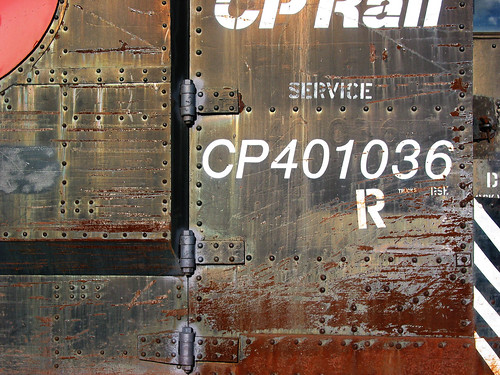
Image by splorp
A snow clearing engine parked along the rail tracks in Banff.
Some cool machining tungsten images:
The old Singer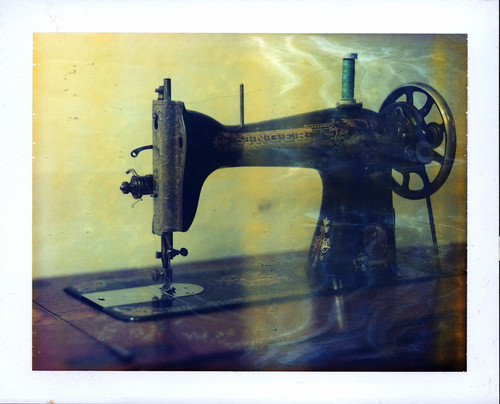
Image by polapix
Hilba 4×5 camera, Symmar 180mm F/5,6, 1/2 s, Tungsten light.
Polacolor 59 4×5" sheet film exp. JUL 2000 (Yay it nonetheless operates!)
I discovered this sewing machine in the garbage in the early 1990s.
It has been functioning properly ever since then.
When I required to replace the rubber ring of the spooler I went to they Singer shop and they had one. This machine is about 90 years old.
It needs no electrical energy and sews through up to six layers of denim with out complaining.
I’ve learned what I know about sewing because of this machine.
Serial Quantity is Y805212 so it was built in Clydebank, Scotland in 1923
Two sheets of 59 left. Looking forward to New55 film.
If only there was New59 too.
Some cool precision machining components pictures:
Mini Mill Table Components
Image by tudedude
Table the right side up on the base displaying cross slide screw and nut
Some cool china machined components photos:
Hopscotch
Image by Wootang01
15.5.09
We’re driving towards the orphanage. The highway is lonely, save for a couple of languid trucks ambling along. It is damp too, and a thick fog covers the countryside: a single light right here or there supplies the only hint of civilization amidst the interminable verdure. Inside the van, the smoke of cigarettes previous wafts in the air, lingering like a lost soul. I inhale, and rapidly cough. I subsequently open the window to the enveloping darkness outdoors, so slightly as to not disturb my companions in the back. The roar of the road echoes in my ears.
An unexpected wrench was thrown into our travel plans today. The trip began expediently enough as the bus on which Candy and I rode reached the Shenzhen airport with hours to spare even so, the unscheduled hiccups quickly followed. We received an announcement over the public address program notifying us of a flight delay, due to a mysterious military maneuver, we deduced, high in the Shenzhen skies. Many much more sonorous reminders came in punctual succession more than the subsequent six hours. It seemed as though we would be stuck, stranded genuinely, at the airport forever, or for the day at least. Thankfully, soon after the police arrested some of the much more aggrieved passengers, we lastly boarded the plane and took off for central China. We had been blessed to be on our way at final, none of us getting blown a gasket during the afternoon tedium.
A single much more pitch black road awaited, down a single lonely lane lined with swarthy trees, standing as even though sentries, and at length we arrived at the orphanage. The auto stopped in a clearing, and we stepped out, onto a cement lot with soft puddles spread silently beneath our feet. We squinted into the twilight, our eyes trying to make sense of the surroundings. Our bags were unloaded, we made our way to the rooms, and quickly adequate fell asleep. I believe we all enjoyed the repose, rendered specially comfortable by the new guest rooms in which we had been staying.
16.five.09
We have only been here for barely 24 hours, yet it feels as although we have been right here for significantly longer, as if time at some point in our journey decided to slow itself to a crawl. Perhaps it was since of the litany of activities that we packed into the span of several hours, or maybe it was the lack of worldly distractions, enabling us to focus solely on our mission, that triggered us to suspend the hands of that imaginary clock in our thoughts. Whatever the case, we’ve enjoyed each and every minute at the orphanage it is time undoubtedly effectively spent in service!
Morning contact was at 6:20 and right after a prayer meeting we went down to finally check out the youngsters. They have been playing on the vast driveway of the orphanage, savoring their moment of freedom ahead of breakfast. To see so a lot of friendly faces, in spite of their precarious physical and filial circumstance was definitely encouraging. I produced a multitude of new friends and did my ideal throughout the day to impact those youngsters with joy, honesty and patience. It is a strong cocktail which brings really like instantly to many.
The meals at the orphanage is without processing, as natural as victuals can be in these days of impersonal industrial production. Large chunks of mantou, steaming bowls of soupy congee, and salty vegetables with slivers of meat have characterized our meals. It is the sort of humble stuff that lengthens life spans, and disciplines the palate.
We presented a wide range of activities – structured and unstructured whole class and modest group – to the youngsters, in the hope that we would handle them as a lot as amuse. In the morning, as although breaking the ice when had been not sufficient, we ran by way of a series of dizzying, if not at instances totally incoherent, activities created to familiarize our dispositions to every other. Later, we established a makeshift enjoyable fair, at which we ushered the young children to rooms filled with (board) games, and puzzles, and other, much more colorful activities such as face painting and balloon creating. The children couldn’t at length include their enthusiasm, busting into and out of rooms with impunity, soaking in the rapturous atmosphere. In the afternoon, our group attempted to tire them out: running topped the agenda, and by leaps and bounds, the activities, whether simple relays or schoolyard classics like duck duck goose and red light, green light, certainly started to tucker our charges out. We, too, had been pretty beat by the time night started to creep over the horizon!
17.five.09
Yesterday evening, we surprised the students with a musical efficiency, followed by forty minutes of bubble-blowing madness to be certain, the students could not appreciate our somewhat precise rendition of Incredible Grace so considerably as the innocent madness of dipping one’s hands in a resolution of dish detergent and corn syrup and then whispering a bubble to life and certainly, the moment the Disney branded bubble-generating machines churned the initial batch of bubbles into the air, with much rapidity weaving their frenetic pattern of fun, chaos erupted in the space. The students stormed the soap basin, and practically overwhelmed my teammates who valiantly held the Snitch and Pooh high above the heads of the clamoring kids.
In the course of the evening’s festivities, I grew progressively ill, till at last I dashed out of the area to sneeze. Outside, in the cool of the night, beneath a cloud of stars beaming so far away in the deep of space, I exploded in a rancor of sneezing. The fit lasted for five minutes, an inexorable depression in my system which sent each my body and my esteem tumbling down. I felt undesirable, not only for my exceedingly rickety well being, but for my teammates and the youngsters who could have been exposed to my sickness as it incubated within me in addition, absolutely everyone in the classroom was saying goodbye and all I could do was rid myself of a sniffle right here and there, in between rounds of bursting from nostrils and sinuses. I was impotent, as although one of my insignificant droplets on the floor!
18.five.09
We are in a car heading towards a popular historical web site in Henan. The driver’s drawl slips slowly from his mouth, and what he says resonates intelligibly in our ears. Candy, Tanya and the driver are discussing Chinese mythology, and history, which, for greater or for worse look to be inextricably intertwined. We narrowly just now missed hitting an idle biker in the middle of the road in dodging our human obstacle, the car swerved into the oncoming site visitors, sending us flying inside the cabin. Reciting a verse from a worship song calmed our frazzled nerves.
How to describe the kids? A lot of of them smiled freely, and have been so polite when greeted that undoubtedly they had been educated well at some point in the tumult of their life education. Precociousness was also a common characteristic shared by the kids, whose stunted bodies belied the mature, perspicacious thoughts hiding just underneath the skin. Of course, in our time with each other we had been far more merry than critical, that top quality being best left for the adults working silently in their rooms and to that impact, the kids brought out their funny bones and jangled them in the air to stir up the excitement and to destroy by a jocular clamor any hint of a dull moment – we really laughed a lot. At final, even though not all of them seemed interested in our staged activities – rather than feign enthusiasm and eagerness, some skipped our events altogether – those who did participate, most of them in fact, enjoyed themselves with abandon, helping to create that delightful atmosphere where the numerous sounds of elation reign.
Of the students whom I had the opportunity to know personally, a number of still stick out in my mind, not the least for my getting christened a handful of of them with English names! David was bold, and courageous, prepared to soothe crying babes as considerably as reprimand them when their capricious actions led them astray he had a caring heart not as opposed to a shepherd who tends to his young charges. Edward, who at 13 was the identical age as David, absolutely grew emotionally, not to mention physically attached to me. He was by my side for significantly of the weekend, grabbing onto my hand and not letting go, to the point where I in my arrogance would detach my fingers inside his, ever so slightly, as if to recommend that a second more would lead to a clean break – I know now that with the cruel hands of time motoring away in the course of the mission, I should not have lapsed into such an independent, selfish state he ought to have been my son. One more youngster who became so attached to the group as to intimate annoyance was the boy we deemed John’s son, simply because the boy, it seemed, had handcuffed himself to our teammate, and would only free himself to trigger insidious mischief, which would invariably result in an explosion of hysterics, his eyes bursting with tears and his mouth, as wide as canyon, unleashing a sonorous wail when some thing went wrong. On the other hand, Alice remained in the distance, content material to smile and shyly wave her hand at our group while hiding behind her sisters. And last but not least, of our precious goonies, Sunny undoubtedly was the photographer extraordinaire, usually in charge of the school’s camera, snapping away liberally, never ever permitting any passing moment to escape his shot.
That I learned on this trip so a lot about my teammates verily shocked me, as I believed the relationships that we had established have been currently mature, not hiding any new bump, any sharp edge to surprise us from our friendly stupor. So, take into account myself delightfully amazed at how a handful of slight adjustments in the character mix can bring out the best, the most inventive and the strangest in the group dynamic: admittedly, Candy and Tanya have been the best foils for John, they eliciting the most humorous observations and reactions from my home church leader, they expertly constructing a depth of character that even last week, in the wake of the Guangdong biking trip, I by no means knew existed! Most of all, I am glad to have been a component of such a harmonious fellowship, for the fact that we could prayer with each other as one particular, and encourage every single other also, and all the a lot more as we saw the day approaching.
What Chalk ARt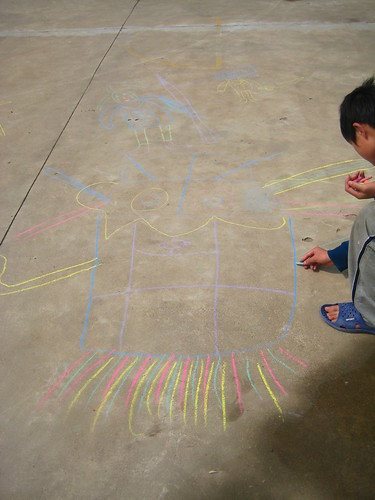
Image by Wootang01
15.5.09
We’re driving towards the orphanage. The highway is lonely, save for a few languid trucks ambling along. It is damp also, and a thick fog covers the countryside: a single light here or there provides the only hint of civilization amidst the interminable verdure. Inside the van, the smoke of cigarettes past wafts in the air, lingering like a lost soul. I inhale, and swiftly cough. I subsequently open the window to the enveloping darkness outside, so slightly as to not disturb my companions in the back. The roar of the road echoes in my ears.
An unexpected wrench was thrown into our travel plans today. The trip started expediently adequate as the bus on which Candy and I rode reached the Shenzhen airport with hours to spare even so, the unscheduled hiccups quickly followed. We received an announcement more than the public address technique notifying us of a flight delay, due to a mysterious military maneuver, we deduced, high in the Shenzhen skies. Many far more sonorous reminders came in punctual succession more than the next six hours. It seemed as although we would be stuck, stranded truly, at the airport forever, or for the day at least. Thankfully, right after the police arrested some of the much more aggrieved passengers, we finally boarded the plane and took off for central China. We have been blessed to be on our way at final, none of us possessing blown a gasket for the duration of the afternoon tedium.
One particular far more pitch black road awaited, down a single lonely lane lined with swarthy trees, standing as although sentries, and at length we arrived at the orphanage. The automobile stopped in a clearing, and we stepped out, onto a cement lot with soft puddles spread silently beneath our feet. We squinted into the twilight, our eyes attempting to make sense of the surroundings. Our bags have been unloaded, we produced our way to the rooms, and soon sufficient fell asleep. I consider we all enjoyed the repose, rendered specially comfy by the new guest rooms in which we had been staying.
16.5.09
We have only been right here for barely 24 hours, yet it feels as although we have been right here for much longer, as if time at some point in our journey decided to slow itself to a crawl. Possibly it was simply because of the litany of activities that we packed into the span of several hours, or perhaps it was the lack of worldly distractions, allowing us to concentrate solely on our mission, that brought on us to suspend the hands of that imaginary clock in our thoughts. Whatever the case, we’ve enjoyed each minute at the orphanage it is time absolutely nicely spent in service!
Morning contact was at 6:20 and soon after a prayer meeting we went down to ultimately pay a visit to the children. They were playing on the vast driveway of the orphanage, savoring their moment of freedom before breakfast. To see so many friendly faces, in spite of their precarious physical and filial circumstance was certainly encouraging. I made a multitude of new buddies and did my very best throughout the day to influence these children with joy, honesty and patience. It is a strong cocktail which brings really like instantly to many.
The meals at the orphanage is with out processing, as all-natural as victuals can be in these days of impersonal industrial production. Big chunks of mantou, steaming bowls of soupy congee, and salty vegetables with slivers of meat have characterized our meals. It is the type of humble stuff that lengthens life spans, and disciplines the palate.
We presented a wide range of activities – structured and unstructured entire class and tiny group – to the little ones, in the hope that we would manage them as considerably as amuse. In the morning, as though breaking the ice once were not sufficient, we ran by way of a series of dizzying, if not at occasions totally incoherent, activities made to familiarize our dispositions to every single other. Later, we established a makeshift exciting fair, at which we ushered the young children to rooms filled with (board) games, and puzzles, and other, far more colorful activities such as face painting and balloon producing. The little ones could not at length include their enthusiasm, busting into and out of rooms with impunity, soaking in the rapturous atmosphere. In the afternoon, our team attempted to tire them out: running topped the agenda, and by leaps and bounds, the activities, whether simple relays or schoolyard classics like duck duck goose and red light, green light, certainly started to tucker our charges out. We, too, had been pretty beat by the time night started to creep more than the horizon!
17.five.09
Yesterday evening, we shocked the students with a musical performance, followed by forty minutes of bubble-blowing madness to be confident, the students could not appreciate our somewhat accurate rendition of Amazing Grace so significantly as the innocent madness of dipping one’s hands in a remedy of dish detergent and corn syrup and then whispering a bubble to life and indeed, the moment the Disney branded bubble-creating machines churned the very first batch of bubbles into the air, with significantly rapidity weaving their frenetic pattern of fun, chaos erupted in the room. The students stormed the soap basin, and practically overwhelmed my teammates who valiantly held the Snitch and Pooh high above the heads of the clamoring kids.
In the course of the evening’s festivities, I grew progressively ill, till at last I dashed out of the area to sneeze. Outdoors, in the cool of the evening, below a cloud of stars beaming so far away in the deep of space, I exploded in a rancor of sneezing. The match lasted for 5 minutes, an inexorable depression in my technique which sent both my physique and my esteem tumbling down. I felt bad, not only for my exceedingly rickety wellness, but for my teammates and the young children who could have been exposed to my sickness as it incubated within me in addition, absolutely everyone in the classroom was saying goodbye and all I could do was rid myself of a sniffle right here and there, in among rounds of bursting from nostrils and sinuses. I was impotent, as though a single of my insignificant droplets on the floor!
18.5.09
We are in a automobile heading towards a well-known historical website in Henan. The driver’s drawl slips slowly from his mouth, and what he says resonates intelligibly in our ears. Candy, Tanya and the driver are discussing Chinese mythology, and history, which, for greater or for worse seem to be inextricably intertwined. We narrowly just now missed hitting an idle biker in the middle of the road in dodging our human obstacle, the auto swerved into the oncoming site visitors, sending us flying inside the cabin. Reciting a verse from a worship song calmed our frazzled nerves.
How to describe the children? A lot of of them smiled freely, and have been so polite when greeted that undoubtedly they had been educated effectively at some point in the tumult of their life education. Precociousness was also a typical characteristic shared by the youngsters, whose stunted bodies belied the mature, perspicacious thoughts hiding just underneath the skin. Of course, in our time with each other we had been more merry than serious, that top quality getting very best left for the adults functioning silently in their rooms and to that effect, the little ones brought out their funny bones and jangled them in the air to stir up the excitement and to destroy by a jocular clamor any hint of a dull moment – we truly laughed a lot. At final, even though not all of them seemed interested in our staged activities – rather than feign enthusiasm and eagerness, some skipped our events altogether – those who did participate, most of them in reality, enjoyed themselves with abandon, helping to generate that delightful atmosphere where the a lot of sounds of elation reign.
Of the students whom I had the opportunity to know personally, several still stick out in my mind, not the least for my possessing christened a handful of of them with English names! David was bold, and courageous, willing to soothe crying babes as significantly as reprimand them when their capricious actions led them astray he had a caring heart not in contrast to a shepherd who tends to his young charges. Edward, who at 13 was the same age as David, absolutely grew emotionally, not to mention physically attached to me. He was by my side for significantly of the weekend, grabbing onto my hand and not letting go, to the point exactly where I in my arrogance would detach my fingers inside his, ever so slightly, as if to recommend that a second much more would lead to a clean break – I know now that with the cruel hands of time motoring away for the duration of the mission, I should not have lapsed into such an independent, selfish state he should have been my son. An additional youngster who became so attached to the team as to intimate annoyance was the boy we deemed John’s son, due to the fact the boy, it seemed, had handcuffed himself to our teammate, and would only free himself to cause insidious mischief, which would invariably outcome in an explosion of hysterics, his eyes bursting with tears and his mouth, as wide as canyon, unleashing a sonorous wail when one thing went incorrect. On the other hand, Alice remained in the distance, content to smile and shyly wave her hand at our group while hiding behind her sisters. And last but not least, of our precious goonies, Sunny undoubtedly was the photographer extraordinaire, usually in charge of the school’s camera, snapping away liberally, never ever allowing any passing moment to escape his shot.
That I discovered on this trip so much about my teammates verily shocked me, as I believed the relationships that we had established have been currently mature, not hiding any new bump, any sharp edge to surprise us from our friendly stupor. So, think about myself delightfully amazed at how a handful of slight alterations in the personality mix can bring out the ideal, the most inventive and the strangest in the group dynamic: admittedly, Candy and Tanya were the perfect foils for John, they eliciting the most humorous observations and reactions from my house church leader, they expertly constructing a depth of character that even final week, in the wake of the Guangdong biking trip, I never ever knew existed! Most of all, I’m glad to have been a component of such a harmonious fellowship, for the truth that we could prayer together as 1, and encourage every single other also, and all the much more as we saw the day approaching.
Verify out these price of cnc machining pictures:
ShapeOko: Drawing on paper
Image by Myles!
ShapeOko is a low-price CNC machine that I just completed developing. These are the benefits of my tweaking parameters and property locations for the test print.
Helmet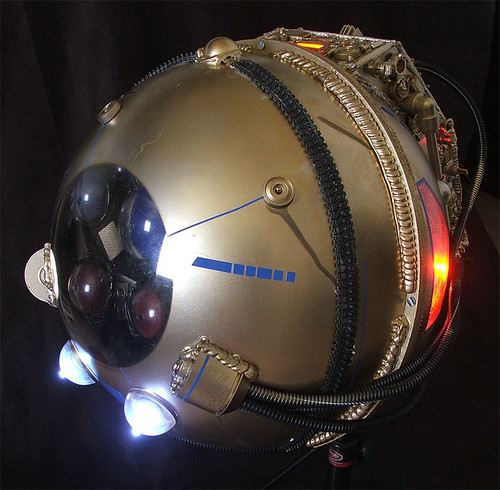
Image by clarksworth
Custom-made helmet for a quick film.
The helmet is primarily based on the old brass Mk 2 diving gear, but with a modern day/alien twist. The style of the piece is inspired by peak sci-fi films such as Alien, Star Wars and Blade Runner – function prior to type.
The helmet was produced from 2 stock acryillic hemispheres, with a sheet styrene building on the back. Detailing was with different model kit components, sillicone glue and standard electronics, along with stock plastic fittings from special effects suppliers EMA Model Supplies. The "gun" was created overnight from what ever leftover stock I had to hand, which involves PVC pipe and a quantity of other prop components (the tip is the nosecone from Derek Medding’s Thunderbird 1). The faceplate with the many lenses was inspired by the Bolex cameras we employed to use at uni. Idea to final construction was about six days, with some overnight periods. The building strategy wasn’t my preferred a single – with far more cash, CNC machining and fibreglass casting would have produced the approach much easier, but that would have quadroupled the price of the costume.
The helmet’s design was a key element of the cinematography of the piece – it is not only highly reflective and full of surface detail, but it also has two forward LED spotlamps that illumunate the scenery around it. My function in this film – largely as production designer and camera op – was to ensure that the art path truly was an integral component of the film, and not just an afterthought.
Some cool electric discharge machining photos:
Discharge Gaps…
Image by Curious Expeditions
I feel…
A few nice machining service images I found:
Extended lost Chelmsford. Lodge Coaches Ford R192- Willowbrook OOO298K at the Rose Bros Motor Coach Garage and Chelmsford Star Co-operative Society’s Machine Bakery, c.1978
Image by sludgegulper
An historical photograph, which remained as a unfavorable until now. This is the scene behind Chelmsford Railway station taken from Mill Road. It must have been a Tuesday Friday or Saturday, as these have been the days on which the Lodge bus service ran in from High Easter by means of Chignal Smealy and parked behind the Plough,the official terminus.. Previously a Bedford SBG, PAJ487 performed the service, but OOO298K was purchased as a replacement. (Ironically Lodges had to buy an identical coach to PAJ to be restored for publicity purposes) This dual objective 45 seater coach/ bus had been purchased new by GW Osborne and Sons, of Tollesbury,another renowned and now vanished bus and coach firm of Essex.
Behind the Ford Capri is the Machine Bakery of the Chelmsford Star Co-operative Society. To the proper, the former garage of the popular Rose Bros coach company, with their small office at 66a Duke Street on the corner of Victoria Road South. They were taken more than by Eastern National in 1956 .Their ghost sign survived till the demolition of the garage. I believe it was getting used as a maintenance depot by British Rail (??) The open auto park to the right for commuters has been replaced by a multi-storey version. Behind the camera, an elevated section of Mill Road went to the modest siding and buildings owned by a meat wholesale firm referred to as Spanjer – interestingly an initially Jewish name from London. The words Hygienic Bakery can be created out on the street side of the Co-op constructing.
As nicely as an express service to London Kings Cross, Rose Bros (Frank Hudson Rose and Douglas Joshua Rose) operated a service at weekends to Steeple Stone, ,by means of Purleigh Round Bush, where there were sailing clubs, caravan parks,shacks and the like. The return fare in 1947 was half-a-crown.
MK19 Grenade Machine Gun
Image by PEOSoldier
Gives offensive and defensive Soldier assistance by means of tripod- or vehicle mounted grenade machine gun.
The MK19 Grenade Machine Gun supports the Soldier in offensive and defensive roles by delivering a heavy volume of precise and continuous firepower against enemy personnel and lightly armored vehicles. The MK19 can be mounted on a tripod or on numerous car platforms and is the principal suppressive weapon for combat assistance and combat service assistance units. The weapon can be employed to defend motor movements, assembly areas, and provide trains in bivouac.
The MK19 Grenade Machine Gun can defend against hovering rotary-wing aircraft, destroy lightly armored vehicles, fire on suspected enemy positions, and offer higher-volume fire into an engagement location and indirect fires from hidden positions. The program increases the capability of U.S. forces to defeat opposing armored, mechanized, and infantry forces with higher explosive, dual-purpose ammunition. The MK19’s point target efficient range is 1,500 meters and the maximum location target successful range is 2,212 meters, with a cyclic firing rate of around 350 rounds per minute.
A Most Ingenious Device
Image by National Library of Ireland on The Commons
This is the interior of the Singer Sewing Machine shop on The Quay in Waterford. Great machines on show, and an engraving of the Singer Factory and a framed Russian Singer advertisement.
Gerry Ward kindly confirmed that the huge framed image of the factory is at Kilbowie Street, Clydebank in Scotland, with its gorgeous clock tower. No excuse for Singer workers who lived nearby to be late for work! Gerry also translated our Russian Poster which reads "Компания Зингеръ Швейная машиъі" which implies "The Singer Sewing Machine Business".
Date: Tuesday, 16 September 1924
NLI Ref.: P_WP_3215
Some cool screw machining images:
Just Nuts
Image by tudedude
View On Black
Nuts and Bolts
Image by tudedude
Spanner nut and bolt
Image by tudedude
Macro
A few nice machining options pictures I discovered:
front of the milking machine
Image by granada_turnier
Time Machine error
Image by swanksalot
Not a really valuable error message, is it? What went incorrect? What triggered it? What is the remedy? Is it fixable? Lame-o, Apple.
Some cool machining projects pictures:
Brody Condon at Machine Project
Image by xeni
Brody Condon – Efficiency Modification (Nauman), Machine Project, Los Angeles, Saturday February 9th, 2008. "10 performers outfitted in medieval/space/fantasy armor re-create Bruce Nauman’s 1973 function “Tony Sinking into the Floor, Face Up and Face Down”. Performed in slow motion and combined with movements primarily based on computer game death animations, this piece is accompanied by a high volume binaural beats reputed to induce out of physique experiences."
Pop Up Pie Shop at Machine Project
Image by Machine Project
Pop Up Pie Shop at Machine Project, portion of the Hammer Museum Artist in Residency.
Photo by Marianne Williams.
A handful of good 3d machining photos I identified:
Agriculture Machine 3D
Image by wim hoppenbrouwers
farming Implements
anaglyph red/cyan
Planet Maker Faire 2012
Image by NYSCI
Photos from Globe Maker Faire at New York Hall of Science. September 29-30, 2012. Photo: Andrew Kelly for New York Hall of Science
A few nice rapid machining services images I found:
Staff Sgt. Sal Giunta receives Medal of Honor in White House ceremony Nov. 16, 2010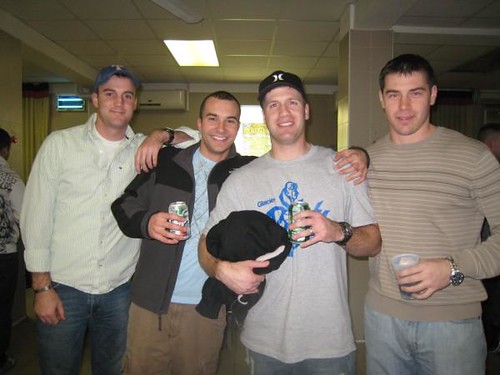
Image by US Army Africa
Sal Giunta (second from left) at a farewell party for a friend, December 2008.
U.S. Army photo
President Barack Obama presented the Medal of Honor for conspicuous gallantry to Staff Sgt. Salvatore Giunta, U.S. Army, in a ceremony held in the East Room of the White House Nov. 16, 2010 — the first living service member from the Iraq or Afghanistan wars to receive it.
When enemy forces in Afghanistan’s Korengal Valley ambushed then-Spc. Giunta’s platoon on the evening of Oct. 25, 2007, the infantry team leader braved heavy enemy fire to rescue fellow paratroopers.
Giunta, of Company B, 2nd Battalion, 503rd Infantry Regiment, 173rd Airborne Brigade Combat Team, will be awarded the Medal of Honor, the U.S. military’s highest award for valor under fire.
The Hiawatha, Iowa-native is the first living service member to earn the award since Vietnam. The medal will be presented in a ceremony at a date and time still to be determined.
A 2003 graduate of Cedar Rapids Kennedy High School, Giunta has served two tours of Afghanistan. Now a staff sergeant serving in Vicenza, Italy, Giunta of Hiawatha, Iowa, knew of the nomination several months ago, but the announcement still came as a shock.
“This is a great honor, but it is not mine to take sole ownership of. I only did the next thing that needed to be done, and I was only able to do that because all of the men around me had the rest taken care of. It’s hard to take credit for simply taking the next step when so many steps had already been taken by everyone else,” Giunta said.
Not a day goes by that Giunta, now a staff sergeant serving at Vicenza’s Caserma Ederle, does not recall what he and fellow paratroopers faced that evening.
The first platoon of Company B – known to 173rd paratroopers as “Battle Company” – were heading back to their base camp in Afghanistan’s Korengal Valley following a long day watching over fellow paratroopers in an Afghan village. It was the final day of Operation Rock Avalanche. Throughout the day, enemy radio intercepts spoke of an impending attack.
Evening was approaching as Giunta’s platoon stretched in to a snaking file down the spur to the Korengal outpost. Roughly thirty paces separated each paratrooper as the moved out.
Sgt. Joshua Brennan, a 22-year-old team leader from Ontario, Ore., on his second tour in Afghanistan, was up front. Behind Brennan, manning an M249 squad automatic weapon, was Spc. Frank Eckrode then squad leader, Staff Sgt. Erick Gallardo, 24, Chula Vista, Calif.
AH-64 Apache helicopters chopped the moonlit evening above as the platoon made their way down goat trails.
Giunta, who carried an M-4 assault rifle was just behind with his team. Pfc. Kaleb Casey carried his M249 squad automatic weapon, followed by Pfc. Garrett Clary with an M203, a 5.56 mm rifle combined with a 40 millimeter grenade launcher.
Along their path, more than a dozen enemy fighters waited, readying their Russian-style rocket propelled grenades, PKM 7.62 mm heavy machine guns, and Kalishnikov rifles. They had set up an L-shape, with an RPG and PKM at the apex of the formation. As Brennan walked just 30 feet from their over watch position, the enemy open fired.
An enemy RPG exploded, followed by a burst of machine gun fire. Brennan fell to the ground. Machine guns fired at the platoon’s flank. Eckrode was hit. He dropped to the ground, returned fire and tried to find cover.
Gallardo tried to run forward, but was met with RPG explosions and sustained machine gun fire. He returned fire and started back to Giunta’s position, falling into a ditch as an AK-47 round struck his helmet. Giunta jumped up, exposing himself to deadly fire, to assist his squad leader.
Giunta ran just a few steps when two enemy AK-47 rounds struck his body. The first shot hit the body armor on Giunta’s chest, the second hit over his left shoulder, striking a disposable rocket launcher strapped to his rucksack. But Giunta kept going, reaching Gallardo and dragging him back to where Giunta’s fire team had begun fighting back.
Gallardo got Giunta’s team online and the four paratroopers began bounding through withering enemy fire to rescue Eckrode and Brennan. Dropping for cover, they prepared fragmentation grenades to throw at the enemy to cover their next move. Casey continued to fire his machine gun at enemy muzzle flashes, less than a half city block away. Gallardo counted to three and the team hurled grenades toward enemy positions. Once they heard the explosions, they moved closer to their wounded comrades.
Eckrode called out. He was wounded, but still trying to fight. Gallardo started first aid on Eckrode while Casey, who found a bullet hole in his uniform, scanned for enemy targets.
Giunta and Clary kept running toward where Brennan fell, only to find two enemy fighters carrying a severely-wounded Brennan away. While still running, Giunta fired his assault rifle, causing them to drop Brennan and flee. Giunta emptied the rest of his magazine, killing one enemy. Giunta knelt down to help Brennan as Clary ran past, firing 40-milimeter rounds toward the retreating enemy.
Giunta saw Brennan’s injuries were severe and required more than he could offer there on the battlefield. He removed Brennan’s gear and began treating his buddy, while calling back to Gallardo for help. Brennan was trying to talk. Giunta reassured his friend as he tended to Brennan’s wounds.
Other paratroopers from the platoon were also wounded. Spc. Hugo Mendoza, was killed. Brennan, who was hoisted into a helicopter, later succumbed to his wounds.
“Giunta is a great friend and an outstanding paratrooper,” said Gallardo, now serving with Battle Company in Afghanistan. “His actions that day meant the difference between life and death to myself and other Soldiers. For that I am grateful.”
To learn more about U.S. Army Africa visit our official website at www.usaraf.army.mil
Official Twitter Feed: www.twitter.com/usarmyafrica
Official YouTube video channel: www.youtube.com/usarmyafrica
Stanley Jefferson
Image by Runs With Scissors
He was the rage when I went to Truman High School in the Bronx and was friends with many of my friends too. He and I came grew up in the same Bronx neighborhood.
Check out Sunday’s Daily News
Forgotten Hero
Former Met Stanley Jefferson struggles to cope with horror of life as 9/11 cop
BY WAYNE COFFEY, DAILY NEWS SPORTS WRITER
Four flights up in Co-Op City, at the end of a hallway in Building 26, the big man sits in a big brown recliner, boxed in by four walls and demons and an emptiness that doesn’t end. If only it did. If only it were finite, measurable, like the outfields of Yankee Stadium and Shea Stadium, or the other big-league parks he once called home.
Then Stanley Jefferson might be able to know exactly what he’s dealing with. Then he might be able to go outside, go to work, maybe share the things he still believes he has to give, and begin to pick up the shards of a life that sometimes seems broken beyond recognition.
It is early in a late-winter afternoon. In Florida the Mets and Yankees are playing their first spring-training games, the sense of renewal as palpable as the palm trees. In Building 26 in the Bronx, the feeling is different, and has been ever since Sept. 11, 2001. Stanley Jefferson, former big-league ballplayer and former New York City police officer, and one of the greatest schoolboy players the city has ever produced, has the remote in his hand, and his beloved Yorkshire terrier, Rocky, on his lap. His wife, Christie, is off at her job at a social-services agency in Westchester. The apartment is crammed with a sectional sofa and a desk and exercise machines that sit unused. Against one wall is a big fish tank. All the fish are dead. Against another is a big-screen television, where Jefferson plays his video games, and watches his comedies, laugh tracks sounding as days pass into weeks, and weeks into months.
"Raymond," "Family Guy," "Two and a Half Men," Stanley Jefferson likes them all.
"They keep my spirits up, rather than crying or brooding," he says. A faint smile crosses his broad, goateed face. The spirits do not stay up for long.
Fifteen years after his baseball career ended with a ruptured Achilles, two years after his police career ended when the department declared him unfit for duty, 44-year-old Stanley Jefferson, former shield No. 14299 and former uniform No. 13, wrangles with the NYPD over his disability benefit, and with a much more debilitating enemy: the ravages of post-traumatic stress disorder. It is a condition that the National Center for Post-Traumatic Stress Disorder, a division of the U.S. Dept. of Veteran Affairs, defines as "an anxiety disorder that can occur following the experience or witnessing of a traumatic event." For Jefferson, it has spawned everything from agoraphobia to panic attacks to immobilizing depression to recurring nightmares – one in which he is tormented by a ball of fire reminiscent of the explosion he witnessed when the second plane flew into the second tower a few minutes after 9 a.m. on 9/11, another in which he desperately tries to save a people in peril, but never manages to reach them.
Once, in 1983, Jefferson was a first-round draft choice of the Mets (taken one slot after the Red Sox selected a pitcher named Clemens), a blindingly fast, 5-11, 175-pound center fielder out of Truman High School, and Bethune-Cookman College in Daytona Beach. He still might be the fastest player the organization has ever had. He was clocked running a 4.27 40 on a wet track during his Met tryout, and was timed at 3.0 from home to first in college. He had some 120 steals in his first three minor-league seasons, and hit an inside-the-park grand slam. Now he is 255 pounds and speeding nowhere.
He leaves the apartment about only twice a week, and even then it’s only if he feels safe, if he’s meeting someone close to him, such as Steve Bradstetter, 40, a Long Island businessman who is perhaps his closest friend.
"I have no life," Jefferson says, in a flat, baritone voice. "I’ve screwed up a lot of days." He pauses. He wrings his hands, something he does often. "I always thought this was something that would pass. I thought I could overcome anything, because that’s just my athletic mentality. I’m ashamed because I never thought that something like this could happen to me."
Says Christie, his wife of three years, "This is not the man I married."
* * *
Even by the sculpted body standards of professional sports, Stanley Jefferson’s physique – ropes of lean muscle on top of thick sprinter’s legs – always stood out. When you saw him in motion, it stood out even more. Willie Daniels, 44, a childhood friend of Jefferson’s from Co-Op City, played Little League with him, the two of them coached by Everod Jefferson, Stanley’s father. They went to Truman High together and then to Bethune-Cookman. Daniels still marvels at the time Jefferson beat out a two-hopper to first against the University of Miami. In one college season, Jefferson stole 67 of 68 bases, getting caught only when his spikes got stuck on a wet track.
"I played with Devon White, Shawon Dunston, Walt Weiss, a lot of guys. Stanley is one of the best pure athletes I’ve ever seen," Daniels says.
The Mets did not disagree. Two years after he made his pro debut in the Single-A New York-Penn League and was the league’s rookie of the year, Jefferson was one of the sensations of the club’s training camp. The year was 1986, and seven months before Mookie Wilson and Bill Buckner would become odd baseball bedfellows, Davey Johnson was likening the 23-year-old Jefferson to Chili Davis. Steve Schryver, director of minor-league operations, saw him as a young Bake McBride. Jefferson hit .500 in the spring, and if not for GM Frank Cashen’s reluctance to rush him, he probably would’ve made the team.
"How can you not love his future?" Rusty Staub said then. "You look at his skills and think ‘leadoff man.’ You think about 100 runs a season." Nor was he just a weapon at the top of the order. "If the ball is in the ballpark, Stanley Jefferson will catch it," said Joe McIlvaine, the future GM, envisioning Jefferson spending years alongside Darryl Strawberry.
Jefferson wound up fighting injuries most of the ’86 season in Tidewater, struggling with a chronic wrist problem and a hamstring pull. Still, he got a September call-up, and picked up his first big-league hit off the Padres’ Dave LaPoint. It was supposed to be just the beginning, before the performance of Lenny Dykstra and the lure of a star left fielder induced the Mets to make Jefferson a key part of a winter deal that brought Kevin McReynolds to Flushing. Fourteen games wound up being the entirety of Jefferson’s Met career.
Jefferson showed patches of promise in San Diego, stealing 34 bases in hitting eight homers and seven triples in 116 games, before a late-season slump left him with a .230 average. A natural righty who was converted into a switch-hitter by the Mets after he was drafted, Jefferson struggled from the left side, and wound up having trouble on his natural side, too. He had a run-in with manager Larry Bowa, and soon found himself on a journeyman’s carousel, doing bits of time with the Yankees, Orioles, Indians and Reds before he tore his Achilles tendon while playing winter ball in Puerto Rico after the 1991 season. He says he had tendinitis for years, but played through it. It wouldn’t be the last time Jefferson would ignore pain, try to push through it.
"Physically, athletically, I had all the tools. I didn’t live up to those lofty expectations," Jefferson says.
With baseball behind him, Jefferson went to work as a warehouse manager of a lighting company in Mt. Vernon, then spent a couple of years coaching in the minor leagues with the Mets and an independent team in Butte, Mont. His larger goal, though, was to become a New York City police officer. "I always wanted to be a cop, a detective," Jefferson says. He took the exam, went through a battery of psychological and physical tests and was sworn in on Dec. 8, 1997. "He was the perfect package for what you look for in a police officer," says Eric Josey, one of his instructors in the Police Academy. Jefferson graduated in the spring of 1998, posed for a graduation picture with Mayor Giuliani and Commissioner Safir, then was assigned to the 14th Pct., Midtown South.
"I would always tell him, ‘You got to live your dream twice,’" Willie Daniels says. "Most people don’t even get to live their dream once."
For almost four years, police work was all Jefferson hoped it would be. Another Labor Day came and went. Kids went back to school. It was a dazzlingly beautiful late-summer morning. It was a Tuesday.
* * *
Stanley Jefferson reported for work at 7:05 a.m. on Sept. 11, having flown all night on a red-eye after a family wedding in Seattle. Two hours later, in squad car 1726, he and his partner, Ed Kinloch, were at 6th Ave. and 38th St. They were eating breakfast. Jefferson, his muscled body built up to 210 pounds by regular trips to the gym, was having his usual bowl of oatmeal. A voice on the radio came on. It told of an explosion at the World Trade Center. They started heading downtown before being ordered to stop at Union Square. Jefferson and Kinloch got out of the car. Jefferson looked downtown and got his first glimpse of the remains of the first tower. He saw people jumping. He saw people waving towels, and more smoke than he’d ever seen in his life. He was still trying to fathom it when he watched the second plane rip right through the second tower. There was a ball of fire. It took a second or two for the sound of the horrific explosion to reach 14th St. Jefferson and Kinloch looked at each other.
"Oh, bleep," Kinloch said. "Did you see that?"
"We’ve got a problem here," Jefferson said.
They were told to stay around 14th St. Jefferson and Kinloch did what they could to help and direct people, and comfort them. "There was a lot of crying, a lot of hugging," Jefferson says. "You try to stay focused and do your job and not get caught up in people’s emotions, but it’s hard." A series of bomb threats followed. Jefferson worked until 9 p.m., and was back at Midtown South at 4 a.m., on the 12th. On Thursday and Friday, the 13th and 14th, Jefferson was at Ground Zero, according to his memo book. "World Trade Detail," he wrote. Each day, Jefferson worked a 12-hour shift – from 4 a.m. to 4 p.m., on the pile, on the bucket brigade, putting body parts in bags, the carnage seemingly endless, the beeping of the empty oxygen packs of departed firefighters a shrill symphony that never stopped. The packs and other equipment, most of it with burnt flesh attached, were thrown into a makeshift tent.
"It was the smell of death in there, a smell you never forget," Kinloch says.
Jefferson spent a number of other shifts around Ground Zero in the ensuing weeks, and by the end of the year, began to suffer from coughing spells and nightmares. He didn’t think much of it at first, until his symptoms worsened in the spring of 2002, not long after he was transferred to the Internal Affairs Bureau (IAB), a move that he hoped would lead to a rapid promotion to detective. He started to experience periodic panic attacks, in which he would sweat profusely and feel his heart pounding as if it were a jackhammer. He also had trouble sleeping. While preparing reports for his IAB work, Jefferson says he began typing the same paragraph over and over.
"I didn’t know what was happening," he says. He did his best not to think about it, hoping it would go away.
"I was in complete denial," Jefferson says. "I wanted to be a detective, period. I just wanted to fake it until I could make it."
Bradstetter began to wonder what was going on with his friend. He and Jefferson used to play golf all the time, but now Jefferson had no interest in it. He stopped working out, began gaining weight and found it harder and harder to leave the apartment. First, Jefferson would make excuses to Bradstetter. Later he opened up, just a little.
"I don’t know what’s wrong with me," Jefferson told him.
Jefferson’s agoraphobia got progressively worse, and so did the panic attacks. His personal datebook shows 41 sick days in the first few months of 2003. Then, in March, days after he underwent an angiogram to correct a 30% blockage in his heart, Jefferson’s mother died suddenly, and the combination of grief and the ongoing aftershocks of 9/11 sent him spiraling downward.
* * *
To say that Jefferson feels betrayed by the police department he dreamed of being a part of is to grossly understate it. He believes that in his time of greatest need, he was treated with all the sensitivity of a pine-tar rag.
Perhaps the first major issue he had came down on June 23, 2003, just when his problems were deepening. Jefferson had a doctor’s appointment and told his immediate supervisor, Sgt. Michael Dowd, about it when his shift started. A short time before Jefferson had to leave, Dowd requested that he finish up a case he was working on. Jefferson reminded him of his appointment. Dowd insisted that Jefferson do the work, and Jefferson refused to comply. In an incident report to Capt. Michael O’Keefe, Dowd said Jefferson was profane and belligerent, screaming, ‘Who the bleep do you think you are talking to?"
Jefferson, in a counter-complaint, says that Dowd was upset because he wanted to leave to play golf. Jefferson subsequently filed a discrimination lawsuit in federal court, a case that he settled out of court for ,000 last year.
Five days after the dispute with Dowd, Jefferson suffered a panic attack as he drove from Co-Op City to the IAB office on Hudson Street. His vision was blurry, his heart pounding. Sweat was pouring out of him. He pulled over and went to the Lenox Hill Emergency Room. Jefferson’s bouts with panic – and fears he was having a heart attack – had made him such a regular at the ER in Our Lady of Mercy Hospital in Pelham that one technician gently told him he needed to stop coming. Now here he was in an ER again. He was terrified. He privately wondered when his troubles were going to end, and if he were going insane. He says his department superiors continually ignored his pleas – and the counsel of his therapist – to reduce his caseload and shift him from investigative to administrative work, an opinion that is backed up by Sgt. John Paolucci, another IAB officer who supported Jefferson in a letter to the department Medical Board.
"No consideration for his predicament was afforded him," Paolucci wrote, adding that the whole culture of the department tends to make anyone who is incapacitated an outcast. "Most will doubt the veracity of your illness and compassion is out of the question."
Police officials declined to address any specifics relating to Jefferson’s case.
Not even 48 hours after his visit to Lenox Hill, Jefferson, of his own volition, went to the NYPD’s Psychological Evaluation Unit in Queens. He had a two-hour intake meeting with a department therapist, Christie at his side. His two handguns were taken from him that day, and have never been returned, Jefferson being deemed unfit for police work. He was transferred to the VIPER unit – the lowest level of police work, involving the monitoring of surveillance cameras. "It’s the land of broken toys – where they send anyone with charges pending or a problem that makes them unable to work," Jefferson says.
On Nov. 8, 2004, the NYPD moved to place him on Ordinary Disability Retirement (ODR), based on a diagnosis of the department Medical Board of "major depressive disorder." Jefferson later applied for Accidental Disability Retirement (ADR), on the grounds that his condition was triggered by his Post-Traumatic Stress Syndrome in the wake of 9/11 – a diagnosis made separately by a social worker and a psychiatrist who have treated Jefferson.
The ODR amounts to ,400 monthly. An ADR – granted to officers mentally or physically incapacitated in the line of duty – would provide Jefferson with just under ,000 monthly, tax-free. The Medical Board and the Pension Board, citing reports by psychiatrists, social workers and an examination of Jefferson, said his mother’s death and his heart problems were major triggers of his condition, and also mentioned the depressed feelings he had when his first wife and two daughters left him, in 1991. The Boards asserted that there was insufficient evidence to support a connection to 9/11 and Jefferson’s problems – a finding upheld in State Supreme Court in Manhattan last October.
Said Carolyn Wolpert, deputy chief of the pensions division of the city law department, "The city is grateful to Stanley Jefferson for his almost eight years of service as a police officer. Due to medical issues, the Police Pension Fund retired Officer Jefferson with ordinary disability benefits . . . The New York County Supreme Court found that there was credible medical evidence to support the determination that the officer’s disability was not caused by his World Trade Center assignment." Jeffrey L. Goldberg, a Lake Success, L.I.-based attorney representing Jefferson, is planning on filing a second application for ADR benefits for Jefferson. Only nine officers who responded to the World Trade Center attacks have been granted accidental disability benefits for psychological reasons, according to a police source. Goldberg believes it is all but a de facto administration policy. "Mayor Bloomberg considers accidental disability retirement a free lunch for a police officer like Stanley Jefferson," Goldberg says. "This is no free lunch. This is the real-life consequence of an officer responding to a tragedy and an emergency. Stanley Jefferson is a hero. He should be aided, not discarded. Hopefully, the city will recognize that and support him as he tries to recover from a terribly serious medical condition."
* * *
Last week was a good one for Stanley Jefferson. He made it to Goldberg’s office, after canceling a series of previous appointments. His daughters, Nicole, 21, and Brittany, 19, came to visit from Virginia. He went for coffee at a bookstore near Co-Op City, and opened up about every aspect of his six-year ordeal: his shame, his vulnerability, his embarrassment over having such a hard time walking out of Building 26, being in the world.
"I know people can’t understand it. I can’t understand," he says. He talks about the medications he takes to ease his anxiety and his depression, and about the drinking binges – Grey Goose and cranberry – he used to go on to escape his pain. "It’s what got me outside," Jefferson says. It also got him into full-blown rages, and a Westchester County treatment center last fall. He didn’t want to talk when he got there, before he began to see that his therapist was right: the silent suffering was nothing but fuel for the demons.
"I can’t let pride get in the way," Jefferson says.
Adds wife Christie, "I keep telling him he’s got to forget all the machismo right now, and realize he’s not the only one who has gone through this in his life, and work on taking care of himself." Steve Bradstetter, Jefferson’s friend, will always be grateful to Jefferson for the way he responded when Bradstetter’s mother died. It was February of 2000, and Jefferson accompanied Bradstetter on a drive to Massachusetts. "It was about the toughest circumstance I’ve ever had to deal with, and he was there for me," Bradstetter says. "He was like, ‘We’ll talk, we’ll laugh, we’ll try to make sense of it all.’"
Stanley Jefferson is a very different person than he was then. He is sad and often distant. When he and Bradstetter arrange to meet at a Dunkin’ Donuts or a diner, Jefferson waits in the car until he sees Bradstetter pull up. Only then does he feel safe enough to get out. Sometimes Bradstetter will see his friend start wringing his hands, see the beads of sweat running down his temple, his leg jiggling as it were stuck in full throttle. Bradstetter doesn’t know what to say. "It’s like his whole body is taken over by whatever issues he’s dealing with." He offers what comfort he can. He knows the real Stanley is still in there.
Tomorrow afternoon, Stanley Jefferson is supposed to go to Dobbs Ferry to meet with Bill Sullivan, the Mercy College baseball coach. Jefferson finished his degree at Mercy while he was on the force. Sullivan has gotten to know him and like him, and would love to have him help out as a volunteer assistant.
"He would be such an asset for our program," Sullivan says.
From his big brown chair on the fourth floor, Jefferson looks out a window, toward his terrace and a barren Co-Op City courtyard. He talks about the things he has to share in the world, how maybe he can work with kids. He says helping out at Mercy would be a great start. Jefferson knows he can’t cure his illness, but he can face it, and battle it. The towers may be down forever, and his days of getting to first in three seconds may be behind him. But who says the rebuilding of a life can’t begin anew? Who says a 44-year-old man can’t get back to first and second and third, and all the way back home, no matter how long it takes?
The big man leans back in his chair.
"I do have optimism," Stanley Jefferson says. "I do believe that I’m strong enough that I will eventually get better. I just have to keep working at it."
Originally published on March 4, 2007
Steven F. Udvar-Hazy Center: SR-71 Blackbird (nose view)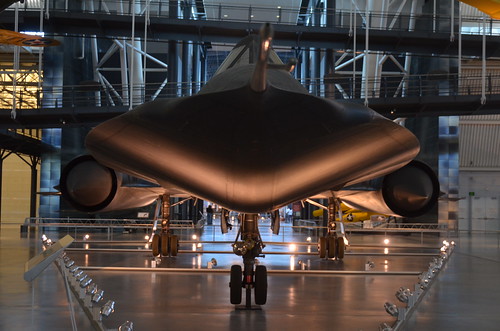
Image by Chris Devers
See more photos of this, and the Wikipedia article.
Details, quoting from Smithsonian National Air and Space Museum | Lockheed SR-71 Blackbird:
No reconnaissance aircraft in history has operated globally in more hostile airspace or with such complete impunity than the SR-71, the world’s fastest jet-propelled aircraft. The Blackbird’s performance and operational achievements placed it at the pinnacle of aviation technology developments during the Cold War.
This Blackbird accrued about 2,800 hours of flight time during 24 years of active service with the U.S. Air Force. On its last flight, March 6, 1990, Lt. Col. Ed Yielding and Lt. Col. Joseph Vida set a speed record by flying from Los Angeles to Washington, D.C., in 1 hour, 4 minutes, and 20 seconds, averaging 3,418 kilometers (2,124 miles) per hour. At the flight’s conclusion, they landed at Washington-Dulles International Airport and turned the airplane over to the Smithsonian.
Transferred from the United States Air Force.
Manufacturer:
Lockheed Aircraft Corporation
Designer:
Clarence L. "Kelly" Johnson
Date:
1964
Country of Origin:
United States of America
Dimensions:
Overall: 18ft 5 15/16in. x 55ft 7in. x 107ft 5in., 169998.5lb. (5.638m x 16.942m x 32.741m, 77110.8kg)
Other: 18ft 5 15/16in. x 107ft 5in. x 55ft 7in. (5.638m x 32.741m x 16.942m)
Materials:
Titanium
Physical Description:
Twin-engine, two-seat, supersonic strategic reconnaissance aircraft; airframe constructed largley of titanium and its alloys; vertical tail fins are constructed of a composite (laminated plastic-type material) to reduce radar cross-section; Pratt and Whitney J58 (JT11D-20B) turbojet engines feature large inlet shock cones.
Long Description:
No reconnaissance aircraft in history has operated in more hostile airspace or with such complete impunity than the SR-71 Blackbird. It is the fastest aircraft propelled by air-breathing engines. The Blackbird’s performance and operational achievements placed it at the pinnacle of aviation technology developments during the Cold War. The airplane was conceived when tensions with communist Eastern Europe reached levels approaching a full-blown crisis in the mid-1950s. U.S. military commanders desperately needed accurate assessments of Soviet worldwide military deployments, particularly near the Iron Curtain. Lockheed Aircraft Corporation’s subsonic U-2 (see NASM collection) reconnaissance aircraft was an able platform but the U. S. Air Force recognized that this relatively slow aircraft was already vulnerable to Soviet interceptors. They also understood that the rapid development of surface-to-air missile systems could put U-2 pilots at grave risk. The danger proved reality when a U-2 was shot down by a surface to air missile over the Soviet Union in 1960.
Lockheed’s first proposal for a new high speed, high altitude, reconnaissance aircraft, to be capable of avoiding interceptors and missiles, centered on a design propelled by liquid hydrogen. This proved to be impracticable because of considerable fuel consumption. Lockheed then reconfigured the design for conventional fuels. This was feasible and the Central Intelligence Agency (CIA), already flying the Lockheed U-2, issued a production contract for an aircraft designated the A-12. Lockheed’s clandestine ‘Skunk Works’ division (headed by the gifted design engineer Clarence L. "Kelly" Johnson) designed the A-12 to cruise at Mach 3.2 and fly well above 18,288 m (60,000 feet). To meet these challenging requirements, Lockheed engineers overcame many daunting technical challenges. Flying more than three times the speed of sound generates 316° C (600° F) temperatures on external aircraft surfaces, which are enough to melt conventional aluminum airframes. The design team chose to make the jet’s external skin of titanium alloy to which shielded the internal aluminum airframe. Two conventional, but very powerful, afterburning turbine engines propelled this remarkable aircraft. These power plants had to operate across a huge speed envelope in flight, from a takeoff speed of 334 kph (207 mph) to more than 3,540 kph (2,200 mph). To prevent supersonic shock waves from moving inside the engine intake causing flameouts, Johnson’s team had to design a complex air intake and bypass system for the engines.
Skunk Works engineers also optimized the A-12 cross-section design to exhibit a low radar profile. Lockheed hoped to achieve this by carefully shaping the airframe to reflect as little transmitted radar energy (radio waves) as possible, and by application of special paint designed to absorb, rather than reflect, those waves. This treatment became one of the first applications of stealth technology, but it never completely met the design goals.
Test pilot Lou Schalk flew the single-seat A-12 on April 24, 1962, after he became airborne accidentally during high-speed taxi trials. The airplane showed great promise but it needed considerable technical refinement before the CIA could fly the first operational sortie on May 31, 1967 – a surveillance flight over North Vietnam. A-12s, flown by CIA pilots, operated as part of the Air Force’s 1129th Special Activities Squadron under the "Oxcart" program. While Lockheed continued to refine the A-12, the U. S. Air Force ordered an interceptor version of the aircraft designated the YF-12A. The Skunk Works, however, proposed a "specific mission" version configured to conduct post-nuclear strike reconnaissance. This system evolved into the USAF’s familiar SR-71.
Lockheed built fifteen A-12s, including a special two-seat trainer version. Two A-12s were modified to carry a special reconnaissance drone, designated D-21. The modified A-12s were redesignated M-21s. These were designed to take off with the D-21 drone, powered by a Marquart ramjet engine mounted on a pylon between the rudders. The M-21 then hauled the drone aloft and launched it at speeds high enough to ignite the drone’s ramjet motor. Lockheed also built three YF-12As but this type never went into production. Two of the YF-12As crashed during testing. Only one survives and is on display at the USAF Museum in Dayton, Ohio. The aft section of one of the "written off" YF-12As which was later used along with an SR-71A static test airframe to manufacture the sole SR-71C trainer. One SR-71 was lent to NASA and designated YF-12C. Including the SR-71C and two SR-71B pilot trainers, Lockheed constructed thirty-two Blackbirds. The first SR-71 flew on December 22, 1964. Because of extreme operational costs, military strategists decided that the more capable USAF SR-71s should replace the CIA’s A-12s. These were retired in 1968 after only one year of operational missions, mostly over southeast Asia. The Air Force’s 1st Strategic Reconnaissance Squadron (part of the 9th Strategic Reconnaissance Wing) took over the missions, flying the SR-71 beginning in the spring of 1968.
After the Air Force began to operate the SR-71, it acquired the official name Blackbird– for the special black paint that covered the airplane. This paint was formulated to absorb radar signals, to radiate some of the tremendous airframe heat generated by air friction, and to camouflage the aircraft against the dark sky at high altitudes.
Experience gained from the A-12 program convinced the Air Force that flying the SR-71 safely required two crew members, a pilot and a Reconnaissance Systems Officer (RSO). The RSO operated with the wide array of monitoring and defensive systems installed on the airplane. This equipment included a sophisticated Electronic Counter Measures (ECM) system that could jam most acquisition and targeting radar. In addition to an array of advanced, high-resolution cameras, the aircraft could also carry equipment designed to record the strength, frequency, and wavelength of signals emitted by communications and sensor devices such as radar. The SR-71 was designed to fly deep into hostile territory, avoiding interception with its tremendous speed and high altitude. It could operate safely at a maximum speed of Mach 3.3 at an altitude more than sixteen miles, or 25,908 m (85,000 ft), above the earth. The crew had to wear pressure suits similar to those worn by astronauts. These suits were required to protect the crew in the event of sudden cabin pressure loss while at operating altitudes.
To climb and cruise at supersonic speeds, the Blackbird’s Pratt & Whitney J-58 engines were designed to operate continuously in afterburner. While this would appear to dictate high fuel flows, the Blackbird actually achieved its best "gas mileage," in terms of air nautical miles per pound of fuel burned, during the Mach 3+ cruise. A typical Blackbird reconnaissance flight might require several aerial refueling operations from an airborne tanker. Each time the SR-71 refueled, the crew had to descend to the tanker’s altitude, usually about 6,000 m to 9,000 m (20,000 to 30,000 ft), and slow the airplane to subsonic speeds. As velocity decreased, so did frictional heat. This cooling effect caused the aircraft’s skin panels to shrink considerably, and those covering the fuel tanks contracted so much that fuel leaked, forming a distinctive vapor trail as the tanker topped off the Blackbird. As soon as the tanks were filled, the jet’s crew disconnected from the tanker, relit the afterburners, and again climbed to high altitude.
Air Force pilots flew the SR-71 from Kadena AB, Japan, throughout its operational career but other bases hosted Blackbird operations, too. The 9th SRW occasionally deployed from Beale AFB, California, to other locations to carryout operational missions. Cuban missions were flown directly from Beale. The SR-71 did not begin to operate in Europe until 1974, and then only temporarily. In 1982, when the U.S. Air Force based two aircraft at Royal Air Force Base Mildenhall to fly monitoring mission in Eastern Europe.
When the SR-71 became operational, orbiting reconnaissance satellites had already replaced manned aircraft to gather intelligence from sites deep within Soviet territory. Satellites could not cover every geopolitical hotspot so the Blackbird remained a vital tool for global intelligence gathering. On many occasions, pilots and RSOs flying the SR-71 provided information that proved vital in formulating successful U. S. foreign policy. Blackbird crews provided important intelligence about the 1973 Yom Kippur War, the Israeli invasion of Lebanon and its aftermath, and pre- and post-strike imagery of the 1986 raid conducted by American air forces on Libya. In 1987, Kadena-based SR-71 crews flew a number of missions over the Persian Gulf, revealing Iranian Silkworm missile batteries that threatened commercial shipping and American escort vessels.
As the performance of space-based surveillance systems grew, along with the effectiveness of ground-based air defense networks, the Air Force started to lose enthusiasm for the expensive program and the 9th SRW ceased SR-71 operations in January 1990. Despite protests by military leaders, Congress revived the program in 1995. Continued wrangling over operating budgets, however, soon led to final termination. The National Aeronautics and Space Administration retained two SR-71As and the one SR-71B for high-speed research projects and flew these airplanes until 1999.
On March 6, 1990, the service career of one Lockheed SR-71A Blackbird ended with a record-setting flight. This special airplane bore Air Force serial number 64-17972. Lt. Col. Ed Yeilding and his RSO, Lieutenant Colonel Joseph Vida, flew this aircraft from Los Angeles to Washington D.C. in 1 hour, 4 minutes, and 20 seconds, averaging a speed of 3,418 kph (2,124 mph). At the conclusion of the flight, ’972 landed at Dulles International Airport and taxied into the custody of the Smithsonian’s National Air and Space Museum. At that time, Lt. Col. Vida had logged 1,392.7 hours of flight time in Blackbirds, more than that of any other crewman.
This particular SR-71 was also flown by Tom Alison, a former National Air and Space Museum’s Chief of Collections Management. Flying with Detachment 1 at Kadena Air Force Base, Okinawa, Alison logged more than a dozen ’972 operational sorties. The aircraft spent twenty-four years in active Air Force service and accrued a total of 2,801.1 hours of flight time.
Wingspan: 55’7"
Length: 107’5"
Height: 18’6"
Weight: 170,000 Lbs
Reference and Further Reading:
Crickmore, Paul F. Lockheed SR-71: The Secret Missions Exposed. Oxford: Osprey Publishing, 1996.
Francillon, Rene J. Lockheed Aircraft Since 1913. Annapolis, Md.: Naval Institute Press, 1987.
Johnson, Clarence L. Kelly: More Than My Share of It All. Washington D.C.: Smithsonian Institution Press, 1985.
Miller, Jay. Lockheed Martin’s Skunk Works. Leicester, U.K.: Midland Counties Publishing Ltd., 1995.
Lockheed SR-71 Blackbird curatorial file, Aeronautics Division, National Air and Space Museum.
DAD, 11-11-01
Verify out these wire reduce electrical discharge machining pictures:
Image from web page 104 of “The street railway assessment” (1891)
Image by Net Archive Book Images
Identifier: streetrailwayrev10amer
Title: The street railway assessment
Year: 1891 (1890s)
Authors: American Street Railway Association Street Railway Accountants’ Association of America American Railway, Mechanical, and Electrical Association
Subjects: Street-railroads
Publisher: Chicago : Street Railway Evaluation Pub. Co
View Book Web page: Book Viewer
About This Book: Catalog Entry
View All Images: All Photos From Book
Click here to view book online to see this illustration in context in a browseable on the internet version of this book.
Text Appearing Ahead of Image:
otected by a lightning arrester. The rails arc bonded with cop-per bonds of .166 sq. in. sectional location and in addition arc con-nected each and every 55 yards with wire of the very same capacity. The arrangement of the various buildings belonging to the com-pany is shown in Fig. i. In the engine area arc three generatingunits, each and every consisting o( an horizontal tandem compouiul en-gine rated at 150 h. p. at two.35 r. p. m., belted to a six-pole con-tinuous existing soo-volt generator. The generators had been suppliedby the Union I^lektricitats-Gesellschaft. of Berlin. Each enginehas two fly-wheels, 1 carrying the generator belt, and the otherthe governor belt, and the machines are arranged to run con-densing or non-condensing as preferred. A surface condenser of theWorthington kind has been installed. The pumping method is ina separate area adjoining the boiler area as shown in Fig. i.There arc two Worthington feed pumps every obtaining a capacityof 2,500 gallons per hour, two injectors obtaining a capacity of 800
Text Appearing Right after Image:
FIG. J~TK.CK SHOWI.NI, LINE COXSTRLCTION. gallons per hour, with a lift of 20 ft., and a storage tank, intowhich condenser pumps discharge fresh condensing water in addi-tion to the water returned by the surface condenser. The boilerfeed pumps draw straight from this tank, forcing the water througha Green economizer ahead of it reaches the boilers. In the boiler area are three boilers as shown in Fig. 2. Thesearc of the double drum variety, and have a heating surface of 1,030sq. ft., and a normal evaporating capacity of 3.300 lb. per hour.The drums are 6 ft. 11 in. in diameter, the upper drum getting 20ft. long and the decrease a single 23 ft. long. The two water and steamspaces arc straight connected by enclosed tubes. Each drums possibly separately fed, and any section of the feed pipes amongst theboilers and pumps may be cut off. The fuel employed is .•^ustraliancoal, despite the fact that it is proposed to make use of petroleum waste for thispurpose at an early date, as this material can be secured on thegrounds
Note About Images
Please note that these pictures are extracted from scanned page images that may possibly have been digitally enhanced for readability – coloration and look of these illustrations may possibly not completely resemble the original perform.
Image from web page 118 of “Electric toy generating for amateurs. This operate treats on the creating of electrical toys, electrical apparatus, motors, dynamos and instruments in common … By T. O’Conor Sloane ..” (1914)
Image by Web Archive Book Images
Identifier: electrictoymakin00sloa
Title: Electric toy making for amateurs. This operate treats on the generating of electrical toys, electrical apparatus, motors, dynamos and instruments in basic … By T. O’Conor Sloane ..
Year: 1914 (1910s)
Authors: Sloane, T. O’Conor (Thomas O’Conor), 1851-1940
Subjects: Electric apparatus and appliances Electric toys
Publisher: New York, The N.W. Henley publishing co.
View Book Web page: Book Viewer
About This Book: Catalog Entry
View All Pictures: All Photos From Book
Click right here to view book on the web to see this illustration in context in a browseable online version of this book.
Text Appearing Ahead of Image:
mary of the coil. No. 24 wire wouldbe a great size for each. This disposition will improve the tension of thecircuit, and will give far more powerful effects, as theapparatus is much more swiftly moved. Ano-Kato. The words ano, kato, are taken from the Greek,and mean up, down, and allude to the motions of theobjects observed in the box. The reduce shows its generalfeatures of construction. It is a shallow box whosebottom and interior sides are coated with tin-foil. Anumber of objects are created out of the lightest pith* The latter might be of the pith of cornstalks, ofelder pith, or, what is nonetheless much better, of the pith of thedry stalks of the sunflower. Tiny men with jointedlegs and arms, insects, jointed snakes, and so forth., are madeout of the pith, and might be colored with a small red ANO-KATO. 117 and black ink. The box is covered with a piece ofglass. If the glass is rubbed with a correct rubber, it be-comes electrically excited, and attracts the objects inthe box. As they rise, they touch the glass and as
Text Appearing Right after Image:
Fig. 47. Ano-Kato. they lie against it, becoming charged with the sameelectricity, are swiftly repelled. They fall into thebox and are discharged by coming against the tin-foil, which, for higher possible distinction, could be con-sidered to be in electrical communication with theearth. This operation goes on as lengthy as the rubbing iskept up. For the rubber, a pad of hair, or other material,around which a piece of kid glove is tied, is employed. 118 ELECTRIC TOT Generating. This may possibly be made much far more efficient by the use ofsome amalgam such as that utilized on electric machines. Straightforward Experiments in Static Electricity.Some simple experiments in static electricity arenext illustrated. The initial reduce shows a modification
Note About Photos
Please note that these images are extracted from scanned web page images that may have been digitally enhanced for readability – coloration and look of these illustrations might not completely resemble the original operate.