Some cool large machining images:
Catch U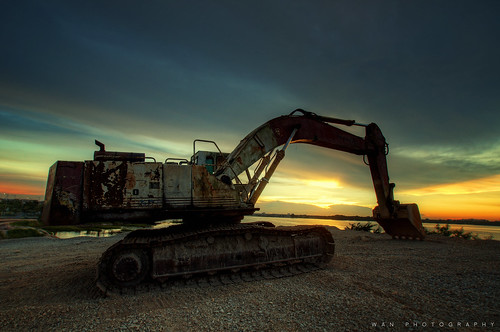
Image by Thanwan Singh
Some cool cnc prototyping solutions images:
IMG_5942.JPG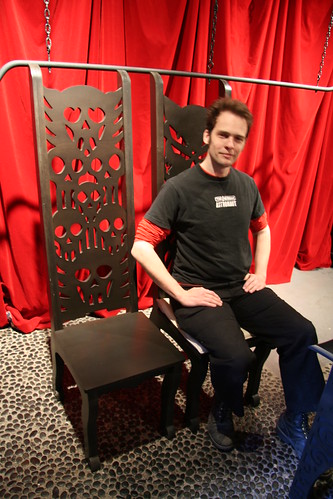
Image by jillianisaphotographer
Client:Comic Debris
Mission: Make us a conference table with chairs that impresses our clients and matches our brand!
Solutions: Custom design and style and fabrication. Prototyping.
Due to the fact We Can is a design and style firm positioned in West Oakland, CA
This photo is copyright to Since We Can, LLC
See much more on this project
IMG_5941.JPG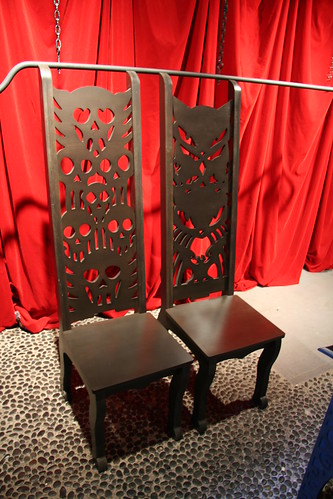
Image by jillianisaphotographer
Client:Comic Debris
Mission: Make us a conference table with chairs that impresses our customers and matches our brand!
Solutions: Custom style and fabrication. Prototyping.
Since We Can is a style firm situated in West Oakland, CA
This photo is copyright to Since We Can, LLC
See far more on this project
Verify out these price of cnc machining pictures:
ShapeOko: Drawing on paper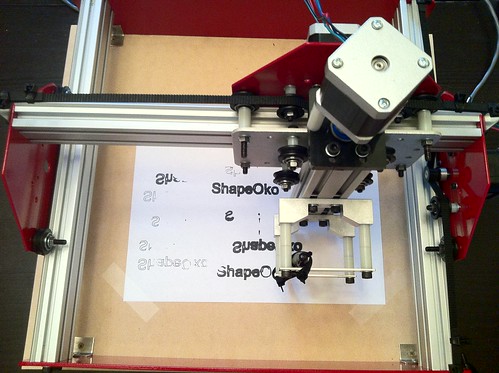
Image by Myles!
ShapeOko is a low-price CNC machine that I just completed developing. These are the benefits of my tweaking parameters and property locations for the test print.
Helmet
Image by clarksworth
Custom-made helmet for a quick film.
The helmet is primarily based on the old brass Mk 2 diving gear, but with a modern day/alien twist. The style of the piece is inspired by peak sci-fi films such as Alien, Star Wars and Blade Runner – function prior to type.
The helmet was produced from 2 stock acryillic hemispheres, with a sheet styrene building on the back. Detailing was with different model kit components, sillicone glue and standard electronics, along with stock plastic fittings from special effects suppliers EMA Model Supplies. The "gun" was created overnight from what ever leftover stock I had to hand, which involves PVC pipe and a quantity of other prop components (the tip is the nosecone from Derek Medding’s Thunderbird 1). The faceplate with the many lenses was inspired by the Bolex cameras we employed to use at uni. Idea to final construction was about six days, with some overnight periods. The building strategy wasn’t my preferred a single – with far more cash, CNC machining and fibreglass casting would have produced the approach much easier, but that would have quadroupled the price of the costume.
The helmet’s design was a key element of the cinematography of the piece – it is not only highly reflective and full of surface detail, but it also has two forward LED spotlamps that illumunate the scenery around it. My function in this film – largely as production designer and camera op – was to ensure that the art path truly was an integral component of the film, and not just an afterthought.
A few nice machining service images I found:
Extended lost Chelmsford. Lodge Coaches Ford R192- Willowbrook OOO298K at the Rose Bros Motor Coach Garage and Chelmsford Star Co-operative Society’s Machine Bakery, c.1978
Image by sludgegulper
An historical photograph, which remained as a unfavorable until now. This is the scene behind Chelmsford Railway station taken from Mill Road. It must have been a Tuesday Friday or Saturday, as these have been the days on which the Lodge bus service ran in from High Easter by means of Chignal Smealy and parked behind the Plough,the official terminus.. Previously a Bedford SBG, PAJ487 performed the service, but OOO298K was purchased as a replacement. (Ironically Lodges had to buy an identical coach to PAJ to be restored for publicity purposes) This dual objective 45 seater coach/ bus had been purchased new by GW Osborne and Sons, of Tollesbury,another renowned and now vanished bus and coach firm of Essex.
Behind the Ford Capri is the Machine Bakery of the Chelmsford Star Co-operative Society. To the proper, the former garage of the popular Rose Bros coach company, with their small office at 66a Duke Street on the corner of Victoria Road South. They were taken more than by Eastern National in 1956 .Their ghost sign survived till the demolition of the garage. I believe it was getting used as a maintenance depot by British Rail (??) The open auto park to the right for commuters has been replaced by a multi-storey version. Behind the camera, an elevated section of Mill Road went to the modest siding and buildings owned by a meat wholesale firm referred to as Spanjer – interestingly an initially Jewish name from London. The words Hygienic Bakery can be created out on the street side of the Co-op constructing.
As nicely as an express service to London Kings Cross, Rose Bros (Frank Hudson Rose and Douglas Joshua Rose) operated a service at weekends to Steeple Stone, ,by means of Purleigh Round Bush, where there were sailing clubs, caravan parks,shacks and the like. The return fare in 1947 was half-a-crown.
MK19 Grenade Machine Gun
Image by PEOSoldier
Gives offensive and defensive Soldier assistance by means of tripod- or vehicle mounted grenade machine gun.
The MK19 Grenade Machine Gun supports the Soldier in offensive and defensive roles by delivering a heavy volume of precise and continuous firepower against enemy personnel and lightly armored vehicles. The MK19 can be mounted on a tripod or on numerous car platforms and is the principal suppressive weapon for combat assistance and combat service assistance units. The weapon can be employed to defend motor movements, assembly areas, and provide trains in bivouac.
The MK19 Grenade Machine Gun can defend against hovering rotary-wing aircraft, destroy lightly armored vehicles, fire on suspected enemy positions, and offer higher-volume fire into an engagement location and indirect fires from hidden positions. The program increases the capability of U.S. forces to defeat opposing armored, mechanized, and infantry forces with higher explosive, dual-purpose ammunition. The MK19’s point target efficient range is 1,500 meters and the maximum location target successful range is 2,212 meters, with a cyclic firing rate of around 350 rounds per minute.
A Most Ingenious Device
Image by National Library of Ireland on The Commons
This is the interior of the Singer Sewing Machine shop on The Quay in Waterford. Great machines on show, and an engraving of the Singer Factory and a framed Russian Singer advertisement.
Gerry Ward kindly confirmed that the huge framed image of the factory is at Kilbowie Street, Clydebank in Scotland, with its gorgeous clock tower. No excuse for Singer workers who lived nearby to be late for work! Gerry also translated our Russian Poster which reads "Компания Зингеръ Швейная машиъі" which implies "The Singer Sewing Machine Business".
Date: Tuesday, 16 September 1924
NLI Ref.: P_WP_3215
A few nice engraving services photos I located:
Twenty-4 Views taken in St. Helena, the Cape, India, Ceylon, Abyssinia, and Egypt, by Henry Salt engraved by Havell, Bluck, and Hill. With Descriptions. – caption: ‘Mosque at Lucknow.’
Image by The British Library
ID: maps_six_tab_74_f007r
Title: Twenty-4 Views taken in St. Helena, the Cape, India, Ceylon, Abyssinia, and Egypt, by Henry Salt engraved by Havell, Bluck, and Hill. With Descriptions.
Illustrator: "Salt, Henry and Hill, I (Henry Salt (artist) and I.Hill (engraver))",
Provenance:
1809
Caption: Mosque at Lucknow.
Source identifier: Maps.six.Tab.24 no.7
British Library Shelfmark: Maps.six.Tab.24
If you want to obtain a high high quality copy of this image, please place an order at Images On the web imagesonline.bl.uk. The particulars from the above list should help you locate the photos.
Things are beautiful if you really like them
Image by id-iom
I just really like rescuing an old bit of wood to paint on. Previously it was just an old shelf destined for the tip. Now it is most likely still destined for the tip but at least she goes out searching good. I even attempted my hand at a small engraved lettering on this 1 – which was a bit trickier than I believed but nonetheless looks pretty affordable in the flesh. Taking into consideration I did not have replacement ideas for the little drill point I was utilizing I was fairly satisfied with the end outcome.
‘Things are lovely if you really like them’ is a good small quote from French dramatist Jean Anouilh. I specifically like the concept that anything can be stunning if you really like it and the converse that things are not inherently stunning but the act of loving them makes them beautiful. Heady stuff for a Friday morning. I’m certain standard service will resume quickly sufficient…
Cheers
id-iom
A Collection of Drawings produced in the Countries visited by Captain Cook in his Initial Voyage. 1768-1771. – caption: ‘Upper drawing Inhabitants of the island of Tierra del Fuego, in their hut, by Alexander Buchan, January 1769. Reduce engraving A View of th
Image by The British Library
ID: c13657-65
Title: A Collection of Drawings made in the Nations visited by Captain Cook in his 1st Voyage. 1768-1771.
Illustrator: "Buchan, Alexander (Alexander Buchan)"
Provenance:
[1] 1769. [two] circa 1772 circa 1773
Caption: Upper drawing Inhabitants of the island of Tierra del Fuego, in their hut, by Alexander Buchan, January 1769. Decrease engraving A View of the Indians of Tierra del Fuego in their hut, by Francesco Bartolozzi, after Giovanni Battista Cipriani
Language: English
Supply identifier: Add. 23920, f.14
British Library Shelfmark: Add. 23920
If you want to obtain a higher top quality copy of this image, please location an order at Photos On the internet imagesonline.bl.uk. The specifics from the above list should aid you find the photos.
Some cool screw machining images:
Just Nuts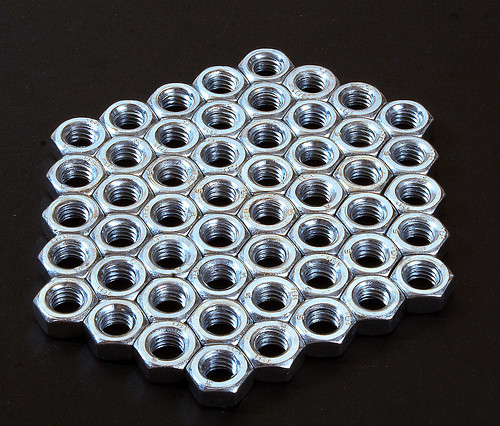
Image by tudedude
View On Black
Nuts and Bolts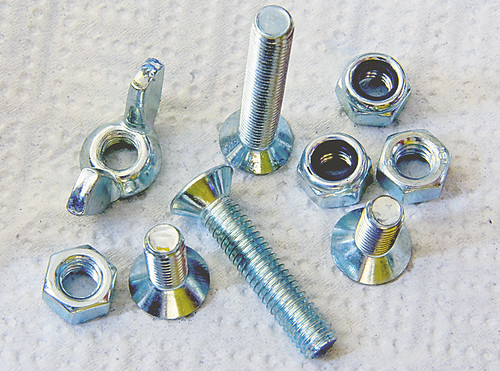
Image by tudedude
Spanner nut and bolt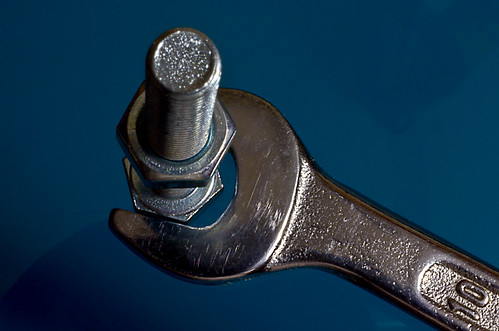
Image by tudedude
Macro
Some cool prototype service pictures:
Service Style – Encounter Prototype
Image by tobiastoft
Service Design – Experience Prototype
Image by tobiastoft
Some cool titanium machining photos:
Supercollider – 48
Image by the justified sinner
Ultimately finished "Supercollider".
Taken with Panasonic-Leica Elmarit 45mm f2.8 Macro lens on Panasonic G1.
Supercollider – 49
Image by the justified sinner
Finally completed "Supercollider".
Taken with Panasonic-Leica Elmarit 45mm f2.eight Macro lens on Panasonic G1.
Some cool machining projects pictures:
Brody Condon at Machine Project
Image by xeni
Brody Condon – Efficiency Modification (Nauman), Machine Project, Los Angeles, Saturday February 9th, 2008. "10 performers outfitted in medieval/space/fantasy armor re-create Bruce Nauman’s 1973 function “Tony Sinking into the Floor, Face Up and Face Down”. Performed in slow motion and combined with movements primarily based on computer game death animations, this piece is accompanied by a high volume binaural beats reputed to induce out of physique experiences."
Pop Up Pie Shop at Machine Project
Image by Machine Project
Pop Up Pie Shop at Machine Project, portion of the Hammer Museum Artist in Residency.
Photo by Marianne Williams.
A couple of nice 3d printing service photos I found:
Removing a miniature 3D Printed model from a tray of nylon powder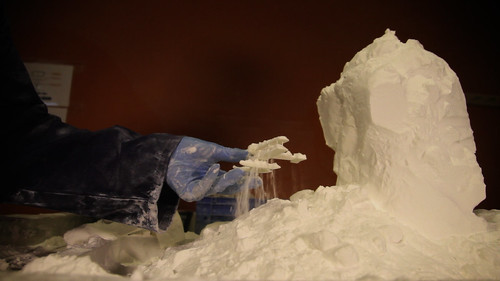
Image by Shapeways:
A technician removes a 3D Printed miniature airplane from tray of nylon powder from the Shapeways SLS 3D Printer.
This is a still from the video Shapeways 3D Printing & the Culture of Creativity
For more data visit www.shapeways.com
moo organization cards!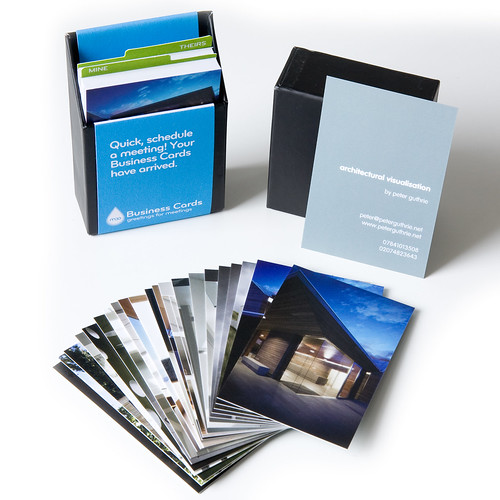
Image by Peter Guthrie
www.peterguthrie.net/
Cleaning excess nylon powder from Shapeways 3D Printed Skull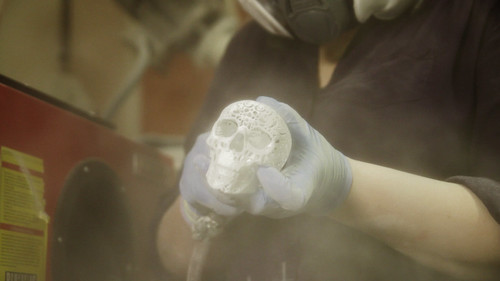
Image by Shapeways:
Cleaning excess nylon powder from Crania Anatomica Filigre created by artist Joshua Harker and 3D Printed in Nylon by Shapeways.
www.shapeways.com/model/294261/crania-anatomica-filigre-s…
This is a nonetheless from the video Shapeways 3D Printing & the Culture of Creativity
For much more data check out www.shapeways.com
Verify out these cncmachining images:
iseman is also working in a social gardening tool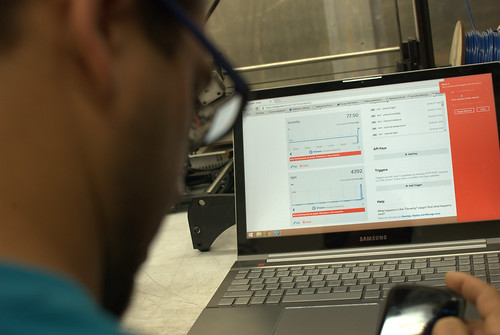
Image by nicolas.boullosa
operating area and two cargo containers as workshops (shop-in-a-box)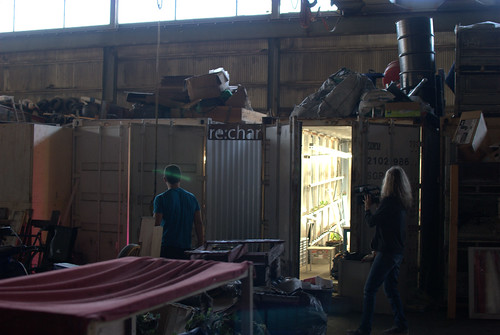
Image by nicolas.boullosa
Some cool 3d printing service photos:
Enabling the Makers: An Intro to Design for 3D Printing at Shapeways
Image by Shapeways:
Enabling the Makers: An Intro to Design and style for 3D Printing at Shapeways
Shapeways NY group held the very first ever Intro to Design and style for 3D Printing workshop, in collaboration with CASE Inc. The idea was a straightforward one — supply a forum exactly where individuals who’ve been excited about 3D printing but have no modeling skills can get their hands dirty.
www.shapeways.com/blog/archives/887-Enabling-the-Makers-A…
A few nice wire cutting services photos I identified:
Image from web page 661 of “The Utah Farmer : Devoted to Agriculture in the Rocky Mountain Area” (1913)
Image by World wide web Archive Book Photos
Identifier: utahfarmerdevot1219utah_
Title: The Utah Farmer : Devoted to Agriculture in the Rocky Mountain Region
Year: 1913 (1910s)
Authors: Utah State Agricultural College. Extension Service
Subjects: Agriculture Farmers Farm management Farm produce Farmers’ spouses
Publisher: Lehi and Salt Lake City, Ut. Co
View Book Web page: Book Viewer
About This Book: Catalog Entry
View All Pictures: All Photos From Book
Click right here to view book on-line to see this illustration in context in a browseable on-line version of this book.
Text Appearing Prior to Image:
A man who owned a large orchard,had a quantity of Wolf River trees,that were extremely shy bearers, so everywinter he decided to summer season prunethem, but usually neglected to do so,either since of the press of work,or that he had not the heart to sacri-fice the modest quantity of fruit growingat the time. The trees with out prun-ing grew very rank and ragged, sothat in the month of July, the largestone, split into three sections all ofwhich lay on the ground. To save thetree it was essential to prune veryseverely, and with wire and eyebolts,draw the limbs back into spot. Theten boxes of fine fruit that this treebore the following season was an ob-ject l/esson in the summer pruningof shy bearers. Most owners of useless, old neg-lected fruit trees will reduce them out itheir interest is caled to the factthat they are breeding pests for theorchardist to fight. Persons defirous of planting a fewtrees for shade, must be encouragedto plant shade trees as an alternative of fruittrees as is so typically the case. In
Text Appearing After Image:
CONCRETE SEWER AND IRRIGA-TION PIPE.They Develop Tougher and Stronger WithAge. All Other Pipes Decline.Definitely ALKALI PROOFUTAH CONCRETE PIPE COMPANYSalt Lake City, Utah.
Note About Photos
Please note that these photos are extracted from scanned web page photos that may have been digitally enhanced for readability – coloration and appearance of these illustrations may possibly not perfectly resemble the original function.
Infantryman wearing a M1916 stahlhelm
Image by ✠ drakegoodman ✠
Illegible letter on reverse (cut down from original sized postcard).
Circa 1917, this older soldier (probably Landwehr Regiment?) is wearing a M1916 Stahlhelm, Model 1910 Vereinfachte (Simplified) Feldrock and M1909 ammunition pouches getting supported by his bread-bag strap. He is armed with two 1917 pattern grenades and a Gew 98.
By 1916 German stick grenade production alone was eight million per month! At least 20 various stick grenade styles and variations had been fielded by Germany from 1914 to 1917.
The German Model 1916 Stahlhelm was developed primarily by two males, Frederich Schwerd and Dr. August Bier. By August 1915 the German High Command had approved of the concept of a new helmet. The designs for the Model 1916 were drawn up in September 1915. By December of that year, the M1916 was becoming employed by a Sturm (Assault) battalion for trial purposes, and it showed excellent prospective if some of the design and style flaws were adjusted.
The mass production of the ‘Stahlhelm’ started January 1916 and it was extensively distributed to soldiers in the Imperial German Field Army on the western front. The Model 1916 helmet saw service on both fronts of the war and proved to be quiet profitable, except that the wearers hearing was impaired because of the size and shape of the helmet.
Source: www.axishistory.com/index.php?id=5173
Some cool cnc services pictures:
101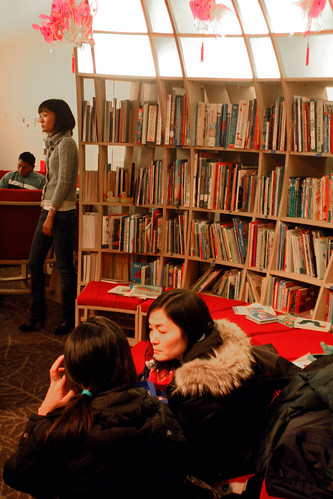
Image by trevor.patt
On website and in use
4110 Books Cataloged
1185 Books Circulated—54% Chinese
1021.five Hours of Volunteer Public Service
523 Storefront Library Cards Issued
322 Hours Open
91 Events Produced
39 Volunteer Employees
2 Paid Staff
A handful of nice machining service images I identified:
Air Canada’ s First L-1011
Image by caribb
A Blast from the Previous
-Ok this is a bit of a historic image in a sense. I remember this simply because it was a moment that nutured my adore for aviation. It was the 1st time I had ever observed an L1011. Air Canada had just had it delivered that week in 1972 and this was the Friday before it’s inagural flight on the Monday… so Air Canada’s first TriStar before getting into service. I believed it was the most beautiful plane I had ever noticed and ever given that then I’ve followed aviation with a private passion.
An intriguing note for Montreal planespotters – the balcony here in the front was the original outside spotting platform at Dorval’s principal terminal. You could go out the length of the main terminal developing and take photographs, smell the jet fumes and wave goodbye or hello to people you knew coming or going on flights. It was great really but of course hijackers or terrorists about the globe shut this all down years ago, I consider even by the time this photo was taken. These days it’s been replaced with new gates along the front of the terminal. We cannot even see out of the front of the terminal like this anymore.
Note: Also in the picture: Two EPA (Eastern Provincial Airlines) 737-200s, an Air Canada Viscount and and an Air Canada DC-9-32 C-FTMF #731
WIBs, educators doing good work, but more is needed
A two-year collaboration between the Bristol Workforce Investment Board, Bristol Community College, the state and the vocational school got started in October and ran through April, training 11 displaced workers in CNC machining skills. The program …
Read more on SouthCoastToday.com
Check out these aluminum cnc machining images:
Good Anodizing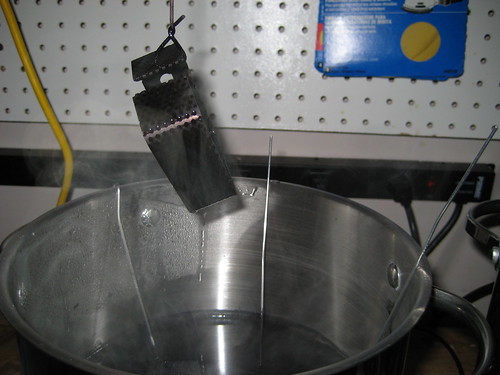
Image by courtney johnston
Anodizing parts for the TC18 VFD Tube Clock www.vonnieda.org/tc18
A few nice hobby cnc milling China machine images I found:
Pinup Stefanina Good Guys Del Mar Nationals - Sunday11milling China machine" src="https://farm4.staticflickr.com/3627/3439954559_c4d05610a6.jpg" width="400"/>
Image by christopherallisonphotography.com
Christopher Allison Photography
619-368-2202
Pinup Model Stefanina
ALL IMAGES ARE COPYRIGHT PROTECTED & AVAILABLE FOR PURCHASE OR LICENCING
www.christopherallisonphotography.com
BUY THIS PRINT - rockabillyboy72.imagekind.com
“THE BLACK WIDOW” Builders: Wally Olson (1952), Bill Scott (1954) and Richard Riddell (2005) The garage find of the century! How long have you been hot rodding cars--since the 1950’s? Many of us got started in the 50’s and 60’s. (For you real old birds out there that remember hot rodding “T” roadsters with Roto-Faze ignitions, Ruxtell 2-speed rear axles, Riley 2-port heads and Laurel lowering kits, well what can we say you’re a generation before us and we take our hats off to you ‘original’ hot rodders.) BUT for all of us “The Black Widow” is a serious piece of 1950’s hot rodding annals and a benchmark for the industry! In an article in Hot Rod Deluxe, July 2008 entitled, “Tangled Web” the full-story of Richard Riddell’s quest to restore the original Black Widow had its public debut. Hot Rod Deluxe reported the car’s winning the 2008 Grand National Roadster Show which was a dream come true, taking “Best Early Altered T Roadster”. (See also Rod and Custom, June 2008.) It was also a contender for the Bruce Meyer award at the ‘Grand Nats.’ Why do guys like Richard Riddell (and the rest of us) spend years (3400 hours in Richard’s case) restoring a car we found in a barn? Answer: ‘For the love of the sport!’ All of us remember some other cars with similar names, for instance the ‘Black Widow’ Monogram model car (“1/24 scale model/Ford ‘T’ Pickup Rod/removable top” by Mattel quality hobby kits). Also, we remember General Motors/Chevrolet coming out in 1957 with their first racing version Chevy called “The Black Widow.” But predating both of these historic cars is the “The Black Widow” built by Wally Olson to help keep his kids out of trouble in 1952 and first débuted in Hot Rod magazine, September 1954 in an article entitled, “Lil’ Beau T”, which read, “Wally Olson, Fresno, California, automotive machinist, is the lucky owner and builder. Duane Taylor was called in for the body work.” It added as to why he built the car, “What with so much current upheaval in the teen-age ranks, Wally figured that a sure-fire way to eliminate those free-time, nothing-to-do troubles would be to interest them (his 9 and 12 year old sons) in a rod. So far the idea has worked like a charm.” In time the family moved on to other projects and Bill Scott purchased the car and redid it with fenders, headlights and all the stuff to make it ‘street legal’—as we used to call it! The first documentation of the car being called “Black Widow” is found in the magazine Rodding and Re-styling, August 1957 issue. That article reported Bill Scott’s changes to Wally Olson’s car, “The front end was revised to incorporate a tubular axle and tube shocks. The new owners also equipped the car with a new power plant. The original mill is a ’41 Merc bored out .100 inch over stock, ported and relieved…includes 8.5-to-1 Offenhauser heads, a Weber full-race cam, and an Evans 3-caberator manifold.” [Note: The several engines that were housed in this car later varied; see final Merc build details below.] Don’t you love the sound of that “ported and relieved” and “full-race cam”—when’s the last time you used those terms? By the time the 1959 Hot Rod Annual was published the car-title stuck for all time “The Black Widow.” Riddell’s 2-Year Renovation! According to long time race car builder Richard Riddell’s log he states, “Sometime in 1955 Wally sold his roadster to Bill Scott. Bill again called on Duane Taylor to turn the car into a bonified street rod. With the additional of windshield, head lights, tail lings, and fenders it was finally able to jump into his little Hot Rod and go crusin’. The pin stripping was done by none other than Dean Jefferies with the familiar cobweb and spider on the turtle deck.” He reports that the car’s first win was “…a five foot trophy at the Sacramento AutoRama in 1957 for ‘Best Roadster’. Yes, Bill’s car was having the time of its life being one of the best looking early California street roadsters of all time.” Richard states, “Bill Scott died around 1987...for several years the car languished…getting worse and worse…as is so often the case for old Hot Rods.” The garage find in 2005 notes, “At a glance the roadster didn’t look that bad.” But the Naugahyde and carpet were shot, fenders, original wheels and hub caps to name a few problems for the yet to begin restoration. Riddell notes, “Under a somewhat decent body and paint job lurked a mess that went beyond your worst nightmare.” He adds, “I began wondering how I could salvage this little beauty in the rough. Not that many people have restored an old Hot Rod but, those who have know what I’m talking about. It’s much harder than building a rod from scratch. But the roadster was begging to be restored and I’m glad that I was chosen to do it.”and#9472;Richard died shortly after finishing the project but happily he was able to see “The Black Widow” win the ‘Grand Nats’ and have a feature center-spread article in Hot Rod Deluxe. Here are a few of the Riddell-engineered refinements to this original car. and#61692; Recessed pockets had to be built in the frame rails to accept the front motor mounts which double as water pumps. and#61692; New front radius rods were built out of heavy wall chrome-moly tubing. The original ones were so poorly made that they were unsafe. and#61692; The correct master cylinder banjo fitting was not available so, he fabricated a new one from scratch. and#61692; The tooling mandral had to be CNC machined to facilitate metal spinning new brass tail pipe end bells. Hey would you agree? Hot rodding is an art form and some Hot Rod Artists have mastered the craft and Richard Riddell is one of them!!! Reconstruction points of interest: and#61656; Original steel body and doors welded shut and#61656; ‘42 Merc 274 c.i flathead (current engine) and#61656; ’39 Lincoln-Zephyr tranny and#61656; ’34 Ford rear with Halibrand quick-change center and enclosed drive shaft and#61656; ’39 Ford hydraulic brakes all around and wide “5” 16-iunch wheels and caps and#61656; ’37 Ford tube axle and#61656; Engine by RPM Machine and#61656; Chrome by Ace Plating and#61656; Frame done by Capps Powder Coat and#61656; Body/paint by Showtime Customs and#61656; Upholstery by Brents Why is the car being sold? To quote his wife Pat, “Unfortunately, Richard passed away on March 18, 2008 and will not get to enjoy seeing the new owner drive away with a piece of automotive history.” Richard’s loyal wife Pat grew up around racing since she was 9 years old. Her maiden name was Rodriguez. If you grew up at Lion’s Dragstrip, as she did, you may remember her father’s rail? He and his brother ran an old top alky rail under the name “Rodriguez Brothers”. Pat said, ‘As I was growing up I often wondered how I would ever meet someone to marry, since all that our family ever did was go to the drags. Then one day Richard came along and met me at the Winternationals.’ Well the rest is history. For Pat after Richard’s death there are just too many memories attached to all the memorabilia, race cars and hot rods in their storage—she would like to sell “The Black Widow” to some deserving hot rodder. Terms of sale: 5,000.00. Please contact Don Burdge at DreamRodLocator or call him at 619.804.8033. You should call me before Leno does! We have hundreds of additional photos and several 50’s and current magazine articles available to seriously interested buyers.
BUY THIS PRINT - rockabillyboy72.imagekind.com
Pinup Breanna Good Guys Del Mar Nationals16milling China machine" src="https://farm4.staticflickr.com/3654/3447924924_6cd88d40e4.jpg" width="400"/>
Image by christopherallisonphotography.com
Model: Breanna
www.christopherallisonphotography.com
All Images are Copyright Protected & Available for Purchase and Licencing
www.christopherallisonphotography.com
Follow me on Facebook www.facebook.com/#!/pages/Christopher-Allison-Photography...
“THE BLACK WIDOW” Builders: Wally Olson (1952), Bill Scott (1954) and Richard Riddell (2005) The garage find of the century! How long have you been hot rodding cars--since the 1950’s? Many of us got started in the 50’s and 60’s. (For you real old birds out there that remember hot rodding “T” roadsters with Roto-Faze ignitions, Ruxtell 2-speed rear axles, Riley 2-port heads and Laurel lowering kits, well what can we say you’re a generation before us and we take our hats off to you ‘original’ hot rodders.) BUT for all of us “The Black Widow” is a serious piece of 1950’s hot rodding annals and a benchmark for the industry! In an article in Hot Rod Deluxe, July 2008 entitled, “Tangled Web” the full-story of Richard Riddell’s quest to restore the original Black Widow had its public debut. Hot Rod Deluxe reported the car’s winning the 2008 Grand National Roadster Show which was a dream come true, taking “Best Early Altered T Roadster”. (See also Rod and Custom, June 2008.) It was also a contender for the Bruce Meyer award at the ‘Grand Nats.’ Why do guys like Richard Riddell (and the rest of us) spend years (3400 hours in Richard’s case) restoring a car we found in a barn? Answer: ‘For the love of the sport!’ All of us remember some other cars with similar names, for instance the ‘Black Widow’ Monogram model car (“1/24 scale model/Ford ‘T’ Pickup Rod/removable top” by Mattel quality hobby kits). Also, we remember General Motors/Chevrolet coming out in 1957 with their first racing version Chevy called “The Black Widow.” But predating both of these historic cars is the “The Black Widow” built by Wally Olson to help keep his kids out of trouble in 1952 and first débuted in Hot Rod magazine, September 1954 in an article entitled, “Lil’ Beau T”, which read, “Wally Olson, Fresno, California, automotive machinist, is the lucky owner and builder. Duane Taylor was called in for the body work.” It added as to why he built the car, “What with so much current upheaval in the teen-age ranks, Wally figured that a sure-fire way to eliminate those free-time, nothing-to-do troubles would be to interest them (his 9 and 12 year old sons) in a rod. So far the idea has worked like a charm.” In time the family moved on to other projects and Bill Scott purchased the car and redid it with fenders, headlights and all the stuff to make it ‘street legal’—as we used to call it! The first documentation of the car being called “Black Widow” is found in the magazine Rodding and Re-styling, August 1957 issue. That article reported Bill Scott’s changes to Wally Olson’s car, “The front end was revised to incorporate a tubular axle and tube shocks. The new owners also equipped the car with a new power plant. The original mill is a ’41 Merc bored out .100 inch over stock, ported and relieved…includes 8.5-to-1 Offenhauser heads, a Weber full-race cam, and an Evans 3-caberator manifold.” [Note: The several engines that were housed in this car later varied; see final Merc build details below.] Don’t you love the sound of that “ported and relieved” and “full-race cam”—when’s the last time you used those terms? By the time the 1959 Hot Rod Annual was published the car-title stuck for all time “The Black Widow.” Riddell’s 2-Year Renovation! According to long time race car builder Richard Riddell’s log he states, “Sometime in 1955 Wally sold his roadster to Bill Scott. Bill again called on Duane Taylor to turn the car into a bonified street rod. With the additional of windshield, head lights, tail lings, and fenders it was finally able to jump into his little Hot Rod and go crusin’. The pin stripping was done by none other than Dean Jefferies with the familiar cobweb and spider on the turtle deck.” He reports that the car’s first win was “…a five foot trophy at the Sacramento AutoRama in 1957 for ‘Best Roadster’. Yes, Bill’s car was having the time of its life being one of the best looking early California street roadsters of all time.” Richard states, “Bill Scott died around 1987...for several years the car languished…getting worse and worse…as is so often the case for old Hot Rods.” The garage find in 2005 notes, “At a glance the roadster didn’t look that bad.” But the Naugahyde and carpet were shot, fenders, original wheels and hub caps to name a few problems for the yet to begin restoration. Riddell notes, “Under a somewhat decent body and paint job lurked a mess that went beyond your worst nightmare.” He adds, “I began wondering how I could salvage this little beauty in the rough. Not that many people have restored an old Hot Rod but, those who have know what I’m talking about. It’s much harder than building a rod from scratch. But the roadster was begging to be restored and I’m glad that I was chosen to do it.”and#9472;Richard died shortly after finishing the project but happily he was able to see “The Black Widow” win the ‘Grand Nats’ and have a feature center-spread article in Hot Rod Deluxe. Here are a few of the Riddell-engineered refinements to this original car. and#61692; Recessed pockets had to be built in the frame rails to accept the front motor mounts which double as water pumps. and#61692; New front radius rods were built out of heavy wall chrome-moly tubing. The original ones were so poorly made that they were unsafe. and#61692; The correct master cylinder banjo fitting was not available so, he fabricated a new one from scratch. and#61692; The tooling mandral had to be CNC machined to facilitate metal spinning new brass tail pipe end bells. Hey would you agree? Hot rodding is an art form and some Hot Rod Artists have mastered the craft and Richard Riddell is one of them!!! Reconstruction points of interest: and#61656; Original steel body and doors welded shut and#61656; ‘42 Merc 274 c.i flathead (current engine) and#61656; ’39 Lincoln-Zephyr tranny and#61656; ’34 Ford rear with Halibrand quick-change center and enclosed drive shaft and#61656; ’39 Ford hydraulic brakes all around and wide “5” 16-iunch wheels and caps and#61656; ’37 Ford tube axle and#61656; Engine by RPM Machine and#61656; Chrome by Ace Plating and#61656; Frame done by Capps Powder Coat and#61656; Body/paint by Showtime Customs and#61656; Upholstery by Brents Why is the car being sold? To quote his wife Pat, “Unfortunately, Richard passed away on March 18, 2008 and will not get to enjoy seeing the new owner drive away with a piece of automotive history.” Richard’s loyal wife Pat grew up around racing since she was 9 years old. Her maiden name was Rodriguez. If you grew up at Lion’s Dragstrip, as she did, you may remember her father’s rail? He and his brother ran an old top alky rail under the name “Rodriguez Brothers”. Pat said, ‘As I was growing up I often wondered how I would ever meet someone to marry, since all that our family ever did was go to the drags. Then one day Richard came along and met me at the Winternationals.’ Well the rest is history. For Pat after Richard’s death there are just too many memories attached to all the memorabilia, race cars and hot rods in their storage—she would like to sell “The Black Widow” to some deserving hot rodder. Terms of sale: 5,000.00. Please contact Don Burdge at DreamRodLocator or call him at 619.804.8033. You should call me before Leno does! We have hundreds of additional photos and several 50’s and current magazine articles available to seriously interested buyers.
Black Widow - Christopher Allison Photography -milling China machine" src="https://farm4.staticflickr.com/3025/3418041051_46026e0c29.jpg" width="400"/>
Image by christopherallisonphotography.com
Christopher Allison Photography
619-368-2202
ALL IMAGES ARE COPYRIGHT PROTECTED & AVAILABLE FOR PURCHASE OR LICENCING
The Original Black Widow restored by Richard Riddell
Built in 1952
“THE BLACK WIDOW” Builders: Wally Olson (1952), Bill Scott (1954) and Richard Riddell (2005) The garage find of the century! How long have you been hot rodding cars--since the 1950’s? Many of us got started in the 50’s and 60’s. (For you real old birds out there that remember hot rodding “T” roadsters with Roto-Faze ignitions, Ruxtell 2-speed rear axles, Riley 2-port heads and Laurel lowering kits, well what can we say you’re a generation before us and we take our hats off to you ‘original’ hot rodders.) BUT for all of us “The Black Widow” is a serious piece of 1950’s hot rodding annals and a benchmark for the industry! In an article in Hot Rod Deluxe, July 2008 entitled, “Tangled Web” the full-story of Richard Riddell’s quest to restore the original Black Widow had its public debut. Hot Rod Deluxe reported the car’s winning the 2008 Grand National Roadster Show which was a dream come true, taking “Best Early Altered T Roadster”. (See also Rod and Custom, June 2008.) It was also a contender for the Bruce Meyer award at the ‘Grand Nats.’ Why do guys like Richard Riddell (and the rest of us) spend years (3400 hours in Richard’s case) restoring a car we found in a barn? Answer: ‘For the love of the sport!’ All of us remember some other cars with similar names, for instance the ‘Black Widow’ Monogram model car (“1/24 scale model/Ford ‘T’ Pickup Rod/removable top” by Mattel quality hobby kits). Also, we remember General Motors/Chevrolet coming out in 1957 with their first racing version Chevy called “The Black Widow.” But predating both of these historic cars is the “The Black Widow” built by Wally Olson to help keep his kids out of trouble in 1952 and first débuted in Hot Rod magazine, September 1954 in an article entitled, “Lil’ Beau T”, which read, “Wally Olson, Fresno, California, automotive machinist, is the lucky owner and builder. Duane Taylor was called in for the body work.” It added as to why he built the car, “What with so much current upheaval in the teen-age ranks, Wally figured that a sure-fire way to eliminate those free-time, nothing-to-do troubles would be to interest them (his 9 and 12 year old sons) in a rod. So far the idea has worked like a charm.” In time the family moved on to other projects and Bill Scott purchased the car and redid it with fenders, headlights and all the stuff to make it ‘street legal’—as we used to call it! The first documentation of the car being called “Black Widow” is found in the magazine Rodding and Re-styling, August 1957 issue. That article reported Bill Scott’s changes to Wally Olson’s car, “The front end was revised to incorporate a tubular axle and tube shocks. The new owners also equipped the car with a new power plant. The original mill is a ’41 Merc bored out .100 inch over stock, ported and relieved…includes 8.5-to-1 Offenhauser heads, a Weber full-race cam, and an Evans 3-caberator manifold.” [Note: The several engines that were housed in this car later varied; see final Merc build details below.] Don’t you love the sound of that “ported and relieved” and “full-race cam”—when’s the last time you used those terms? By the time the 1959 Hot Rod Annual was published the car-title stuck for all time “The Black Widow.” Riddell’s 2-Year Renovation! According to long time race car builder Richard Riddell’s log he states, “Sometime in 1955 Wally sold his roadster to Bill Scott. Bill again called on Duane Taylor to turn the car into a bonified street rod. With the additional of windshield, head lights, tail lings, and fenders it was finally able to jump into his little Hot Rod and go crusin’. The pin stripping was done by none other than Dean Jefferies with the familiar cobweb and spider on the turtle deck.” He reports that the car’s first win was “…a five foot trophy at the Sacramento AutoRama in 1957 for ‘Best Roadster’. Yes, Bill’s car was having the time of its life being one of the best looking early California street roadsters of all time.” Richard states, “Bill Scott died around 1987...for several years the car languished…getting worse and worse…as is so often the case for old Hot Rods.” The garage find in 2005 notes, “At a glance the roadster didn’t look that bad.” But the Naugahyde and carpet were shot, fenders, original wheels and hub caps to name a few problems for the yet to begin restoration. Riddell notes, “Under a somewhat decent body and paint job lurked a mess that went beyond your worst nightmare.” He adds, “I began wondering how I could salvage this little beauty in the rough. Not that many people have restored an old Hot Rod but, those who have know what I’m talking about. It’s much harder than building a rod from scratch. But the roadster was begging to be restored and I’m glad that I was chosen to do it.”and#9472;Richard died shortly after finishing the project but happily he was able to see “The Black Widow” win the ‘Grand Nats’ and have a feature center-spread article in Hot Rod Deluxe. Here are a few of the Riddell-engineered refinements to this original car. and#61692; Recessed pockets had to be built in the frame rails to accept the front motor mounts which double as water pumps. and#61692; New front radius rods were built out of heavy wall chrome-moly tubing. The original ones were so poorly made that they were unsafe. and#61692; The correct master cylinder banjo fitting was not available so, he fabricated a new one from scratch. and#61692; The tooling mandral had to be CNC machined to facilitate metal spinning new brass tail pipe end bells. Hey would you agree? Hot rodding is an art form and some Hot Rod Artists have mastered the craft and Richard Riddell is one of them!!! Reconstruction points of interest: and#61656; Original steel body and doors welded shut and#61656; ‘42 Merc 274 c.i flathead (current engine) and#61656; ’39 Lincoln-Zephyr tranny and#61656; ’34 Ford rear with Halibrand quick-change center and enclosed drive shaft and#61656; ’39 Ford hydraulic brakes all around and wide “5” 16-iunch wheels and caps and#61656; ’37 Ford tube axle and#61656; Engine by RPM Machine and#61656; Chrome by Ace Plating and#61656; Frame done by Capps Powder Coat and#61656; Body/paint by Showtime Customs and#61656; Upholstery by Brents Why is the car being sold? To quote his wife Pat, “Unfortunately, Richard passed away on March 18, 2008 and will not get to enjoy seeing the new owner drive away with a piece of automotive history.” Richard’s loyal wife Pat grew up around racing since she was 9 years old. Her maiden name was Rodriguez. If you grew up at Lion’s Dragstrip, as she did, you may remember her father’s rail? He and his brother ran an old top alky rail under the name “Rodriguez Brothers”. Pat said, ‘As I was growing up I often wondered how I would ever meet someone to marry, since all that our family ever did was go to the drags. Then one day Richard came along and met me at the Winternationals.’ Well the rest is history. For Pat after Richard’s death there are just too many memories attached to all the memorabilia, race cars and hot rods in their storage—she would like to sell “The Black Widow” to some deserving hot rodder. Terms of sale: 5,000.00. Please contact Don Burdge at DreamRodLocator or call him at 619.804.8033. You should call me before Leno does! We have hundreds of additional photos and several 50’s and current magazine articles available to seriously interested buyers.
Precision Turned Components and Great Good quality Organizations
There are numerous situations where precision turned components are needed to complete a project, and they are required in an expedited manner. For example, a easy problem can soon turn into a extremely large difficulty when you take into account that some projects can run into millions of dollars worth of manufacturing and production.
For instance, a suspension bridge may possibly have millions of rivets and components produced and then a simple adjust to the general structure mid-project could demand that millions of precision turned components are required, with distinct sizes, and with diverse load bearing specifications. A precision turned components manufacturer will then be tendered, normally who made and manufactured the last order, and then new production will be began, based on the service level agreement of the client.
Exactly where some makers fall down is in the on-spec production location. Should a project manager be unable to use the original manufacturer, precision turned components must be ordered (and redesigned) on-spec, and frequently in a really quick timeframe. Right here, a manufacturer will show their true worth, by getting a standardised functioning process, generally ISO certified, and inform the client of a realistic and manageable delivery time.
Getting standardised, these procedures will be followed to the letter by the manufacturing engineers, and the project will resume on time. This careful organizing will either make or break a project deadline, and handful of managers will overlook the operations policy of a precision elements manufacturer.
Within the precision turned components sector, there are extremely few occasions exactly where a manufacturer will not encounter a project that is out of the ordinary. Often it is the timescales, and often it is the project itself, and there are a entire myriad of other situations that might raise a handful of eyebrows.
It is not in the day to day running of a manufacturing organization, but rather in these situations that the firm actually shows its mettle. Without these circumstances and projects arising, a manufacturer would never ever know just how far they could stretch their capabilities, and they would never ever know just how their employees would react under pressure. This indicates that any time a client comes forward once again with a project that requires precision turned components in a very short timescale, as well as consumers that have far more uncommon requirements, they can draw on past experience and let the client know that even below severe stress, the project specifications will be satisfied.
Precision turned components and a great top quality firm! http://www.aptleicester.co.uk/
A few good cnc service photos I located:
Neil Bush & Mark Gearan
Image by jdlasica
Neil Bush, chairman of the Points of Light Institute, and Mark Gearan, chair of the federal agency the Corporation for National and Neighborhood Service (CNCS).
Neil Bush & Mark Gearan
Image by jdlasica
Neil Bush, chairman of the Points of Light Institute, and Mark Gearan, chair of the federal agency the Corporation for National and Community Service (CNCS).


