Showing posts with label Turned. Show all posts

Tuesday, November 8, 2016

CNC Turned Parts - Manufacturer, Supplier - V.N Enterprise

CNC Turned Parts – Manufacturer, Supplier – V.N Enterprise


CNC Turned Components
V. N. Enterprise is a dynamic production firm offers leading quality, high precision CNC machine elements. It really is a wisely organized and also created firm. According to the analysis and improvement primarily based tasks. we have employed very versatile and versatile technologies. We offer our fabrication services for copper, stainless steel and aluminum.
Our services incorporate collection of material for building. We also assist our customers for swiftly prototyping. All operational facilities are provided at the same spot to make available precision turn mill components.
We have high speed horizontal and vertical computerized numerically controlled-CNC machine facility to show out the high precision parts. Milling, drilling and grinding processes are completed with ideal coordination.
We also owned hugely successful chip management technique. Our contemporary handle program leads the quite very best part accuracy. We supply CNC turned parts from distinct metals. With best technological established for the computerized numerologically controlled machine. we offer you limitless engineered facilities for the fabrication of precision CNC components.
We strictly adhere to the top quality process to supply optimum leading high quality and extremely precise CNC elements. Complete procedure is monitored with reference to worldwide requirements.
Effectively equipped vertical machining centers lead the higher precision components. We offer a flexible and robust choice of VMC machined components taking into consideration all facets of operations and its plan need.
The variety is designed from ideal grade material to get required top quality and durability. We cater a lot of engineering applications. A matchless accuracy and higher precision fabrication is achieved with employment of sophisticated fabrication procedure.
We make use of stainless steel, brass, aluminum and alloys to offer appropriate VMC machined components. The parts are constructed of considering its efficiency.
As becoming leading manufacturer and supplier of best high quality CNC elements, we offer you high precision steel CNC auto component. We personal extremely organized along with totally equipped machining center to supply simple to complicated demand of machining. High grade steel is needed for the fabrication.
Properly managed work force also aids to minimize the production price. Therefore, our steel CNC auto components can be obtained with higher precision and price-efficient cost.
To meet every single requirement of machining, we possess an successful team of specialists. The team is enable to interpret effectively the offered drawings and specifications to give precise result.
This suitable optimization of entire measures leads the perfection for that building of steel CNC auto components. All sources are tactfully employed to gain totally integrated options. We work closely with our consumers from notion to ultimate fabrication of component.


V. N. Enterprise is joined in 2009 and inside of short time compass it advances for becoming of best manufacturer and exporter firm delivering a pick scope of vibratory engines and CNC machine components. Usage of totally computerized developed and fabrication systems, We can effortlessly seek soon after our creation together with high accuracy.
We have got utilized and developed the most effective group of specialists. Serving such a large quantity of industries, we tend to identified and square measure conversant in all of the conceivable criteria for numerous operational tactics of our motors and machine components.


Uncover Much more Cnc Vertical Machining Articles

Thursday, April 14, 2016

Lastest Turned Parts China News

Communist Celebration Honcho Turns Godfather of Meth Gets Death Sentence

Even though meth labs have been identified in different parts of the nation, a report published by the Brookings Institute suggests narcotics made in Burma make up a a lot larger share of the drugs accessible in China. A lot more meth is coming in from North …
Read a lot more on Day-to-day Beast


Bone fragments from WWII crashes returning to US from India

The aircraft was 1 of many that ran supplies from China to India, flying people and parts back and forth more than what they named the Hump. The second set of remains was turned more than to the POW/MIA agency by a third party and was from the exact same region.
Study a lot more on Fox News


Joint mainland-HK &#39smart city&#39 deal signed off

Xu suggested that the city&#39s Cyberport could be turned into an innovation hub for organizations from each sides of the border by using big information to increase mainland and overseas organizations in Hong Kong. Eric Yeung Chuen-sing, convener of Sensible City&nbsp…
Read more on South China Morning Post

Wednesday, July 30, 2014

Lastest Turned Components Manufacturer News

Girl"s Galaxy S4 smartphone burns under her pillow as she sleeps

For one young Samsung smartphone owner, however, that habit almost turned heated. Last week, a 13-year-old North … And not only was the backside of the pillow scorched, but the phone was fried into an unrecognizable slab of plastic and melted …
Read more on Yahoo News Canada


Cable hails future of manufacturing

After seeing strips of steel punched and formed into drainage grilles at Hadley Industries in Smethwick, Mr Cable saw the precision aeroplane components being made at Moog"s aerospace factory on Wolverhampton"s i54 site. He also met with the Black …
Read more on expressandstar.com


The Refuge Selects LynTec Relay Panels for New North Carolina Campus

July 29, 2014 — LynTec, a leading manufacturer of customized electrical power control solutions for professional audio, video, and lighting systems, today announced that the company"s award-winning RPCR relay panels have been selected for The Refuge"s …
Read more on Home Toys (press release)


Lastest Turned Components Manufacturer News

Monday, July 28, 2014

Nice Automotive Turned Components photos

Some cool automotive turned components China images:


Small changes…


Image by wwward0

Over the past 15 years or so I’ve watched with very mild interest at how LEDs have taken over from the electric bulb in automotive lighting. I’ve always been a bit disappointed that the glass bulb has dominated car design for so long, but in the past few years we’ve seen auto designers get more creative with lighting designs using LEDs rather than repeating tired old fixtures. However, in commerical applications, the designs are very pragmatic, replacing fairly standard signal components with LED-versions that have similar dimensions and fit the existing mountings. It’s a good move, because for other motorists, these signals are more likely to be working than their old bulb counterparts, and they’re kind of novel to look at – arrays and good color purity and such.


Nice Automotive Turned Components photos

Sunday, July 27, 2014

Cool Turned Components Manufacturer images

Some cool turned components China manufacturer China images:


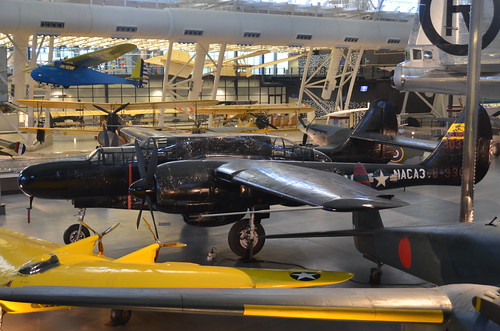
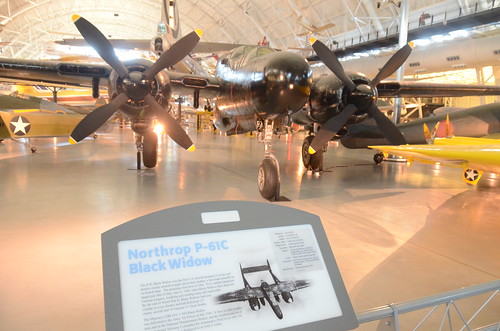
Steven F. Udvar-Hazy Center: Northrop P-61C Black Widow


Image by Chris Devers

Compare & contrast:


Northrop P-61C Black widow:

* Front view

* Above view


Star Wars ARC-170 Fighter:

* Official page

* Wikia

* Wikipedia

* Toy review


I put it to you that they’re the SAME THING.


* twin engines

* double-cockpit in front

* gunner’s cockpit in back

* broad wing coming out from the middle


***************


Quoting Smithsonian National Air and Space Museum | Northrop P-61C Black Widow:


The P-61 Black Widow was the first U.S. aircraft designed to locate and destroy enemy aircraft at night and in bad weather, a feat made possible by the use of on-board radar. The prototype first flew in 1942. P-61 combat operations began just after D-Day, June 6, 1944, when Black Widows flew deep into German airspace, bombing and strafing trains and road traffic. Operations in the Pacific began at about the same time. By the end of World War II, Black Widows had seen combat in every theater and had destroyed 127 enemy aircraft and 18 German V-1 buzz bombs.


The Museum’s Black Widow, a P-61C-1-NO, was delivered to the Army Air Forces in July 1945. It participated in cold-weather tests, high-altitude drop tests, and in the National Thunderstorm Project, for which the top turret was removed to make room for thunderstorm monitoring equipment.


Transferred from the United States Air Force.


Manufacturer:
Northrop Aircraft Inc.


Date:

1943


Country of Origin:

United States of America


Dimensions:

Overall: 450 x 1500cm, 10637kg, 2000cm (14ft 9 3/16in. x 49ft 2 9/16in., 23450.3lb., 65ft 7 3/8in.)


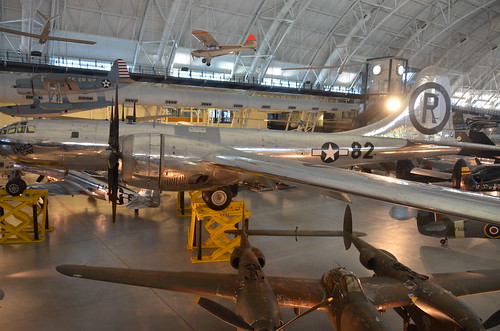
Steven F. Udvar-Hazy Center: Boeing B-29 Superfortress “Enola Gay”, with Lockheed P-38J-10-LO Lightning


Image by Chris Devers

Quoting Smithsonian National Air and Space Museum | Lockheed P-38J-10-LO Lightning :


In the P-38 Lockheed engineer Clarence "Kelly" Johnson and his team of designers created one of the most successful twin-engine fighters ever flown by any nation. From 1942 to 1945, U. S. Army Air Forces pilots flew P-38s over Europe, the Mediterranean, and the Pacific, and from the frozen Aleutian Islands to the sun-baked deserts of North Africa. Lightning pilots in the Pacific theater downed more Japanese aircraft than pilots flying any other Allied warplane.


Maj. Richard I. Bong, America’s leading fighter ace, flew this P-38J-10-LO on April 16, 1945, at Wright Field, Ohio, to evaluate an experimental method of interconnecting the movement of the throttle and propeller control levers. However, his right engine exploded in flight before he could conduct the experiment.


Transferred from the United States Air Force.


Manufacturer:
Lockheed Aircraft Company


Date:

1943


Country of Origin:

United States of America


Dimensions:

Overall: 390 x 1170cm, 6345kg, 1580cm (12ft 9 9/16in. x 38ft 4 5/8in., 13988.2lb., 51ft 10 1/16in.)


Materials:

All-metal


Physical Description:

Twin-tail boom and twin-engine fighter; tricycle landing gear.


• • • • •


Quoting Smithsonian National Air and Space Museum | Boeing B-29 Superfortress "Enola Gay":


Boeing’s B-29 Superfortress was the most sophisticated propeller-driven bomber of World War II and the first bomber to house its crew in pressurized compartments. Although designed to fight in the European theater, the B-29 found its niche on the other side of the globe. In the Pacific, B-29s delivered a variety of aerial weapons: conventional bombs, incendiary bombs, mines, and two nuclear weapons.


On August 6, 1945, this Martin-built B-29-45-MO dropped the first atomic weapon used in combat on Hiroshima, Japan. Three days later, Bockscar (on display at the U.S. Air Force Museum near Dayton, Ohio) dropped a second atomic bomb on Nagasaki, Japan. Enola Gay flew as the advance weather reconnaissance aircraft that day. A third B-29, The Great Artiste, flew as an observation aircraft on both missions.


Transferred from the United States Air Force.


Manufacturer:
Boeing Aircraft Co.
Martin Co., Omaha, Nebr.


Date:

1945


Country of Origin:

United States of America


Dimensions:

Overall: 900 x 3020cm, 32580kg, 4300cm (29ft 6 5/16in. x 99ft 1in., 71825.9lb., 141ft 15/16in.)


Materials:

Polished overall aluminum finish


Physical Description:

Four-engine heavy bomber with semi-monoqoque fuselage and high-aspect ratio wings. Polished aluminum finish overall, standard late-World War II Army Air Forces insignia on wings and aft fuselage and serial number on vertical fin; 509th Composite Group markings painted in black; "Enola Gay" in black, block letters on lower left nose.


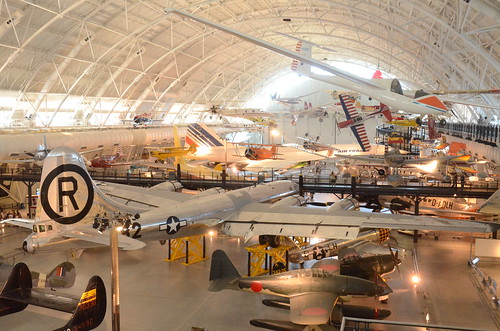
Steven F. Udvar-Hazy Center: View of south hangar, including B-29 Superfortress “Enola Gay”, a glimpse of the Air France Concorde, and many others


Image by Chris Devers

Quoting Smithsonian National Air and Space Museum | Boeing B-29 Superfortress "Enola Gay":


Boeing’s B-29 Superfortress was the most sophisticated propeller-driven bomber of World War II and the first bomber to house its crew in pressurized compartments. Although designed to fight in the European theater, the B-29 found its niche on the other side of the globe. In the Pacific, B-29s delivered a variety of aerial weapons: conventional bombs, incendiary bombs, mines, and two nuclear weapons.


On August 6, 1945, this Martin-built B-29-45-MO dropped the first atomic weapon used in combat on Hiroshima, Japan. Three days later, Bockscar (on display at the U.S. Air Force Museum near Dayton, Ohio) dropped a second atomic bomb on Nagasaki, Japan. Enola Gay flew as the advance weather reconnaissance aircraft that day. A third B-29, The Great Artiste, flew as an observation aircraft on both missions.


Transferred from the United States Air Force.


Manufacturer:
Boeing Aircraft Co.
Martin Co., Omaha, Nebr.


Date:

1945


Country of Origin:

United States of America


Dimensions:

Overall: 900 x 3020cm, 32580kg, 4300cm (29ft 6 5/16in. x 99ft 1in., 71825.9lb., 141ft 15/16in.)


Materials:

Polished overall aluminum finish


Physical Description:

Four-engine heavy bomber with semi-monoqoque fuselage and high-aspect ratio wings. Polished aluminum finish overall, standard late-World War II Army Air Forces insignia on wings and aft fuselage and serial number on vertical fin; 509th Composite Group markings painted in black; "Enola Gay" in black, block letters on lower left nose.


Cool Turned Components Manufacturer images

Friday, July 25, 2014

Thursday, July 24, 2014

Precision Turned Components and The Design Process


Precision Turned Components and The Design Process


When you have selected a company China to work with for purchasing precision turned components China, you need to ensure the company China in question is one of long establishment, and therefore a good track record with previous customers, reliability and professionalism. However, before you go through with your order you need to ascertain that the design you have made is completely up to standard and falls in line with the exact requirements that you have for the job. Maintaining a good standard of product ensures that you retain the client you are working for and continue to provide an excellent quality service for them. This will ascertain that your company China maintains a steady workload and is always wanted by the very best of clients.


The design stage of the process is down to you and your company China completely and should not be left to the company China that you are hiring to produce the precision turned components China that you require. Therefore, if any mistakes are made during the production as a result of the design, the company China you have hired cannot be held responsible for this. As you can tell, it is vitally important that you have any designs thoroughly checked out before sending them on to the company China that you have chosen to complete the work. Also, if you are not completely comfortable with doing the designing yourself, you can always hire an alternative company China to do this for you as well.


You should be very careful when hiring a company China to do this type of work for you due to the high standards the industry guidelines set out. The requirements are extremely precise and always need to be of the utmost in quality and therefore, you need to thoroughly research and verify the previous work of any company China that you are looking to work with on your projects. You will need to look at how long your order will take to complete and also how long their delivery time frame is as this will of course play a part in their service to you as a client. Look into any feedback that is displayed on their website and research the company China in general as best you can in order to ascertain that they are the right company China for you to be placing your orders with. On a final note, always make sure that they can keep up with the workload that you have as this will ensure all of your future orders for precision turned components China can be met.


Precision turned components China and the design stage with Apt Leicester! – http://aptleicester.co.uk/


Find More Precision Turning China Articles


Precision Turned Components and The Design Process

Tuesday, July 22, 2014

Cool Precision Turned Components images

Check out these precision turned components China images:


Steven F. Udvar-Hazy Center: Northrop P-61C Black Widow


Image by Chris Devers

Compare & contrast:


Northrop P-61C Black widow:

* Front view

* Above view


Star Wars ARC-170 Fighter:

* Official page

* Wikia

* Wikipedia

* Toy review


I put it to you that they’re the SAME THING.


* twin engines

* double-cockpit in front

* gunner’s cockpit in back

* broad wing coming out from the middle


• • • • •


See more photos of this, and the Wikipedia article.


Details, quoting from Smithsonian National Air and Space Museum: Steven F. Udvar-Hazy | Northrop P-61C Black Widow:


The P-61 Black Widow was the first U.S. aircraft designed to locate and destroy enemy aircraft at night and in bad weather, a feat made possible by the use of on-board radar. The prototype first flew in 1942. P-61 combat operations began just after D-Day, June 6, 1944, when Black Widows flew deep into German airspace, bombing and strafing trains and road traffic. Operations in the Pacific began at about the same time. By the end of World War II, Black Widows had seen combat in every theater and had destroyed 127 enemy aircraft and 18 German V-1 buzz bombs.


The Museum’s Black Widow, a P-61C-1-NO, was delivered to the Army Air Forces in July 1945. It participated in cold-weather tests, high-altitude drop tests, and in the National Thunderstorm Project, for which the top turret was removed to make room for thunderstorm monitoring equipment.


Transferred from the United States Air Force.


Manufacturer:
Northrop Aircraft Inc.


Date:

1943


Country of Origin:

United States of America


Dimensions:

Overall: 450 x 1500cm, 10637kg, 2000cm (14ft 9 3/16in. x 49ft 2 9/16in., 23450.3lb., 65ft 7 3/8in.)


Long Description:

The P-61 Black Widow was the first United States aircraft designed from the start to find and destroy other aircraft at night and in bad weather. It served in combat for only the final year of World War II but flew in the European, Mediterranean, Pacific, and China-Burma-India theaters. Black Widow crews destroyed 127 enemy aircraft and 18 robot V-1 buzz bombs.


Jack Northrop’s big fighter was born during the dark days of the Battle of Britain and the London Blitz in 1940. British successes against German daylight bombers forced the Luftwaffe (German Air Force) to shift to night bombing. By the time Royal Air Force (RAF) Spitfires could launch, climb out, and then try to intercept these raids, the bombers crews had usually dropped their loads and turned for home. An aircraft was needed to patrol the skies over England for up to seven hours during the night, and then follow radar vectors to attack German aircraft before they reached their target. U.S. Army Air Corps officers noted this requirement and decided that America must have a night fighter if and when it entered the war.


The Army awarded a contract to Northrop on January 30, 1941. The resulting design featured twin tail booms and rudders for stability when the aircraft closed in behind an intruder. It was a large aircraft with a big fuel load and two powerful engines. Armament evolved into four 20 mm cannons mounted in the belly firing forward and a powered, remote-controlled turret on top of the center fuselage equipped with four .50 cal. machine guns. The three-man crew consisted of the pilot, a gunner seated behind him, and a radar observer/gunner at the rear behind the gun turret. Only the pilot could fire the cannons but any of the three could operate the machine guns.


Simultaneously, work was proceeding, at a laboratory run by the Massachusetts Institute of Technology, to develop the airborne radar set. The Army tested an early design in a Douglas B-18 in 1941. The much-improved SCR-520 set was ready by early 1942. Meanwhile, Army enthusiasm for the XP-61 produced another contract on March 10, 1941, for 13 service-test YP-61s. Even before these airplanes flew, Northrop received orders for 410 production machines! Northrop test pilot Vance Breeze flew the aircraft on May 26, 1942. Although the Black Widow was nearly as large as a medium bomber, it was a true fighter. The only prohibited flight maneuvers were outside loops, sustained inverted flight, and deliberate spins.


As Northrop advanced the design toward production, supply problems arose and modifications became necessary. The 4-gun top turret was the same type fitted to the top forward position on the Boeing B-29 Superfortress (see NASM collection) and that bomber had production priority over the P-61. As a result, several hundred P-61s did not have this turret. Those that did experienced buffeting when the turret was traversed from side to side and a fix took time. By October 1943, the first P-61s were coming off the line. Training started immediately, and the first night fighters arrived in the European Theater by March 1944. Combat operations began just after D-Day (June 6) and the Black Widows quickly departed from their original role as defensive interceptors and became aggressors. They flew deep into German airspace, bombing and strafing trains and road traffic and making travel difficult for the enemy by day and at night.


P-61s arrived in the Pacific Theater at about the same time as the European Black Widows. For years, the Japanese had operated lone bombers over Allied targets at night and now U. S. fighters could locate and attack them. However, on June 30, 1944, a Mitsubishi BETTY (see NASM collection) became the first P-61 kill in the Pacific. Soon, Black Widows controlled the night skies. On the night of August 14-15, a P-61 named "Lady in the Dark" by her crew encountered an intruding Nakajima Ki-43 Hayabusa (Peregrine Falcon) OSCAR (see NASM collection) and eventually forced it into the sea without firing a shot. Although the war was officially over, no one was sure that all of the Japanese had heard the message and stopped fighting. The American night fighters flew again the next night and "Lady in the Dark" again found a target. It was a Nakajima Ki-44 Shoki (Demon) TOJO and the fighters maneuvered wildly as they attempted to gain an advantage. The P-61 crew lost and reacquired the Ki-44 several times then finally lost it for good and returned to base. The next day ground troops found the wrecked TOJO. In the darkness, Lady in the Dark’s crew had forced the Japanese pilot to fly into the ground, again without firing a shot.


With the war over, the Army cancelled further production. Northrop had built 706 aircraft including 36 with a highly modified center fuselage. These F-15As (later redesignated RF-61C) mounted a number of cameras in the nose and proved able reconnaissance platforms. Many of these airplanes participated in the first good aerial photographic survey of the Pacific islands. A few, plus some special purpose P-61s, stayed in active service until 1950.


NASM’s Black Widow is a P-61C-1-NO, U.S. Army Air Forces serial number 43-8330. Northrop delivered it to the Army on July 28, 1945. By October 18, this P-61 was flying at Ladd Field, Alaska, in cold weather tests and it remained there until March 30, 1946. This airplane later moved to Pinecastle Air Force Base, Florida, for participation in the National Thunderstorm Project. The project’s goal was to learn more about thunderstorms and to use this knowledge to better protect civil and military airplanes that operated near them. The U. S. Weather Bureau and the National Advisory Committee for Aeronautics (NACA) undertook the study with cooperation from the Army Air Forces and Navy. With its radar and particular flight characteristics, the P-61 was capable of finding the most turbulent regions of a storm, penetrating them, and returning crew and instruments intact for detailed study.


Pinecastle personnel removed the guns and turret from 43-8330 in July 1946 to make room for new equipment. In September, the aircraft moved to Clinton County Army Air Base, Ohio, where it remained until January 1948. The Air Force then assigned the aircraft to the Flight Test Division at Wright-Patterson Air Force Base, Ohio. After declaring the airplane surplus in 1950, the Air Force stored it at Park Ridge, Illinois, on October 3 along with important aircraft destined for the National Air Museum.


But 43-8830 was not done flying. NACA asked the Smithsonian to lend them the aircraft for use in another special program. The committee wanted to investigate how aerodynamic shapes behaved when dropped from high altitude. The Black Widow arrived at the Ames Aeronautical Laboratory, Naval Air Station Moffett Field, California, on February 14, 1951. NACA returned the aircraft and delivered it to the Smithsonian at Andrews Air Force Base, Maryland, on August 10, 1954. When the engines shut down for the last time, this P-61 had accumulated only 530 total flight hours. Smithsonian personnel trucked it to the Paul Garber Facility in Suitland, Maryland. In 2006, the aircraft was preserved and assembled at the Udvar-Hazy Center. The three different paint schemes from its past service life have been revealed by carefully removing individual layers of paint.


Cool Precision Turned Components images

Friday, July 18, 2014

Lastest Turned Parts News

Ottawa Citizen week in photos, July 12 to 18, 2014

The biggest crowds, more than 25,000 strong, turned out for a country bash with superstar Blake Shelton on opening night, a confetti carnival with pop diva Lady Gaga on July 5 and Snoop Dogg"s rap smokeout on July 12. ….. The tour to promote last …
Read more on Ottawa Citizen


Wrap up tight, big freeze coming

On Thursday morning, rain which turned to black ice and a light dusting of snow which turned to slush closed SH5 between Napier and Taupo for about an hour. While there was no snow forecast at this stage, New Zealand Transport Agency spokesman …
Read more on Hawke’s Bay Today


Lastest Turned Parts News

Nice Precision Turned Parts photos

Check out these precision turned parts China images:


Three Jaw Chuck


Image by tudedude

Part of the Cleaning chucks series


Further details and text available on my website:


www.tudedude.co.uk/workshop/Lathe/3 Jaw Chuck.html


Three Jaw Chuck


Image by tudedude

Part of the Cleaning chucks series


Further details and text available on my website:


www.tudedude.co.uk/workshop/Lathe/3 Jaw Chuck.html


Three Jaw Chuck


Image by tudedude

Part of the Cleaning chucks series


Further details and text available on my website:


www.tudedude.co.uk/workshop/Lathe/3 Jaw Chuck.html


Nice Precision Turned Parts photos

Cool Turned Components Manufacturer images

Check out these turned components China manufacturer images:


Messerschmitt KR200


Image by pedrosimoes7

MotorClássico, Lisbon, Portugal


in Wikipedia


The Messerschmitt KR200, or Kabinenroller (Cabin Scooter), was a three-wheeled bubble car designed by the aircraft engineer Fritz Fend and produced in the factory of the German aircraft manufacturer Messerschmitt from 1955 to 1964.


Messerschmitt, temporarily not allowed to manufacture aircraft, had turned its resources to producing other commodities. In 1952, Fend approached Messerschmitt with the idea of manufacturing small motor vehicles.These were based on his Fend Flitzer invalid carriage.


The first of Fend’s vehicles to enter production at Messerschmitt’s Regensburg factory was the KR175. The title Kabinenroller means "scooter with cabin". While the Messerschmitt name and insignia were used on the car, a separate company, incorporated as Regensburger Stahl- und Metallbau GmbH, was created to manufacture and market the vehicle.


The KR200 replaced the KR175 in 1955. While using the same basic frame as the KR175 with changes to the bodywork (notably including wheel cutouts in the front fenders) and an improved canopy design,the KR200 was otherwise an almost total redesign. The rear suspension and engine mounting were reworked, and hydraulic shock absorbers were installed at all three wheels. Tire sizes were enlarged to 4.00×8.


Retailing for around DM 2,500, the KR200 was considered an instant success with almost 12,000 built during its first year. A maximum speed in excess of 90 km/h (56 mph)[8] despite a claimed power output of only 10 PS (7.4 kW; 9.9 hp) reflected the vehicle’s light weight.


In 1956, Messerschmitt was allowed to manufacture aircraft again and lost interest in Fend’s microcars. Messerschmitt sold the Regenburg works to Fend who, with brake and hub supplier Valentin Knott, formed Fahrzeug- und Maschinenbau GmbH Regensburg (FMR) to continue production of the KR200 and his other vehicles.


In 1957, the KR200 Kabrio model was released, featuring a cloth convertible top and fixed side window frames. This was followed by the KR201 Roadster without window frames, using a folding cloth top, a windscreen, and removable side curtains. A Sport Roadster was later offered with no top and with the canopy fixed into place so that the driver would have to climb in and out at the top of the car.


Production of the KR200 was heavily reduced in 1962 and ceased in 1964 as sales had been dropping for a few years. The demand for basic economy transport in Germany had diminished as the German economy boomed. A similar situation developed in other parts of Europe such as in the manufacturer’s biggest export destination, the United Kingdom, where sales were particularly affected by the increasing popularity of the Mini.

24-hour record run.


In 1955, in order to prove the KR200′s durability, Messerschmitt prepared a KR200 to break the 24-hour speed record for three-wheeled vehicles under 250 cc (15.3 cu in). The record car had a special single-seat low-drag body and a highly modified engine, but the suspension, steering, and braking components were stock. Throttle, brake, and clutch cables were duplicated. The record car was run at the Hockenheimring for 24 hours and broke 22 international speed records in its class, including the 24-hour speed record, which it set at 103 km/h (64 mph)

Messerschmitt Service Car.


Messerschmitt, and subsequently FMR, made factory-converted Service Cars to order for the automobile service industry. Similar in concept to the Harley-Davidson Servi-Car and the Indian Dispatch Tow, the Service Car had a detachable tow bar and clamp, a revised front suspension to accommodate the tow bar when in use, and a storage system inside the car to accommodate the tow bar when not in use. The service technician would drive the Service Car to the customer’s car and, if the customer’s car was drivable, attach the tow bar to the front of the Service Car, clamp the other end of the tow bar to the bumper of the customer’s car, and drive the customer’s car to the garage. When the service was complete, he would drive the car back to the customer while towing the Service Car, detach the Service Car from the customer’s car, and drive back to the garage. Approximately 12 were built; only one is known to exist at present.


Features


The KR200 incorporated several features unique to the KR line and its four-wheeled derivative, the FMR Tg500. Externally, the narrow body, the transparent acrylic bubble canopy and low stance were among the more obvious features.

Tandem seating


The narrow body, and corresponding low frontal area, was achieved with tandem seating, which also allowed the body to taper like an aircraft fuselage, within a practical length. 10 PS (7.4 kW; 9.9 hp) propelled the KR200 to around 105 km/h (65 mph). The consumption of the car was 87 mpg-imp (3.2 L/100 km).

The tandem seating also centralized the mass of the car along the longitudinal axis which, combined with the low center of gravity, low weight, and wheel placement at the vehicle’s extremes, gave the KR200 good handling characteristics. A more minor advantage of tandem seating was that it made an export version to countries that drive on the left unnecessary. An "Export" model was built, but this denoted a more luxurious trim level.


Bubble canopy


Messerschmitt Kabinenroller with Yılmaz Onay and Erol Keskin in Turkey. 1968

Entry to most KR models except the KR201 Sport Roadster and a corresponding Tg500 version was through a canopy door hinged on the right side of the vehicle. The door included all the windows (windshield, window frames on all but the Roadster models, folding top on Roadster and Kabrio models, and acrylic bubble on other versions) and the frame in which it was set, extending from the right side of the monocoque tub to the left. On Sport Roadster models, the canopy was fixed and there was neither a top nor any windows at all, only a tonneau cover.


KR200 Kabrio; the folding top replaces the bubble in this version.

The bubble top on the KR200 was simplified over that of the KR175 by the use of a larger curved glass windshield that formed A-pillars with the side window frames. This allowed the bubble to be simpler and more compact than the KR175 bubble, and it was consequently easier and less expensive to produce. The windshield wiper, manual on the KR175, was electric on the KR200.


Engine and transmission


The KR200 ran on a 191 cc (11.7 cu in) Fichtel & Sachs air-cooled single cylinder two-stroke engine positioned in front of the rear wheel, just behind the passenger’s seat. The engine had two sets of contact breaker points and, to reverse, the engine was stopped and then restarted, going backwards. This was effected by pushing the key further in the ignition switch than normal, whether intentionally or not. One result of this was that the KR200′s sequential, positive-stop transmission provided the car with the same four gear ratios available in reverse as in forward movement.


Controls


Instruments and controls of a KR201 Roadster

Apart from the dual-mode ignition, the KR200 had a steering bar reminiscent of that of an aircraft. Operated by pushing rather than by turning,[clarification needed] the steering bar was connected directly to the track rods of the front wheels, providing an extremely direct response best suited to small, measured inputs.[4][14] The gearshift lever had a secondary lever on it which, when actuated, would put the car in neutral regardless of what gear it had been in before, although the transmission would have to be shifted back to first before the car would be able to move from a standstill.


Unlike the KR175, the KR200 had a full set of pedals: clutch, brake, and accelerator. The brake pedal still operated mechanical brakes using cables.


Legacy


This section does not cite any references or sources. Please help improve this section by adding citations to reliable sources. Unsourced material may be challenged and removed. (August 2010)

There are car clubs in Europe, the US, and elsewhere[where?] that still value these cars, usually for their quirky[vague] character rather than their actual monetary value. Nonetheless, some collectors[who?] will pay over €20,000 for a well-maintained "Schmitt".


Aftermarket reproduction parts are made for the KR200,[by whom?] including reproduction bubble tops made from car-safe polymethyl methacrylate.


Hotchkiss 864 (1937)


Image by pedrosimoes7

Cascais, Portugal


in Wikipedia


Hotchkiss cars were made between 1903 and 1955 by the French company Hotchkiss et Cie in Saint-Denis, Paris. The badge for the marque showed a pair of crossed cannons, evoking the company’s history as an arms manufacturer.


The company’s first entry into car making came from orders for engine components such as crankshafts which were supplied to Panhard et Levassor, De Dion-Bouton and other pioneering companies and in 1903 they went on to make complete engines. Encouraged by two major car distributors, Mann and Overton of London and Fournier of Paris, Hotchkiss decided to start making their own range of cars and purchased a Mercedes Simplex for inspiration and Georges Terasse, previously of Mors, was taken on as designer.


Early cars


The first Hotchkiss car, a 17 CV four-cylinder model, appeared in 1903. The engine of the 20 CV type C was heavily based on the Mercedes Simplex except that wherever possible it used ball bearings rather than plain ones (including the crankshaft) and except the Hotchkiss drive. Six-cylinder models, the types L and O followed in 1907.

The ball bearing engines lasted until the 30CV type X of 1910. In that same year Hotchkiss moved into a smaller car market with the 2212cc type Z.

With the outbreak of World War I, the factory turned to war production and a subsidiary plant was opened in Coventry, England. Car production resumed in France 1919 with the pre war types AD, AD6, AF and AG.


Inter war production


After an attempt to enter the luxury market with the AK, which did not get beyond the prototype stage, the company decided on a one model policy and introduced the Coventry designed AM in 1923. Later that year the Coventry plant was sold to Morris. Henry Ainsworth (1884–1971) and A.H. Wilde who had run it, moved to Paris to become general manager and chief engineer of the car division respectively.


In 1926 construction of the new factory in the Boulevard Ornano was completed and Hotchkiss bought a steel pressing company allowing in-house manufacture of bodies. The one model policy lasted until 1929 when the six-cylinder AM73 and AM80 models were announced.


The AM models were replaced by a new range in 1933 with a new naming system. The 411 was an 11CV model with four-cylinder engine, the 413 a 13CV four and the 615, 617 and 620 were similar six-cylinder types. The 1936 686, which replaced the 620, was available as the high-performance Grand Sport and 1937 Paris-Nice with twin carburettors and these allowed Hotchkiss to win the Monte Carlo Rally in 1932, 1933, 1934, 1939, 1949 and 1950.


Second World War


The armament side of the company and the body stamping plant were nationalised in 1936 by the Front Populaire government. The car company in 1937 took over Amilcar. With re-armament speeding up they also started making military vehicles and light tanks. When France declared war, in September 1939, Hotchkiss were sitting on a army order for 1,900 H35 and H39 tanks powered by six-cylinder motors of respectively 3.5 and 6 litres capacity, and at the time of the German invasion in May 1940 they were still working through the order.[1] However, as the military situation deteriorated the decision was taken, on 20 May 1940, to abandon the Saint-Denis plant which by now was fully concentrated on war production.[1] There was a disorderly evacuation, initially towards Auxerre and then Moulins and then further towards the south, as employees desperately tried to keep information on the military production out of the hands of the Germans.[1] However, the national capitulation implicit in the signing of the armistice on 22 June left these efforts looking somewhat irrelevant, and most of the employees drifted back in the ensuing weeks.[1] Two exceptions were the Commercial Director, Jacques Jacobsen and the English born General Director, Henry Ainsworth, both of whom managed to avoid capture and to leave France.[1] During the war, like many businesses in the occupied (northern) zone, the company was obliged to work for the occupiers and was engaged in the repair of military vehicles.[1]

In 1941 François Lehideux, then a leading member of the government’s economic team, called Jean-Pierre Peugeot and his General Director Maurice Jordan to a meeting, and invited them to study the possibility of taking a controlling share in the Hotchkiss business.[1] The suggestion from Lehideux derived from a German law dated 18 October 1940 authorising the confiscation of businesses controlled by Jews.[1] The Peugeot business itself had been operating, grugingly, under overall German control since the summer of 1940. In any event, in July 1942 Peugeot took a controlling share in the Hotchkiss business and towards the end of 1942 the names of Peugeot and Jordan were listed as members of the Hotchkiss board.[1] There is no evidence of any attempt to combine the operations of the two businesses, however: after the war Peugeot would relinquish their holding in Hotchkiss.

With liberation in 1944, Ainsworth returned and production restarted in 1946 with the pre-war cars, a light truck and a tractor.


Post war models


1955 Hotchkiss Anjou

After the war, car production resumed only slowly with fewer than 100 cars produced in each of 1946 and 1947, but by 1948 things were moving a little more rapidly with 460 Hotchkiss cars produced that year.[2] This volume of output was wholly insufficient to carry the company, although truck production was a little more successful with more than 2,300 produced in 1948,[2] and it was support from the truck volumes and from the Jeep based M201 that enabled the company to stagger on as a car producer slightly more convincingly than some of France’s other luxury car makers, at least until the mid 1950s. The cars that represented the business in the second half of the 1940s were essentially the company’s prewar designs. The 2,312 cc four-cylinder car was now branded as the Hotchkiss 864 while the six-cylinder car was badged as the Hotchkiss 680 with a 3,016 cc engine or as the Hotchkiss 686 with the 3,485 cc engine.[2]

The automobile range was modernised in 1950 and a new car, the four-door saloon Anjou, was available on the 1350 (renamed from the 486) and 2050 (686) chassis. The Anthéor cabriolet was added in 1952. In 1948 Hotchkiss had bought the rights to the Grégoire front-wheel-drive car and this car entered production in 1951 but was expensive. Sales in general were falling and in 1950 Ainsworth retired. The Peugeot family sold their interest in the company. Coupé and cabriolet versions of the Hotchkiss-Grégoire were announced in 1951, but sales did not improve, and production stopped in 1952 after only 247 were made.


Merger and closure


Hotchkiss merged with Delahaye in 1954 to become Société Hotchkiss-Delahaye, but car production stopped in 1955 to be replaced by licence built Jeeps. In 1956 the company was taken over by Brandt, a household appliance maker, to become Hotchkiss-Brandt, who were again taken over in 1966 by Thomson-Houston. Military vehicles were made until 1967 and trucks until 1971.

[edit]


Cool Turned Components Manufacturer images

Wednesday, July 16, 2014

Cool Machine Chinad Turned Parts images

A few nice machined turned parts China images I found:


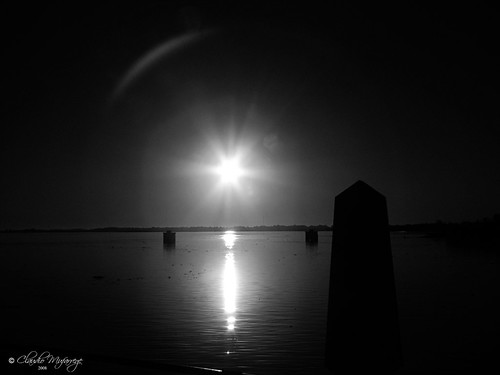
The Sentinel / El Centinela


Image by Claudio.Ar

Listen / Escucha "Sentinel" by/por Mike Oldfield


Para mi hermano del alma / For my soul brother Juli Modul (Juli Morató Torres).


"Cuando nuestro mundo alcanzó la mitad de su edad actual, algo que venía de las estrellas pasó a través del Sistema Solar, dejó aquella huella de su paso, y prosiguió su camino. Hasta que nosotros la destruimos, aquella máquina cumplió su cometido. Y empiezo a intuir cuál era.


Alrededor de cien mil millones de estrellas giran en el círculo de la Vía Láctea, y, hace mucho tiempo, otras razas de los mundos pertenecientes a otros soles deben de haber alcanzado y superado el estadio en el que ahora nos hallamos nosotros. Piensen en una tal civilización, muy lejana en el tiempo, cuando la Creación era aún tibia, dueña de un universo tan joven que la vida había surgido tan sólo en una infinitésima parte de mundos. La soledad de aquel mundo es algo imposible de imaginar, la soledad de los dioses que miran a través del infinito y no hallan a nadie con quien compartir sus pensamientos.


Deben de haber explorado las galaxias como nosotros exploramos los mundos. Por todos lados había mundos, pero estaban vacíos, o a lo sumo poblados de cosas que se arrastraban y eran incapaces de pensar. Así debía de ser nuestra Tierra, con el humo de los volcanes ofuscando aún el cielo, cuando la primera nave de los pueblos del alba surgió de los abismos más allá de Plutón. Rebasó los planetas exteriores apresados por el hielo, sabiendo que la vida no podía formar parte de sus destinos. Alcanzó y se detuvo en los planetas interiores, que se calentaban al fuego del Sol, esperando a que comenzara su historia.


Aquellos exploradores deben de haber observado la Tierra, sobrevolando la estrecha franja entre los hielos y el fuego, llegando a la conclusión de que aquél debía de ser el hijo predilecto del Sol. Allí, en un remoto futuro, surgiría la inteligencia; pero ante ellos quedaban aún innumerables estrellas, y nunca regresarían por aquel mismo camino.


Así pues, dejaron un centinela, uno de los millones que deben de existir esparcidos por todo el universo, vigilando los mundos en los cuales vibra la promesa de la vida. Era un faro que, a través de todas las edades, señalaba pacientemente que aún nadie lo había descubierto.


Quizás ahora comprendan por qué la pirámide de cristal fue instalada en la Luna y no en la Tierra. A sus creadores no les importaban las razas que luchaban aún por salir del salvajismo. Nuestra civilización les podía interesar tan sólo si dábamos prueba de nuestra capacidad de supervivencia, lanzándonos al espacio y escapando así de la Tierra, nuestra cuna. Este es el desafío que, antes o después, se plantea a todas las razas inteligentes. Es un desafío doble, porque depende de la conquista de la energía atómica y de la decisiva elección entre la vida y la muerte.


Una vez superado este punto crítico, era tan sólo cuestión de tiempo que descubriéramos la pirámide, y la forzásemos para ver lo que había dentro. Ahora ya no emite ninguna señal, y aquellos encargados de su escucha deben de haber vuelto su atención hacia la Tierra. Quizás acudan a ayudar a nuestra civilización, aún en su infancia. Pero deben de ser viejos, muy viejos, y a menudo los viejos son morbosamente celosos de los jóvenes.


Ahora ya no puedo mirar la Vía Láctea sin preguntarme de cuál de esas nebulosas estelares están acudiendo los emisarios. Si me permiten hacer una comparación bastante vulgar, hemos tirado del aparato de alarma, y ahora no podemos hacer otra cosa más que esperar.


No creo que tengamos que esperar mucho."


Fragmento del cuento "El Centinela", Arthur C. Clarke, 1957


"When our world was half its present age, something from the stars swept through the Solar System, left this token of its passage, and went again upon its way. Until we destroyed it, that machine was still fulfilling the purpose of its builders; and as to that purpose, here is my guess.


Nearly a hundred thousand million stars are turning in the circle of the Milky Way, and long ago other races on the worlds of other suns must have scaled and passed the heights that we have reached. Think of such civilizations, far back in time against the fading afterglow of Creation, masters of a universe so young that life as yet had come only to a handful of worlds. Theirs would have been a loneliness we cannot imagine, the loneliness of gods looking out across infinity and finding none to share their thoughts.


They must have searched the star-clusters as we have searched the planets. Everywhere there would be worlds, but they would be empty or peopled with crawling, mindless things. Such was our own Earth, the smoke of the great volcanoes still staining the skies, when that first ship of the peoples of the dawn came sliding in from the abyss beyond Pluto. It passed the frozen outer worlds, knowing that life could play no part in their destinies. It came to rest among the inner planets, warming

themselves around the fire of the Sun and waiting for their stories to begin.


Those wanderers must have looked on Earth, circling safely in the narrow zone between fire and ice, and must have guessed that it was the favorite of the Sun’s children. Here, in the distant future, would be intelligence; but there were countless stars before -them still, and they might never come this way again.


So they left a sentinel, one of millions they have scattered throughout the Universe, watching over all worlds with the promise of life. It was a beacon that down the ages has been patiently signaling the fact that no one had discovered it.


Perhaps you understand now why that crystal pyramid was set upon the Moon instead of on the Earth. Its builders were not concerned with races still struggling up from savagery. They would be interested in our civilization only if we proved our fitness to survive -by crossing space and so escaping from the Earth, our cradle. That is the challenge that all intelligent races must meet, sooner or later. It is a double challenge, for it depends in turn upon the conquest of atomic energy and the last choice between life and death.


Once we had passed that crisis, it was only a matter of time before we found the pyramid and forced it open. Now its signals have ceased, and those whose duty it is will be turning their minds upon Earth. Perhaps they wish to help our infant civilization. But they must be very, very old, and the old are often insanely jealous of the young.


I can never look now at the Milky Way without wondering from which of those banked clouds of stars the emissaries are coming. If you will pardon so commonplace a simile, we have set off the fire-alarm and have nothing to do but to wait.


I do not think we will have to wait for long."


Fragment of the short story "The Sentinel", Arthur C. Clarke, 1957


Recommended View On Black, large – Recomendado Ver en Fondo Negro, grande


Most recent photos in black – Mis fotos más recientes en negro


Pad Prep


Image by jurvetson

Tom and the rest of the "rocket pit crew" helped me get it on the rail. (photo by oddwick)


It’s my heaviest rocket project so far. I fiber-glassed the body, added a flight computer up in the nose cone, epoxy-coated the fins, and filled the remaining free space in the nose and tail cones with expanding two-part foam.


I like the sleek shape and symmetry of the design. In the early days of rocketry, I wonder if the comic books were the design inspiration. It turns out that this shape and weight distribution is unstable, and so I epoxied two pounds of lead buck shot into the tip of the nose cone to keep it from spiraling out of control.


Here I am adjusting the angle to tilt slightly into the wind (to reduce the recovery hike distance).


I have already armed the on-board computer which will detonate 5 grams of black powder to pop a large parachute when it detects apogee (it has barometric and tilt sensors and an accelerometer; it also logs flight data for later PC download). The motor also has an ejection charge that will detonate 14 seconds after launch as a redundant precaution.


The last step will be to thread the electric igniter up through the center of the solid-AP Aerotech K550 motor. After clipping to the 12V power supply and a continuity test, she is ready to fly.


We are go flight.


Walking the Dogs (Explored)


Image by Douglas Brown

In Far North Bicentennial Park outside Anchorage, Alaska, there is a no-leash area for dogs. This is not simply a "city dog park," this is a huge tract of wilderness where there are no leash requirements.


This wise policy really helps with the multi-user problems we have recreating in the out of doors in Alaska around Anchorage. (Not much of a problem anywhere else in Alaska!). In the Winter, people flock to the outdoors to Ski, Snow Machine China, Cross-Country Ski, Skijoring (where one or two dogs pull you on your skis), Ice Skating and Ice Fishing on frozen lakes, serious Dog Sledding with huge dog teams coming down the trail, winter Bicyclists, Hikers, Dog Walkers, and Nature and Wildlife Photographers!


This is pretty much what people do here in the Winter in the snow and ice in Parks. I’m leaving out people who climb up the face of frozen waterfalls because I think they are nuts! :)


But many of these outdoor activities conflict with dogs running free on the trails and in the Parks. Therefore, we have leash laws. Mostly ignored and seldom enforced, it basically turns out to be an exercise in good judgement on the dog owner’s part. Like when you hear a musher yelling at his or her team at the top of their lungs (BTW, there are a lot of women mushers in Alaska!) and the sound of 12 loudly barking dogs coming from around the corner ahead of you, it’s best to get your dog under control and off the trail as soon as possible…!!!!


Well, this wonderful, large, pristine wilderness that’s dedicated to dogs being off leash is really a safe haven for dogs and makes being out with them off-lead far more relaxed. Especially in the Winter when there are no bears around.


In the non-Winter times, there is an obvious risk to letting your dog run free in the Wilderness. About three Summers ago in this area, we came upon a huge Grizzly Bear eating a Moose kill and it took us about one nanosecond to offer him our congratulations on his fine meal, and quietly disappear backwards! :)


Happy New Year!


Cool Machine Chinad Turned Parts images

Cool Turned Parts Manufacturers images

Some cool turned parts China manufacturers images:


Classic


Image by Billy Wilson Photography

© Billy Wilson 2010


A manipulation of an 1937 Oldsmobile sedan.


About the Photo

*Camera: Canon EOS Digital Rebel XS *Lens: EF-S 18-55mm ƒ/3.5-5.6 IS *Shutter Speed: 1/100 Sec. *Aperture Value: ƒ/5.6 *ISO: 100 *Focal Length: 33mm (52.8mm Equivalent in 35mm Film)


At the top of the comments is a comparison of the original image beside the edited one. I wanted to take a snap shot like image and make it look like a commercial image that might have been shot in a studio. I also wanted to modify the car to my liking. I was inspired by higher end automobile manufacturers in the editing like those from Duesenberg, Bugatti, and Cadillac. In total this image took three days of editing to produce, there are a few errors in perspective and some lines aren’t perfect, but this is my first try at such an extreme edit.


To make the car appear higher end I distorted the wheelbase to make it look longer. I made the grill thicker with chrome and added more pieces of chrome below the grill. I changed the wheel arches to make the curves flow a bit more like the 1930′s French cars such as Bugatti, Talbot Lago, and Delahaye. I added a spare tire to the side of the vehicle to keep it in line with the 1930′s touring sedans like Cadillac, Packard, and Duesenberg. I also added some chrome on the rear wheel arch like on some of the bodywork on the 1930′s Duesenbergs. I also added an extra bar above the bumper since the Cadillacs and Duesenbergs of the time had more of everything. I also added a curve in the paint job using the pen tool, to mimic the beautiful paint jobs on some of period’s Duesenbergs.


The hardest part of the edit was removing the reflections and softening the light to make the vehicle appear to be in a studio rather than in a parkinglot. I used the patch healing tool to remove the reflections but maintain the image’s tones, it also aided in reducing the noise in the image since I applied some tone mapping-like effects in ACR. I also had to remove the blue colour of the sky that was reflecting off the car’s paint, I did that using the sponge tool. The chrome still reflects the car’s original location though.


I added diffraction stars to give the viewer a sense of being in moody weather and brightened the headlights to make sure they looked like they were on. I added some beams of light infront of the car to give the impression that the headlights were shining onto something. I added the stonework texture to give the viewer a sense of being at some kind of location, perhaps elegent because of the stonework. I added the rain to go with the turned on headlights and add to the mood of the image. I also used the gradient tool to make the top of the image darker to give the viewer a further impression of bad weather. I also added a drop shadow to make sure the car looks like it is sitting on the stonework. When else to cars look more inviting to enter other than when it is raining?


Amazing Large on Black!


EXPLORED!


1958 Edsel: Lousy Car But Great Planter.
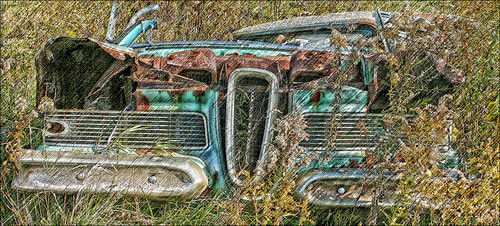

Image by bill barber

Here’s a link to how this same Edsel looked in 1959. I took this picture with my Brownie Hawkeye when I was thirteen.
farm2.static.flickr.com/1286/544933741_8e82112e81.jpg


A bit busy today and tomorrow, but will try to visit everyone’s stream. Thanks for your patience


When my stepfather first met my mother in 1959, he was driving a brand new 1958 Ford Edsel. At that time it was touted as being far ahead of its time. The big feature was the ability of the driver to shift gears by pushing buttons on a touch pad in the centre of the steering wheel.


After a few years the Edsel was abandoned. It had become an embarrassment to Ford. The button shift did not live up to its potential, and was notorious for losing its timing. It sometimes took up to five seconds from the time you pushed a button until the time the transmission shifted, usually with a jolting ‘thunk’. Further, the Edsel was an overly heavy car, even in an age of heavy cars.


I did drive it a fair bit over a ten year period, and it could be scary at times.


Over the years I wondered what happened to it. I couldn’t remember it being traded in. Then, several years ago, I spotted it in the farm yard at my brother, Steve’s, place. it was pretty badly smacked up, and had been used for .22 practice. I always meant to photograph it, but didn’t get a chance until yesterday. It had been towed about fifty feet from where I originally saw it, and the tow had not been kind.


From my set entitled “Steve and Marg’s Farm”
www.flickr.com/photos/21861018@N00/sets/72157608031549391/

In my collection entitled “Places”
www.flickr.com/photos/21861018@N00/collections/7215760074…

In my photostream
www.flickr.com/photos/21861018@N00/


The Story of the Edsel

(taken from Wikipedia, the free encyclopedia)
en.wikipedia.org/wiki/Edsel

The Edsel was a marquee division of Ford Motor Company during the 1958, 1959 and 1960 model years.


In the early 1950s, the Ford Motor Co. became a publicly traded corporation that was no longer entirely owned by members of the Ford family. They were then able to sell cars according to then-current market trends following the sellers’ market of the postwar years. The new management compared the roster of Ford makes with that of General Motors, and noted that Lincoln competed not with Cadillac, but with Oldsmobile. Since Ford had an excess of money on hand from the success of the Ford Thunderbird the plan was developed to move Lincoln upmarket with the Continental at the top, and to add another make to the intermediate slot vacated by Lincoln. Research and development had begun in 1955 under the name "E-car," which stood for "Experimental car." This represented a new division of the firm alongside that of Ford itself and the Lincoln-Mercury division, whose cars at the time shared the same body.


The Edsel was introduced amidst considerable publicity on "E Day"—September 4, 1957. It was promoted by a top-rated television special, The Edsel Show on October 13, but it was not enough to counter the adverse public reaction to the car’s styling and conventional build. For months Ford had been circulating rumours that led consumers to expect an entirely new kind of car when in reality the Edsel shared its bodywork with other Ford models.


The Edsel was to be sold through a new Ford division. It existed from November 1956 until January 1958, after which Edsels were made by the Mercury-Edsel-Lincoln division (referred to as M-E-L). Edsel was sold through a new network of 1,500 dealers. This briefly brought total dealers of all Ford products to 10,000. Ford saw this as a way to come closer to parity with the other two companies of the Big Three: Chrysler had 10,000 dealers and General Motors had 16,000. As soon as it became apparent that the Edsels were not selling, many of these dealers added Lincoln-Mercury, English Ford and/or Taunus dealerships to their lines with the encouragement of Ford Motor Company. Some dealers, however, closed.


For the 1958 model year, Edsel produced four models, including the larger Mercury-based Citation and Corsair, and the smaller Ford-based Pacer and Ranger. The Citation came in two-door and four-door hardtops and two-door convertible versions. The Corsair came in two-door and four-door hardtop versions. The Pacer came in two-door and four-door hardtops, four-door sedan, and two-door convertible. The Ranger came in two-door and four-door hardtop or sedan versions. The four-door Bermuda and Villager wagons and the two-door Roundup wagon were based on the 116" wheelbase Ford station wagon platform and shared the trim and features of the Ranger and Pacer models. It included several innovative features, among which were its "rolling dome" speedometer and its Teletouch transmission shifting system in the center of the steering wheel. Other design innovations included an ergonomically designed controls for the driver, and self-adjusting brakes (often claimed as a first for the industry, although Studebaker had pioneered them earlier in the decade).


In the first year, 63,110 Edsels were sold in the U.S. with another 4,935 sold in Canada. Though below expectations, it was still the second largest car launch for any brand to date, second only to the Plymouth introduction in 1928.


For the 1959 model year, there were only two Edsels: the Ranger and the Corsair. The two larger cars were not produced. The new Corsair came in two-door and four-door hardtops, four-door sedan, and two-door convertible. The Ranger came in two-door and four-door hardtops, two-door and four-door sedans, and the Villager station wagon. In the 1959 model year, 44,891 cars were sold in the U.S., with an additional 2,505 sales in Canada.


For the 1960 model year, Edsel’s last, only the Ranger and Villager were produced. The 1960 Edsel, in its final model year, emerged as a Ford. Its grill, hood, and four taillights, along with its side sweep spears, were the only real differences separating the Edsel from the Ford.


Ford announced the end of the Edsel program on Thursday, November 19, 1959. However, cars continued being produced until late in November, with the final tally at 2,846 1960 models. Total sales were approximately 84,000, less than half McNamara’s projected break-even point. The company lost 0 million on the venture [1].


On Friday, November 20, United Press International’s (UPI) wire service reported that book values for used Edsels had decreased by as much as 0 [approximately 00 in 2006 dollars] (based on condition and age) immediately following the Ford press release. In some newspaper markets, dealers scrambled to renegotiate newspaper advertising contracts involving the 1960 Edsel models, while others dropped the name from their dealership’s advertising "slugs." Ford issued a statement that it would distribute coupons to consumers who purchased 1960 models (and carryover 1959 models) prior to the announcement, valued at 0 to 0 towards the purchase of new Ford products to offset the decreased values. The company also issued credits to dealers for stock unsold or received, following the announcement.


There is no single reason why the Edsel failed, and failed so spectacularly. Popular culture often faults the car’s styling. Consumer Reports cited poor workmanship. Marketing experts hold the Edsel up as a supreme example of corporate America’s failure to understand the nature of the American consumer. Business analysts cite the weak internal support for the product inside Ford’s executive offices. According to author and Edsel scholar Jan Deutsch, the Edsel was "the wrong car at the wrong time."


One popular misconception was that the Edsel was an engineering China failure, or a lemon, although it shared the same general reliability of its sister Mercury and Ford models that were built in the same factories. The Edsel is most famous for being a marketing disaster. Indeed, the name Edsel came to be synonymous with commercial failure, and similar ill-fated products have often been colloquially referred to as Edsels. Since it was such a debacle, it provided a case study for marketers on how not to market a product. The main reason the Edsel’s failure is so famous was that it flopped despite Ford’s investment of 0,000,000 in its development.


The prerelease advertising campaign touted the car as having "…more YOU ideas," and the teaser advertisements in magazines only revealed glimpses of the car through a highly blurred lens or wrapped in paper or under tarps. Edsels were shipped to the dealerships undercover and remained wrapped on the dealer lots.


But the public also had a hard time understanding what the Edsel was, mostly because Ford made the mistake of pricing the Edsel within Mercury’s market price segment. Theoretically, the Edsel was conceived to fit into Ford’s marketing plans as the brand slotted in between Ford and Mercury. However, when the car arrived in 1958, its least expensive model—the Ranger—was priced within of the most expensive and best-trimmed Ford sedan and less than Mercury’s base Medalist model. In its midrange pricing, Edsel’s Pacer and Corsair models were more expensive than their Mercury counterparts. Edsel’s top-of-the-line Citation four door hardtop model was the only model priced to correctly compete with Mercury’s mid-range Montclair Turnpike Cruiser model.


Not only was the Edsel competing against its own sister divisions, but model for model, consumers did not understand what the car was supposed to be—a step up or a step below the Mercury.


After its introduction to the public, the Edsel did not live up to its overblown hype, even though it did have many new features, such as self-adjusting rear brakes and automatic lubrication. While consumer focus groups had said these and other features would make the "E" car attractive to them as car buyers, the cost of the cars outstripped what the public was willing to pay. When many potential buyers saw the base price tag, they simply left the dealership, and others were frightened by the price for a fully loaded, top of the line model.


One of the external forces working against the Edsel that Ford had no control over was the onset of the recession in late 1957.


When the Edsel was in its planning stages in the early and mid-1950s, the American economy was robust and growing. However, in the years that spanned the planning to its introduction, an economic recession hit, and American consumers not only shifted their idea of what an ideal car should be; in prior economic downturns, buyers flocked to the lower price marques like Plymouth, Chevrolet, and Ford. But in 1958, even these cars were perceived by some as unnecessarily large, and while the compact Rambler saw itself shoot to the third best selling make, none of the Big Three had anything compact to sell except their European cars built for Vauxhall, Simca, and Opel. The compacts introduced by the Big Three in 1960 were the direct result of the recession of 1958.


Compounding Edsel’s problems was that the car had to appeal to buyers of other well established nameplates from the Big Three, such as Pontiac, Oldsmobile, Dodge, DeSoto, and even its internal sister division, Mercury — itself never a stellar sales success.


Even if the 1958 recession hadn’t hit when it did, the Edsel was entering into a shrinking marketplace. While Ernest Breech convinced Ford management that this market segment offered great untapped opportunity in the early 1950s, when the "E" car was in its earliest stages, by 1957, independent manufacturers in the mid-price field were drifting towards insolvency. Hoping to turn around their losses, Packard acquired Studebaker, yet the venerable Packard was no longer produced after 1958. On the other hand, American Motors changed its focus to the compact Rambler models, while their pre-merger brands (Nash and Hudson) were discontinued after the 1957 model year. Even Chrysler saw sales of its DeSoto marque drop dramatically from its 1957 high by over 50% in 1958. Following a disastrous 1959 model year, plans were made in Highland Park to discontinue DeSoto during its 1961 model year run.


Thus, the large, expensive Edsel that was planned to be all things to all people suddenly stood for excess, not progress.


The name of the car, Edsel, is also often cited as a further reason for its unpopularity. Naming the vehicle after Edsel Ford was proposed early in its development. However, the Ford family strongly opposed its use, Henry Ford II stating that he didn’t want his father’s good name spinning around on thousands of hubcaps. Ford also ran internal studies to decide on a name and even dispatched employees to stand outside movie theaters to poll audiences as to what their feelings were on several ideas. They reached no conclusions.


Ford hired the advertising firm Foote, Cone and Belding to come up with a name. However, when the advertising agency issued its report, citing over 6,000 possibilities, Ford’s Ernest Breech commented that they had been hired to develop a name, not 6,000. Early favorites for the name brand included Citation, Corsair, Pacer, and Ranger, which were ultimately chosen for the vehicle’s series names.


David Wallace, Manager of Marketing Research, and coworker Bob Young unofficially invited poet Marianne Moore for input and suggestions. Moore’s unorthodox contributions (among them "Utopian Turtletop," "Pastelogram," and "Mongoose Civique") were meant to stir creative thought and were not officially authorized or contractual in nature. History has greatly exaggerated her relationship to the project.

At the behest of Ernest Breech, who was chairing a meeting in the absence of Henry Ford II, the car was finally called "Edsel" in honor of Edsel Ford, former company president and son of Henry Ford. Marketing surveys later found the name was thought to sound like the name of a tractor (Edson) and therefore was unpopular with the public.


Moreover, several consumer studies showed that people associated the name "Edsel" with "weasel" and "dead cell" (dead battery), drawing further unattractive comparisons.


Perhaps the most important factor in the Edsel’s failure, however, was that when the car was introduced, the U.S. was entering a period of recession. Sales for all car manufacturers, even those not introducing new models, were down; consumers entered a period of preferring less expensive, more fuel-efficient automobiles.


Edsels were fast, but required premium gas and did not have the fuel economy desired during a recession. Mechanics disliked the bigger engine because of its unique design. The cylinder head had no combustion chamber and was perfectly flat, with the head set at an angle and "roof" pistons forming both a squish zone on one side and a combustion chamber on the other, meaning that the combustion took place entirely within the cylinder bore. This design reduced the cost of manufacture and possibly carbon buildup, but appeared strange to mechanics.


There were also reports of mechanical flaws in the models originating in the factory, due to lack of quality control and confusion of parts with other Ford models. Edsels in their first (1958) model year were made in both Mercury and Ford factories; the longer wheelbase models, Citation and Corsair, were produced alongside the Mercury products, and the shorter wheelbase models, Pacer and Ranger, were produced alongside the Ford products. There was never a stand-alone Edsel factory devoted solely to Edsel model production; workers making Fords and Mercurys literally had to change parts bins and tools to assemble extra Edsels once their hourly quota of regular Fords and Mercurys was achieved. As such, the desired quality control of the different Edsel models was difficult to attain for the new make of car. Many Edsels left the line unfinished, with the extra parts having been put into the trunks, with assembly instructions for the mechanics at the dealerships.


The Edsel is best remembered for its trademark "horsecollar" grille, which made it stand out from other cars of the period. A widely circulated wisecrack at the time was that "It looked like an Oldsmobile sucking on a lemon." Men often referred to the horsecollar grille as being akin to a woman’s genitalia. In fact, Robin Jones, a Ford designer at the time, later recalled that someone in the design studio – presumably as a cruel joke – actually taped hair to the inside of the grille area on one of the clay models produced during the design process; the end result, according to Jones, "looked like a hormonally-disturbed cow after giving birth."


Jokes aside, the front of the original Edsel turned out nothing like what was originally intended. Roy Brown, the original chief designer on the project, wanted a slender, almost delicate opening in the center; engineers, fearing engine cooling problems, vetoed the intended design, which led to the "horsecollar." The vertical grille theme, while improved for the 1959 models, was discontinued for the 1960 models, which were almost indistinguishable from Ford models of the same year, although the new front-end design bore no small resemblance to that of the 1959 Pontiac.


Many drivers disliked having the automatic transmission as pushbuttons (above) mounted on the steering wheel hub: this was the traditional location of the horn, and drivers ended up shifting gears instead of honking the horn. While the Edsel was fast, the location of the transmission pushbuttons was not conducive to street racing. There were jokes about stoplight dragsters and the buttons: D for Drag, L for Leap, and R for Race (instead of Drive, Low and Reverse).


There were also complaints about the taillights on 1958-model Edsel station wagons, which were boomerang-shaped and placed in a reverse fashion; at a distance, they appeared as arrows pointed in the opposite direction of the turn being made. While the left turn signal blinked, its arrow shape pointed right, and vice versa. However, there was little that could be done to give the Ford-based station wagons a unique appearance from the rear; corporate management insisted that no sheetmetal could be changed. Only the taillights and trim could be touched.


While the car and Ford’s planning of the car are the most often cited reasons for its failure, internal politics within the executive offices at Ford are as much to blame for the failure of the Edsel. Following World War II, Henry Ford II brought on Robert McNamara as one of the "whiz kids" to help turn Ford around. McNamara’s cost cutting China and cost containment skills helped Ford emerge from its near collapse after the war. As such, McNamara eventually assumed a great deal of power at Ford. In many ways, McNamara was very much like Henry Ford: both men were committed to Ford above all other things and had little use for Continental, Lincoln, Mercury, and Edsel brand cars made by the company.


McNamara was against the formation of the separate divisions for Continental, Lincoln, Mercury, and Edsel cars, and moved to consolidate Lincoln, Mercury, and Edsel into the M-E-L division. McNamara saw to it that the Continental program was canceled and that the model was merged into the Lincoln range for 1958. He next set his sights on Edsel by maneuvering for elimination of the dual wheelbases and separate body used in 1958; instead, the Edsel would share the Ford platform and use Ford’s inner body structure for 1959. In 1960, the Edsel emerged as a Ford with different trim. McNamara also moved to reduce Edsel’s advertising budget for 1959, and for 1960, he virtually eliminated it. The final blow came in the fall of 1959, when McNamara convinced Henry Ford II and the management structure that the Edsel was doomed and that it was time to end production before the Edsel bled the company dry. (Note: McNamara also attempted to end the Lincoln nameplate; however, that effort ended with Elwood Engel’s now classic redesign of 1961.) McNamara left Ford when he was named Secretary of Defense by President John F. Kennedy.


During the 1964 presidential election, Republican nominee Barry Goldwater blamed McNamara, then Secretary of Defense, for the Edsel’s failure. Eventually, Ford’s former executive vice president and financial contributor to Goldwater’s campaign Ernest R. Breech wrote the Senator’s campaign explaining that "Mr. McNamara … had nothing to do with the plans for the Edsel car or any part of the program." However, the charge continued to be leveled against McNamara for years. During his time as head of the World Bank he instructed his public affairs officer to distribute copies of Breech’s letter to the press whenever the accusation was made.[2]


The scheduled 1960 Edsel Comet compact car was hastily rebranded the Comet and assigned to Mercury dealerships. The Comet was an instant success, selling more cars in its first year than all models of Edsel produced during its three-year run. Styling touches seen in the Comets sold to the public that allude to being part of the Edsel family of models included the instrument cluster, rear tailfins (though canted diagonally), and the taillight shape (the lens is visually similar to that used on the 1960 Edsel, and even retained the embossed "E" code). The Comet’s keys were even shaped like Edsel keys, with the center bar removed from the "E" to form a "C." For 1962, Ford officially assigned the Comet to the Mercury brand.


As the Edsel was a large commercial failure, the name became a popular joke in various media. A backronym, "Every Day Something Else Leaks", was inspired by the car’s failure. Television programs, cartoons, video games, and films have all used the Edsel as humor, usually as a quick joke or as a sight gag.


In May 1958, then Vice President Richard Nixon was on a trip to Peru, riding in an Edsel convertible, when he was pelted with eggs and tomatoes by demonstrators. Nixon later joked: "They were throwing eggs at the car, not me."[3]


Fifty years after its spectacular failure, Edsel has become a highly collectible item amongst vintage car hobbyists. Fewer than 6,000 Edsels survive and are considered collectors’ items. A mint 1958 Citation convertible sometimes sells for over 0,000,[1] while rare models, like the 1960 convertible, may price up to 0,000. While the design was considered "ugly" fifty years ago, many other car manufacturers, such as Pontiac and Alfa Romeo, have employed similar vertical grille successfully on their car designs.

Many of the Edsel’s features, such as transmission lock on ignition, adjustable brakes, gear selection as steering wheel buttons etc, which were considered "too impractical" in the late 1950s, are today standard features of sports cars.


Post Processing:

Topaz Add-On: Vibrance (HDR)

PhotoShop Elements 5: posterization, rough pastel, accented edges, ink outlines


Cool Turned Parts Manufacturers images

Tuesday, July 15, 2014

Lastest Machine Chinad Turned Parts News

NCTech sees new horizons for panoramic imaging

"We settled on using fixed-focus and fixed-aperture optics in a product with no moving parts to simplify the calibration process, essentially manufacturing China each iSTAR as a bespoke camera machined from solid metal," said Tocher. … The nature of 360 …
Read more on Optics.org


3D Knee

There are a number of injuries that can affect different parts of the knee like the ligaments, cartilage and tendons. An ACL injury occurs when the anterior … Dr. Buch: In the old days if you came in under the age of 60 and your knees are in bad …
Read more on NewsChannel5.com


Alexander Comley, Hydra Offshore sign agreement

… of Hydra Offshore also envisages that the partnership between Alexander Comley and Hydra Offshore will become a major name in Ghana"s Oil and Gas industry and serve as a one-stop-shop for flanges, pipe, tube, fittings, plate, machined/turned parts …
Read more on GhanaWeb


Lastest Machine Chinad Turned Parts News

Monday, July 14, 2014

The World Turned Upside Down

Check out these turning China parts images:


The World Turned Upside Down


Image by just.Luc

X & Y

The land, sea, rivers, trees, the stars, the sky

That and this

We’re part of a bigger plan

Don’t know what it is

Don’t know what it is


You and me

The land, sun, trees, the sky, the stars, the sea

365 Degrees

I am a puzzle, you’re the missing piece

Hang on a minute, just a minute please

I’ll come

And everything under the sun

And everything under the sun


Chorus:

What is this feeling that I can’t explain

And why am I never gonna sleep again

What is this thing I’ve never seen before

A little boy lost in a breaking storm


Hide and sob, and away they fly

To write your name in the summer sky

Life has really only just begun

Life that comes

And everything under the sun


X is Y (why)

The land, sea, rivers, trees, the stars, the sky

365 Degrees

All of the surface and the underneath

Searching your mellow and outsings your key, ah

And everything under the sun

And everything under the sun


What is this feeling that I can’t explain

And why am I never gonna sleep again

What is this thing I’ve never seen before

A little boy lost in a breaking storm


Hide and sob, and away they fly

To write your name in the summer sky

Life has really only just begun

Life that comes

And everything under the sun


And you don’t know that you’ve been born

Can’t see the calm until the storm

Can’t tell your right side from your wrong

Can’t see the wave you’re riding on


(The World Turned Upside Down – Coldplay)


You Turn


Image by gfpeck
PRO84 Elliott Erwitt – Emulation Assignment October 09


Mission:

To emulate the style of Elliott Erwitt, Born Paris 1928.

This will become clearer as you read further and as you study his work. However, at this moment, your task is to find a human, tender, amusing or downright funny moment involving people or animals and to depict it in a way that we are seeing the moment – not the decisive moment – just the snapshot moment where two things came together and the result was the unexpected – a tender human moment – or funny, but always real life and making us appreciate the ‘sense of the ridiculous’ all around us.

He uses juxtaposition of elements not meant to be together, but when they are, we smile.


Of course his work was not always to make us smile or laugh, but I do feel that this is his most self-effacing asset. Through his work, we are part of the end product and can share the ‘indecisive moment’ (as he himself puts it) with him. Elliott Erwitt was not above engineering those moments – in fact, he used to carry a noisy horn to spook dogs into jumping at the moment he took the photo.


But he also saw the potential in many situations. This is where your imagination comes into play. Do you see a Billboard which would be hilarious with (say) horses underneath it? Or even the child carrying a balloon, which looks like a substitute head at different angles? Or like one of Elliott Erwitt’s classics, the woman sitting with a dog on her lap – and it is the dog we see for the top half of her body.


WIT: I took my daughter and niece to the park to play so I could look for EE situations. I had no luck so I decided to use the kids for props. We walked along a trail and I had the girls act out every sign we came to. This was one of their best interpretations. For post processing I cropped the shot square and created two b&w versions (one to work on the sky and trees, and another for the sign and girls) and overlayed them with some layer masking.


I really like Erwitt’s sense of irony and humor, it fits me well. Although there were no particular EE photos that I used for inspiration, I am hoping my submission has his sense of juxtaposition and humor. It was very frustrating not to be able to find other/better examples around town. I think this is one of those things where if you look too hard you wont be able to find it. Just let it happen and hope you have your camera with you.


Color, non-square version


The World Turned Upside Down