Showing posts with label Company. Show all posts

Tuesday, April 26, 2016

Company Profile: Cloud DDM's Lights-Out 3D Printing

Firm Profile: Cloud DDM&#39s Lights-Out 3D Printing

Cloud DDM produces on-demand 3D printed components in an automated “lights-out” factory. Founder and CEO Mitch Free of charge … He acknowledged that subtractive manufacturing or machining is a considerably faster way to make components than additive manufacturing when it comes …
Study much more on Product Design and style & Development


MANUFACTURING: Diversity stabilizes region

“There&#39s still a big gap in between skilled men and women and young folks actually interested in the business,” Scott stated. “I think it&#39s going to stay that way till we adjust the perception.” NMC is doing its part to crank out more skilled workers …
Read much more on Traverse City Record Eagle


15 Jobs That Need a Higher College Diploma Close to West Islip

Precipart. – Farmingdale, NY. Precipart has instant positions accessible for Deburrers to carry out post-machining operations, guaranteeing the functionality of our custom manufactured components. The profitable… PREMIER 3 days ago from Patch.com … Looking …
Read much more on Patch.com

Friday, April 15, 2016

Shenyang company offers world ' s first smart machine tool

Shenyang company provides planet &#39 s very first intelligent machine tool

Shenyang Machine Tool Co Ltd , China &#39 s major manufacturer of numerical controlled machine tools and machinery gear , has launched i5M8, the world &#39 s first integrated smart machine toolmaker . The Monday launch at the ninth China CNC Machine …
Study more on China Day-to-day


Newsmaker Q&ampA: Todd Willman, of The Manufacturers&#39 Association

Following JLG, I worked as head of advertising for the planet&#39s biggest privately-held provider of technical publications, a firm which created parts, service and operator&#39s manuals for numerous international OEMs (original gear companies). … our ongoing …
Study more on Waynesboro Record Herald

Wednesday, September 3, 2014

Chicagoland Machining Company, Machine Shop


ISO certified, RAB accredited, precision CNC machining solutions. Chicago machine shop operating 24 hours a day offering grinding, milling, cutting, turning, …


TEK Industries, Inc. is a 6000 square foot machine shop that utilizes state-of-the-art CNC machinery to create components accurately and regularly to meet al…
Video Rating: 5 / 5


(Posted by a CNC machining China Company and precision CNC machined parts China manufacturer)

Sunday, August 31, 2014

New company to expand into Eunice

New enterprise to expand into Eunice

St. Landry Parish Financial Improvement Director Bill Rodier says the parish is set for speedy business growth. Exhibit A: the opening of a new $ 5 million enterprise in Eunice. In recent days Gov. Bobby Jindal and Crest Industries CEO Kenneth Robison&nbsp…
Read more on Opelousas Every day Globe


For 13 plaintiffs, pollution lawsuits came as well late

Wierschke, one particular of the 33 plaintiffs in the McCullom Lake brain cancer lawsuits, has overcome tremendous odds – people diagnosed with deadly glioblastoma multiforme have a 3 percent opportunity of becoming alive five years right after diagnosis. But other plaintiffs&nbsp…
Read much more on Northwest Herald


(Posted by a CNC machining China Company and precision CNC machined parts China manufacturer)

Saturday, August 23, 2014

Nice Machining China Company photos

Some cool machining company images:


Image from page 128 of “Tables showing dimensions and production of roving frames manufactured by Providence Machine China Company, Providence, R.I” (1904)


Image by Internet Archive Book Images
Identifier: tablesshowingdim1904prov
Title: Tables showing dimensions and production of roving frames manufactured by Providence Machine China Company, Providence, R.I
Year: 1904 (1900s)
Authors: Providence Machine China Company Providence Machine China Company
Subjects: Spinning machinery Twisting machines (Textile machinery)
Publisher: Providence, R.I. : J.C. Hall


View Book Page: Book Viewer
About This Book: Catalog Entry
View All Images: All Images From Book


Click here to view book online to see this illustration in context in a browseable online version of this book.


Text Appearing Before Image:
•a C S3 a c U.UJ-3 HEO 0) (1»


Text Appearing After Image:
51 a> *•>c u a CO «3 M -^5C ►-3 H* Mt Hoo .03 SS 0 fc r- -N H HN Q HOC 0 Hrf m M. <1 s S CO z ■^iH !s ^ •- -j:- 4i) t-)M ^- s 00 rC S 1-.;-. u. ^1 -!:i -;?: ^ —;^ i .-;7> ^i^ r-;r> lU ^5. W td. ■^•M %iii t-iri ^ ^ 1;. a – T-. HB T-ix H30 T-to ?1» Hx 0 k °=P ==« H* H-* ^■* H-t ^^ W-? m – %.» – o|» – ^1 ^01 ^« -^« 00 K 0 V. ^ c C4 & •ac j:II Ll.M-J uo EOS r> ^E Oi J . 52 ;;-.y..


Note About Images
Please note that these images are extracted from scanned page images that may have been digitally enhanced for readability – coloration and appearance of these illustrations may not perfectly resemble the original work.


Image from page 162 of “Tables showing dimensions and production of roving frames manufactured by Providence Machine China Company, Providence, R.I” (1904)


Image by Internet Archive Book Images
Identifier: tablesshowingdim1904prov
Title: Tables showing dimensions and production of roving frames manufactured by Providence Machine China Company, Providence, R.I
Year: 1904 (1900s)
Authors: Providence Machine China Company Providence Machine China Company
Subjects: Spinning machinery Twisting machines (Textile machinery)
Publisher: Providence, R.I. : J.C. Hall


View Book Page: Book Viewer
About This Book: Catalog Entry
View All Images: All Images From Book


Click here to view book online to see this illustration in context in a browseable online version of this book.


Text Appearing Before Image:


Text Appearing After Image:
-<^ en tn ^ U S < . a •a u. c J ^ < <x rt cr Q la W CO u U z t) < r J ^ < u 03 o D *■ IL r -3 UJ o C/3 rt ^ -J V -J z > < UJ «^ a *r J < o UJ a ^ o! rt nj H -LI rt 0 -/ ky W >-/ cn i^ u h -^ S § E3 T3 tJO ^ I T ¥■ m: OJ OJ CD OJ M ^ ^ ^


Note About Images
Please note that these images are extracted from scanned page images that may have been digitally enhanced for readability – coloration and appearance of these illustrations may not perfectly resemble the original work.


Nice Machining China Company photos

Friday, August 22, 2014

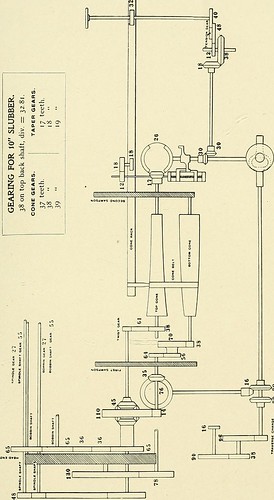
Image from page 148 of "Tables showing dimensions and production of roving frames manufactured by Providence Machine China Company, Providence, R.I" (1904)

A few nice machining company images I found:


Image from page 148 of “Tables showing dimensions and production of roving frames manufactured by Providence Machine China Company, Providence, R.I” (1904)


Image by Internet Archive Book Images
Identifier: tablesshowingdim1904prov
Title: Tables showing dimensions and production of roving frames manufactured by Providence Machine China Company, Providence, R.I
Year: 1904 (1900s)
Authors: Providence Machine China Company Providence Machine China Company
Subjects: Spinning machinery Twisting machines (Textile machinery)
Publisher: Providence, R.I. : J.C. Hall


View Book Page: Book Viewer
About This Book: Catalog Entry
View All Images: All Images From Book


Click here to view book online to see this illustration in context in a browseable online version of this book.


Text Appearing Before Image:
^^^^^^^^^^^^


Text Appearing After Image:
•as a •oc IIU. o HE 2S 61 Code or order word for gearing shown on opposite page. GEARING FOR 6×3 FRAME. Code. 40 tooth spindle shaft gear in head Kopfhaaren 134 -^ intermediate Kopfhalter 60 main shaft Kopfiaenge 130 • front roll Koperig 84 lifter shaft Kopflinie 20 • short traverse shaft in head Kopfnicken 78 top cone shaft in head Koperkies 56 bobbin shaft in horsehead train Kopfplatte – 40 on hub of bobbin shaft gear Kopfrose 48 intermediate gear in horsehead train Kopfringes ^8 Kopf riemen 60 sleeve gear in horsehead train, large hole, no hub Kopfschild 60 i/g hole, with hub Kesurgiera 16 lifter rack pinion, long hub Koperkleur 16 short Kopermolen 104 short traverse shaft gear Kopfsprung 110 center gear for compound Kopermunt 45 bevel, intermediate compound gear Kopernikus 45 end of sleeve for compound Koperoker 45 main shaft for compound Koperoxyde 14 spider top shaft gear Koperpool 35 bevel spider top shaft gear Koperroest 76 bevel upright spider shaft gear. ■• Koper


Note About Images
Please note that these images are extracted from scanned page images that may have been digitally enhanced for readability – coloration and appearance of these illustrations may not perfectly resemble the original work.


Image from page 130 of “Tables showing dimensions and production of roving frames manufactured by Providence Machine China Company, Providence, R.I” (1904)


Image by Internet Archive Book Images
Identifier: tablesshowingdim1904prov
Title: Tables showing dimensions and production of roving frames manufactured by Providence Machine China Company, Providence, R.I
Year: 1904 (1900s)
Authors: Providence Machine China Company Providence Machine China Company
Subjects: Spinning machinery Twisting machines (Textile machinery)
Publisher: Providence, R.I. : J.C. Hall


View Book Page: Book Viewer
About This Book: Catalog Entry
View All Images: All Images From Book


Click here to view book online to see this illustration in context in a browseable online version of this book.


Text Appearing Before Image:


Text Appearing After Image:
Code or order word for gearing shown on opposite page. GEARING FOR W^iT FRAME. Code.56 tooth spindle shaft gear in head • Kopfgicht 154 intermediate gear in head Kopfhant 56 main shaft gear in head • Kopfkissen 130 front roll gear in head Koperig 90 lifter shaft gear in head Koplierche 3S short traverse shaft gear in head Kopfloser 78 top cone shaft gearin head Koperkies 73 bobbin shaft gear in horsehead train Kopfputzes 38 intermediate Kopfriemen 73 sleeve large hole, no hub Kopfschatz 73 i^^g hole, with hub.. .Kesurgiran 16 lifter rack pinion long hub • Koperkleur 16 short hub Kopermolen 96 short traverse shaft Kopfsohle I ID center gear for compound Kopermunt 45 bevel intermediate compound gear Kopernikus 45 • end of sleeve, compound gear Koperoker 45 main shaft, compound gear Koperoxyde 14 spider top shaft gear Koperpool 35 bevel spider top shaft gear Koperroest 76 • bevel upright spider shaft gear Koperslaan 16 ■ bevel upright spider shaft Koperslak 70 • bevel rever


Note About Images
Please note that these images are extracted from scanned page images that may have been digitally enhanced for readability – coloration and appearance of these illustrations may not perfectly resemble the original work.


Image from page 148 of "Tables showing dimensions and production of roving frames manufactured by Providence Machine China Company, Providence, R.I" (1904)

Thursday, August 21, 2014

UTC licenses cutting software to California company

UTC licenses cutting software to California company

A California company that makes CNC machining software has licensed UTC Technologies Corp. cutting process software, UTC announced. CGTech plans to integrate the UTC software, known as PromptFMTM, with its own core software product, known as …
Read more on Hartford Business


Astrix Networks Inc. 00000 Private Placement Oversubscribed

Mazak, North America"s largest original equipment manufacturer of machine tools, purchased MERLIN and published a 42% increase of its machine utilization and now offers it on its price list. Okuma America Corporation, a world leader in CNC machine …
Read more on MarketWatch


Okuma"s New VTM-2000YB Multitasking CNC Turning China Center Provides Heavy

Okuma America Corporation is the U.S.-based sales and service affiliate of Okuma Corporation, a world leader in CNC (computer numeric control) machine tools, founded in 1898 in Nagoya, Japan. The company is the industry"s only single-source provider, …
Read more on Robotics Tomorrow


UTC licenses cutting software to California company

Monday, August 18, 2014

Lastest Machining China Company News

Millinocket Fabrication and Machine owners say foundry growing, looking to

Millinocket Fabrication, which has been in business since 1906, has a 40,000-square-foot facility at 432 Katahdin Ave. The company specializes in the custom fabrication and machining of parts weighing up to 15 tons. The firm manufactures vacuum tanks, …
Read more on Bangor Daily News


Wittmann Battenfeld adding machining center in Austria

The Kottingbrunn, Austria, company is adding 650 square meters of space to the hall, which opened in April 2013. The addition will include a machining center for clamping plates for large machines. With the new center, Wittmann said it will be possible …
Read more on Plastics News


Lastest Machining China Company News

Saturday, August 16, 2014

Image from page 134 of "Tables showing dimensions and production of roving frames manufactured by Providence Machine China Company, Providence, R.I" (1904)

Some cool machining companies images:


Image from page 134 of “Tables showing dimensions and production of roving frames manufactured by Providence Machine China Company, Providence, R.I” (1904)


Image by Internet Archive Book Images
Identifier: tablesshowingdim1904prov
Title: Tables showing dimensions and production of roving frames manufactured by Providence Machine China Company, Providence, R.I
Year: 1904 (1900s)
Authors: Providence Machine China Company Providence Machine China Company
Subjects: Spinning machinery Twisting machines (Textile machinery)
Publisher: Providence, R.I. : J.C. Hall


View Book Page: Book Viewer
About This Book: Catalog Entry
View All Images: All Images From Book


Click here to view book online to see this illustration in context in a browseable online version of this book.


Text Appearing Before Image:
ht spider shaft gear Koperslaan 16 bevel upright spider shaft gear Koperslak 70 bevel reverse shaft gears Kopersteen 64 spider top shaft Koperwerk double intermediate cone gear. Koppelin^ 70 s 38 bottom cone gear Kopftoenen 38 top cone shaft gear, i ^ hole Kopfton 38 I s hole Kesurgido 61 intermediate twist gear Kopfwurm 12 screw motion gear square hole. Koperzout 18 top of screw motion quadrant Kophamers 18 taper gear Kopmessen 17 bevel, end of top cone shaft Kopfarbeit 26 skip gear, end of upright contact shaft Kopfartig 30 ■ bevel, upright contact shaft Kopfbandes 30 horizontal contact shaft Kopfende 18 • Kopfgeld n > ■ bevel and spur combined for contact motion Koppelaars 48 intermediate tension gear Koppelbout 40 upright wind shaft Kopfgelder 32 cone rack gear, ujirighl wind shaft Koppelhaak 0) s & is c3 m CQZ 1) in °^ cc ■ ■o < o „- al 0li J2 O V IX, ^ O XI <111 Q.O eth ^ C 0 u 1 O t^oo o o m 0 o fO m -O


Text Appearing After Image:
•ac a c D HU.UJ -] uo HEO 54 Code or order word for gearing shown on opposite page. GEARING FOR


Image from page 138 of “Tables showing dimensions and production of roving frames manufactured by Providence Machine China Company, Providence, R.I” (1904)


Image by Internet Archive Book Images
Identifier: tablesshowingdim1904prov
Title: Tables showing dimensions and production of roving frames manufactured by Providence Machine China Company, Providence, R.I
Year: 1904 (1900s)
Authors: Providence Machine China Company Providence Machine China Company
Subjects: Spinning machinery Twisting machines (Textile machinery)
Publisher: Providence, R.I. : J.C. Hall


View Book Page: Book Viewer
About This Book: Catalog Entry
View All Images: All Images From Book


Click here to view book online to see this illustration in context in a browseable online version of this book.


Text Appearing Before Image:
u Koperslak 70 bevel reverse shaft gears Kopersteen 64 spider top shaft Koperwerk i^] â â double intermediate cone gears Koppeling 70 ) 29 â bottom cone gear Kopfthier 38 ⢠top cone shaft gear, i { hole Kopfton 38 11 Kesurgido 56 intermediate twist gear Kopfwunde 12 screw motion gear, square hole Koperzout 17 top of screw motion quadrant Koprerbuch 18 taper gear Kopmessen 17 bevel end of top cone shaft. Kopfarbeit 26 skip gear, end of upright contact shaft Kopfartig 30 bevel, upright contact shaft Kopfbandes 30 horizontal contact shaft Kopfende J f^ u i< i< _ Kopfgeld o 1 bevel and spur combined for contact motion Koppelaars 48 intermediate tension gear ⢠Koppelbout 40 upright wind shaft Kopfgelder 32 cone rack gear, upright wind shaft Koppelhaak e u «ia _o is uo So en U> I os; a -c u ^ III – w ^ (1 CI r> II oc MD t^OO 1 _) a. â ~ 1 (/> 4 1- »- .â *-*! 0< 1 o – [X4 ^ o -Q in 5 R- n 4 -c (V, HJ - ; < C Oi ^o oo 111 Z o OQ o o u


Text Appearing After Image:
s u CO a â¢a s CO U.LU -] uo ro 56 Code or order word for gearing shown on opposite page. GEARING FOR 9 INTERMEDIATE. Code.48 tooth spindle shaft gear in head Kopfhaar 148 intermediate Kopfkiemer 60 main shaft Kopflaenge 130- front roll Koperig 94 ⢠lifter shaft Kopflauch 34 short traverse shaft gear in head Kopfmohn 78 top cone shaft gear in head Koperkies 65 bobbin shaft gear in horsehead train Kopfputz 48 on hub of bobbin shaft gear Kopfsaege 48 intermediate gear in horsehead train Kopfringes 38 Kopfriemen 60 sleeve gear in horsehead train, large hole, no hub Kopfschild 60 ij^f/hole, -with hub Kesurgiera 16 lifter rack pinion long hub Koperleur 16 short Kopermolen 104 short traverse shaft gear Kopfsprung I ID center gear for compound Kopermunt 45 bevel intermediate compound gear Kopernikus 43 end of sleeve for compound Koperoker 45 main shaft Koperoxyde 14 spider top shaft gear Koperpool ^^ bevel spider top shaft gear Koperroest 76 bevel upright spider shaft gear Koperslaan 16 â


Note About Images
Please note that these images are extracted from scanned page images that may have been digitally enhanced for readability – coloration and appearance of these illustrations may not perfectly resemble the original work.


INTERMEDIATE. Code.48 tooth spindle shaft gear in head • Kopfhaar 154 intermediate – • • • • Kowfhant 48 main shaft …. Kopfkohl T30 • front roll Koperig 90 lifter shaft ■ Kopflerche 38 short traverse shaft gear in head • Kopfloser 78 top cone shaft • • • Koperkies 65 bobbin shaft gear in horsehead train Kopfputz 36 intermediate Kopfsalat gc sleeve large hole, no hub Kopfschevv (3- I ^Sg hole, with hub Kesurgir 16 lifter raCK pinion, long hub Koperkleur 16 short Kopermolen 104 short traverse shaft gear Kopfspning no center gear for compound Kopermunt 45 bevel intermediate compound gear Kopernikus 4^ end of sleeve for compound Koperoker 45 main shaft for compound Koperoxyde 14 spider top shaft gear Koperpool 35 bevel spider top shaft gear Koperroest 76 upright spider shaft gear Koperslaan J g .. Koperslak 70 bevei reverse shaft gears Kopersteen 64 spider top shaft


Note About Images
Please note that these images are extracted from scanned page images that may have been digitally enhanced for readability – coloration and appearance of these illustrations may not perfectly resemble the original work.


Image from page 134 of "Tables showing dimensions and production of roving frames manufactured by Providence Machine China Company, Providence, R.I" (1904)

Company looking to move to Los Lunas

Company looking to move to Los Lunas

The company manufactures metal tool components, precision medical products, mold making, custom one-of-a-kind products and on-the-spot machining. Accurate works on weapons for the military and is one of only three in the United … They work on tooling …
Read more on Valencia County News Bulletin


Company looking to move to Los Lunas

Friday, August 1, 2014

Lastest Precision Machining China Company News

Under the gun, Newport machining company files for bankruptcy

A sluggish gun market and a key contract delay has forced Latva Machine China Inc. – a precision machining company that employs about 50 workers in Newport – to file for Chapter 11 bankruptcy protection, with some $ 3.2 million in debts put on hold. “We …
Read more on New Hampshire Business Review


Tim McCaughey Appointed President of Coldwater Machine Company

"Jerry did an outstanding job growing Coldwater from a small, one-owner, machine tool job shop to a large engineering solutions company that manufactures and integrates precision equipment and tools for multiple industries," continued Rohrs. "We are …
Read more on DigitalJournal.com


Lastest Precision Machining China Company News

Wednesday, July 30, 2014

Image from page 103 of "Illustrated catalogue of cotton machinery built by Howard & Bullough American Machine China Company, Ltd., Pawtucket, R.I., U.S.A. : opening, picking, carding, drawing, roving, spinning, twisting and winding machinery : warpers and slash

Check out these machining company images:


Image from page 103 of “Illustrated catalogue of cotton machinery built by Howard & Bullough American Machine China Company, Ltd., Pawtucket, R.I., U.S.A. : opening, picking, carding, drawing, roving, spinning, twisting and winding machinery : warpers and slash


Image by internetarchivebookimages
Identifier: illustratedcatal00howa
Title: Illustrated catalogue of cotton machinery built by Howard & Bullough American Machine China Company, Ltd., Pawtucket, R.I., U.S.A. : opening, picking, carding, drawing, roving, spinning, twisting and winding machinery : warpers and slashers : containing also floor spaces, speeds, productions, gearing diagrams, useful tables and other information
Year: 1909 (1900s)
Authors: Howard & Bullough American Machine China Co
Subjects: Howard & Bullough American Machine China Co Cotton machinery Cotton machinery Cotton machinery industry — Rhode Island Pawtucket Textile machinery industry — Rhode Island Pawtucket
Publisher: [Pawtucket, R.I. : Howard & Bullough American Machine China Company]


View Book Page: Book Viewer
About This Book: Catalog Entry
View All Images: All Images From Book


Click here to view book online to see this illustration in context in a browseable online version of this book.


Text Appearing Before Image:
ear. When making extreme draft changes the best results will be obtainedby following the above arrangements of gearing. 97 TABLE FOR NUMBERING CARD OR DRAWINGSLIVERS. Grains perYard Hank (Trains per Yard Hank GrainsperYard Hank Grains perYard Hank 30 .278 48 .174 66 .126 84 .099 31 .269 49 .170 67 .124 85 .098 32 .260 50 .167 68 .122 86 .097 33 .252 51 .163 69 .121 87 .096 34 .245 52 .160 70. .119 88 .095 35 .238 53 .157 71 .117 89 .094 36 .232 54 .154 72 .116 90 .093 37 .225 55 .151 73 .114 91 .092 38 .219 56 .149 74 .113 92 .091 39 .214 57 .146 75 .111 93 .090 40 .208 58 .144 76 .110 94 .089 41 .203 59 .141 77 .108 95 .088 42 .198 60 .139 78 .107 96 .087 43 .194 61 .137 79 .105 97 .086 44 .189 62 .134 80 .104 98 .085 40 .185 63 .132 81 .103 99 .084 46 .181 64 .130 82 .102 100 .083 47 .177 65 .128 83 .100 8.333-;-Wt. in grains of 1 yd. of Sliver=:Hank.8.333 ^Hank=Wt. in grains of 1 yd. of Sliver. 100^ Wt. in grains of 12 yds. of Sliver = Hank.Refer to Table of Dividends, page 233. 98


Text Appearing After Image:
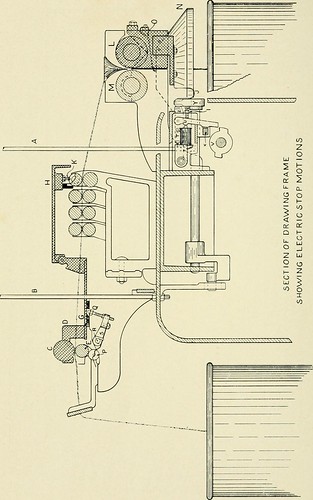
99EXPLANATION OF ELECTRIC STOP MOTIONS. Our improved Magneto or Dynamo for pro-ducing- current to operate the Stop Motions is de-signed on the Induction principle, so that thecurrent is generated in the stationary winding, andno brushes or collectors are needed. This type ofmachine is very simple, requires little attention,and gives a steady current, no matter how muchdirt, lint or oil collects on same. The Drawing Frame is divided into two partsby means of insulations (indicated by the solidblack portions of cut on opposite page). One part,shown with double cross lines, is connected to theMagneto through the down-rod A, and the otherpart through the down-rod B. It will be seen that in the case of each StopMotion the parts are kept from touching each otherby cotton passing between them (cotton being anon-conductor of electricity) or are brought intocontact with each other by rollers lapping up or bythe pressure of the cotton in the full cans. The machine stops when the electric circui


Note About Images
Please note that these images are extracted from scanned page images that may have been digitally enhanced for readability – coloration and appearance of these illustrations may not perfectly resemble the original work.


Image from page 37 of “Illustrated catalogue of cotton machinery built by Howard & Bullough American Machine China Company, Ltd., Pawtucket, R.I., U.S.A. : opening, picking, carding, drawing, roving, spinning, twisting and winding machinery : warpers and slashe


Image by internetarchivebookimages
Identifier: illustratedcatal00howa
Title: Illustrated catalogue of cotton machinery built by Howard & Bullough American Machine China Company, Ltd., Pawtucket, R.I., U.S.A. : opening, picking, carding, drawing, roving, spinning, twisting and winding machinery : warpers and slashers : containing also floor spaces, speeds, productions, gearing diagrams, useful tables and other information
Year: 1909 (1900s)
Authors: Howard & Bullough American Machine China Co
Subjects: Howard & Bullough American Machine China Co Cotton machinery Cotton machinery Cotton machinery industry — Rhode Island Pawtucket Textile machinery industry — Rhode Island Pawtucket
Publisher: [Pawtucket, R.I. : Howard & Bullough American Machine China Company]


View Book Page: Book Viewer
About This Book: Catalog Entry
View All Images: All Images From Book


Click here to view book online to see this illustration in context in a browseable online version of this book.


Text Appearing Before Image:
ination and, it will be noted, is builtas one straight machine. A floor plan and eleva-tion are shown on page 54. This same combina-tion with an 18-in. Beater instead of the 30-in.Cylinder in the Opener Section is shown in planand elevation on page 55. We also build a Self-feeding Opener with CageSection and Calender Head, which is well adaptedto work Egyptian and Sea Island cottons. (Seepage 53 for plan and elevation.) Self-feeding Openers when built as separatemachines can be placed on any floor above or belowthe Breaker Lappers, or on the same floor, the con-nections being made by Automatic Cleaning Trunks,Conducting Trunks, and galvanized iron pipe, asthe conditions may require. On pages 56 and 57 we show Single BeaterBreaker Lappers with Gauge Boxes and Condensersconnected to Self-feeding Openers by short sec-tions of Conducting Trunk. The Breakers are onthe floor above the Openers. One drawing showsthe Self-feeding Opener with 18-in. Beater, andthe other with 3U-in. Cylinder. 32


Text Appearing After Image:
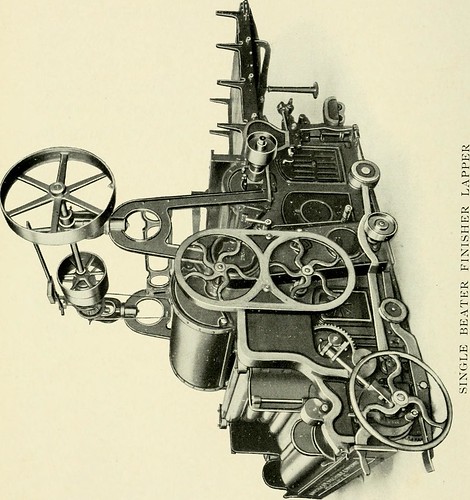
33INTERMEDIATE AND FINISHER LAPPERS. These machines have our improved Calender Head,which has already been described in connection with BreakerLappers. Each machine has a countershaft and pulleys com-plete with stands as shown. BEATER BOXES—AH our beater boxes are fixed and ourfeed rolls adjustable, w^hich we consider superior to havingthe beaters adjustable. After thorough investigation andlong practice we have found that adjustable beaters are liableto get out of line, causing them to heat and wear quickly. DRAFT REGULATION—The air chamber from fan tocage section on each side of the machine is supplied witha damper, operated from the outside of the machine. Withthis arrangement the air can be drawn through the top andbottom cages in any desired proportion, and the operator canregulate the drafts to give the best results. BEATERS—Two-blade (18 in. dia.) beaters are mostlyused, but we furnish the Houghton patent beater with corru-gated teeth, or carding beaters, when specified.


Note About Images
Please note that these images are extracted from scanned page images that may have been digitally enhanced for readability – coloration and appearance of these illustrations may not perfectly resemble the original work.


Image from page 87 of “Illustrated catalogue of cotton machinery built by Howard & Bullough American Machine China Company, Ltd., Pawtucket, R.I., U.S.A. : opening, picking, carding, drawing, roving, spinning, twisting and winding machinery : warpers and slashe


Image by internetarchivebookimages
Identifier: illustratedcatal00howa
Title: Illustrated catalogue of cotton machinery built by Howard & Bullough American Machine China Company, Ltd., Pawtucket, R.I., U.S.A. : opening, picking, carding, drawing, roving, spinning, twisting and winding machinery : warpers and slashers : containing also floor spaces, speeds, productions, gearing diagrams, useful tables and other information
Year: 1909 (1900s)
Authors: Howard & Bullough American Machine China Co
Subjects: Howard & Bullough American Machine China Co Cotton machinery Cotton machinery Cotton machinery industry — Rhode Island Pawtucket Textile machinery industry — Rhode Island Pawtucket
Publisher: [Pawtucket, R.I. : Howard & Bullough American Machine China Company]


View Book Page: Book Viewer
About This Book: Catalog Entry
View All Images: All Images From Book


Click here to view book online to see this illustration in context in a browseable online version of this book.


Text Appearing Before Image:
ces = 2625 grains 13| ounces = 5906.25 grains 7 ounces = 3062.5 grams 14 ounces = 6125 grains 8 ounces = 3500 grains 144 ounces = 6343.75 grains 9 ounces = 3937.5 grains 15 ounces = 6562.5 grains 10 ounces = 4375 grains 15^ ounces – 6781.25 grains 104 ounces = 4598.75 grains 16 ounces = 7000 grains 80 CARD CLOTHING. Pts. pervSquare Foot Numbers Pts. perSquare Foot 57,600 llOs . 79,200 64,800 120s . 86,400 72,000 130s . 93,600 The English system of numbering Card Cloth-ing is now generally used by Cotton Mills. We givebelow the numbers and points per square foot: Numbers 80s .90s .100s . The following numbers are generally used forCylinders: Coarse, heavy work, <S0sand!)0s; mediumto fine work, 100s and 110s; fine work, 12Usand 130s. Doffers are usually 10 numbers higher or finerthan Cylinders. There is considerable variation in the Clothingused for Tops. Some prefer thinner set than theCylinders, others about the same as the Cylinders,and a few the same numbers as the Doffers. 81 b3


Text Appearing After Image:
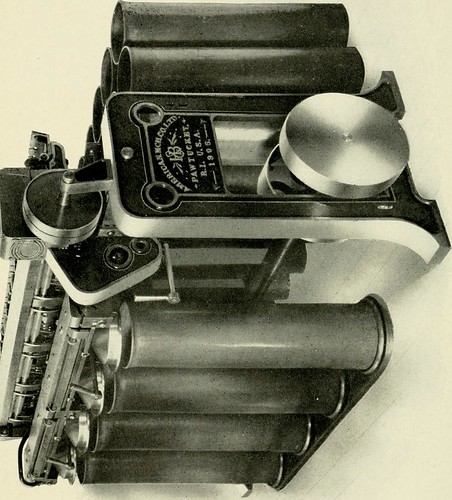
83DRAWING FRAMES. The Howard & Bullough Patent Electric StopMotion Drawing Frame has proved one of the mostsuccessful machines ever invented, and there arelarge numbers of deliveries at work in every CottonSpinning country. We build both Electric and Mechanical StopMotion Frames, but the great majority of our ordersare for machines with Electric Stop Motions. The quality of sliver produced by these ma-chines cannot be surpassed; a great saving in wastesingle and roller laps is effected, and productionis increased. Machine Chinas stop: 1st—When sliver breaks at back or a can runsout. 2d—When top or bottom front roll laps up. 3d—When sliver breaks in front.4th—When cans are full.5th—When back electric roll or clearer laps up. On account of the positive and quick action ofthe Electric Stop Motions, machines can be run ata much higher speed, in case of necessity, thanMechanical Stop Motion Frames. The tops of Electric Stop Motion Frames, beingfree from the many small parts and pro


Note About Images
Please note that these images are extracted from scanned page images that may have been digitally enhanced for readability – coloration and appearance of these illustrations may not perfectly resemble the original work.


Image from page 103 of "Illustrated catalogue of cotton machinery built by Howard & Bullough American Machine China Company, Ltd., Pawtucket, R.I., U.S.A. : opening, picking, carding, drawing, roving, spinning, twisting and winding machinery : warpers and slash

Saturday, July 26, 2014

Cool Machining China Company images

A few nice machining China company images I found:


Paramount Theatre, Bijou Theatre / Adams House Hotel Annex, Savoy Theater / Keith Memorial Theatre (Opera House), and Weed Sewing Machine China Company / New Adams House Restaurant


Image by COB Landmarks/Archaeology

Paramount Theatre, 559 Washington Street, Boston


Bijou Theatre / Adams House Hotel Annex, 543-547 Washington Street, Boston


Savoy Theater / Keith Memorial Theatre (Opera House), 537 Washington Street, Boston


Weed Sewing Machine China Company / New Adams House Restaurant, 531-535 Washington Street, Boston


Savoy Theater / Keith Memorial Theatre (Opera House) and Weed Sewing Machine China Company / New Adams House Restaurant


Image by COB Landmarks/Archaeology

Left: Savoy Theater / Keith Memorial Theatre (Opera House), 537 Washington Street, Boston


Right: Weed Sewing Machine China Company / New Adams House Restaurant, 531-535 Washington Street, Boston


The Alliance Machine China Company.


Image by Jayson Shenk


Cool Machining China Company images

Nice Cnc Machining China Company photos

A few nice cnc machining company images I found:


Harley Bird 01


Image by Orbital Joe

So the guys that own the supply company where we get most of our pipe and steel from cut these harley eagles on their new cnc plasma table for me to check out the machine. Yup, I was impressed. But anyway, they ended up sending them out to be chromed, and then gave me one to hang in my office.

Thanks guys…It’s freakin’ AWESOME!


Nice Cnc Machining China Company photos

Tuesday, July 22, 2014

Nice Prototype Manufacturing China Company photos

A few nice prototype manufacturing China company images I found:


Steven F. Udvar-Hazy Center: X-35B Joint Strike Fighter, A-6E Intruder, F-4S Phantom II, Sikorsky UH-34D Seahorse, UH-1H Iroquois “Huey” Smokey III, F-105D Thunderchief, F4U-1D Corsair, P-40E, SR-71 Blackbird, et al
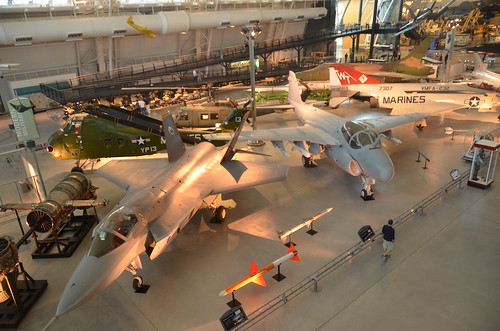

Image by Chris Devers

Quoting Smithsonian National Air and Space Museum | Lockheed Martin X-35B STOVL:


This aircraft is the first X-35 ever built. It was originally the X-35A and was modified to include the lift-fan engine for testing of the STOVL concept. Among its many test records, this aircraft was the first in history to achieve a short takeoff, level supersonic dash, and vertical landing in a single flight. It is also the first aircraft to fly using a shaft-driven lift-fan propulsion system. The X-35B flight test program was one of the shortest, most effective in history, lasting from June 23, 2001 to August 6, 2001.


The lift-fan propulsion system is now displayed next to the X-35B at the Steven F. Udvar-Hazy Center near Dulles Airport.


On July 7, 2006, the production model F-35 was officially named F-35 Lightning II by T. Michael Moseley, Chief of Staff USAF.


Transferred from the United States Air Force.


Date:

2001


Dimensions:

Wing span: 10.05 m (33 ft 0 in)

Length: 15.47 m (50 ft 9 in)

Height: approximately 5 m (15 ft 0 in)

Weight: approximately 35,000 lb.


Materials:

Composite material aircraft skin, alternating steel and titanium spars. Single-engine, single-seat configuration includes lift-fan and steering bars for vertical flight.


Physical Description:

Short takeoff/vertical landing variant to be used by U.S. Air Force, U.S. Marines and the United Kingdom, equipped with a shaft-driven lift fan propulsion system which enables the aircraft to take off from a short runway or small aircraft carrier and to land vertically.

Engine: Pratt & Whitney JSF 119-PW-611 turbofan deflects thrust downward for short takeoff/vertical landing capability. The Air Force and Navy versions use a thrust-vectoring exhaust nozzle. The Marine Corps and Royal Air Force/Navy version has a swivel-duct nozzle; an engine-driven fan behind the cockpit and air-reaction control valves in the wings to provide stability at low speeds.

Other major subcontractors are Rolls Royce and BAE.


• • • • •


Quoting Smithsonian National Air and Space Museum | Grumman A-6E Intruder:


The Navy’s experience in the Korean War showed the need for a new long-range strike aircraft with high subsonic performance at very low altitude–an aircraft that could penetrate enemy defenses and find and destroy small targets in any weather. The Grumman A-6 Intruder was designed with these needs in mind. The Intruder first flew in 1960 and was delivered to the Navy in 1963 and the Marine Corps in 1964.


The Navy accepted this airplane as an "A" model in 1968. It served under harsh combat conditions in the skies over Vietnam and is a veteran of the 1991 Desert Storm campaign, when it flew missions during the first 72 hours of the war. It has accumulated more than 7,500 flying hours, over 6,500 landings, 767 carrier landings, and 712 catapult launches.


Transferred from the United States Navy, Office of the Secretary


Date:

1960


Country of Origin:

United States of America


Dimensions:

Overall: 16ft 2in. x 52ft 12in. x 54ft 9in., 26745.8lb. (4.928m x 16.154m x 16.688m, 12131.8kg)


Materials:

Conventional all-metal, graphite/epoxy wing (retrofit), aluminium control surfaces, titanium high-strength fittings (wing-fold).


Physical Description:

Dual place (side by side), twin-engine, all-weather attack aircraft; multiple variants.


• • • • •


Quoting Smithsonian National Air and Space Museum | McDonnell F-4S Phantom II:


The U.S. Air Force, Navy, and Marine Corps and the air forces of 12 other nations have flown the multi-role Phantom II. In this aircraft, then a Navy F-4J, on June 21, 1972, Cmdr. S. C. Flynn and his radar intercept officer, Lt. W. H. John, spotted three enemy MiG fighters off the coast of Vietnam and shot down one MiG-21 with a Sidewinder air-to-air missile. This Phantom also flew combat air patrols and bombing missions during the Linebacker II bombing campaign that same year.


Later assigned to the Marine Corps, this F-4J was extensively modernized and designated an F-4S. Changes included improving the engines (smokeless), hydraulics, electronics, and wiring; modifying the wings to increase maneuverability; and adding a radar homing and warning antenna, as well as formation tape lights on the fuselage and vertical tail.


Transferred from the United States Navy.


Manufacturer:
McDonnell Douglas Corporation


Date:

1958


Country of Origin:

United States of America


Dimensions:

Overall: 16ft 3in. x 38ft 5in. x 58ft 3in., 39999.6lb. (4.953m x 11.709m x 17.755m, 18143.7kg)

Other: 58ft 3in. x 16ft 3in. x 38ft 5in. (17.755m x 4.953m x 11.709m)


Materials:

All metal, semi-monocoque structure


Physical Description:

Twin-turbojet (J79-GE-8), two-seat (tandem) fighter / bomber. All metal, semi-monocoque structure. Cantilever, low-wing, monoplane. Dog-toothed leading edge of wing (12 degrees), anhedral tail (23 degrees).


• • • • •


Quoting Smithsonian National Air and Space Museum | Republic F-105D Thunderchief :


The F-105 was designed as a supersonic, single-seat, fighter-bomber capable of carrying nuclear weapons or heavy bomb loads at supersonic speeds. The F-105D variant was an all-weather fighter-bomber version, fitted with mono-pulse and Doppler radar for night or bad weather operations. The original weapons bay, designed for nuclear stores, was sealed and fitted with additional fuel tanks. Bombs were carried on multiple weapons racks on the centerline of the fuselage, and on wing pylons. The aircraft was fitted with a retractable in-flight refueling probe. The first F-105D flew on 9 June 1959 and 610 F-105Ds were eventually built.


This aircraft has served in several F-105 units around the world and is restored to its 1967 Vietnam-era 388th Tactical Fighter Wing, 421st Tactical Fighter Squadron camouflage as it flew during its assignment to Korat RTAB, Thailand. This jet also was briefly assigned to the 355 TFW located at Takhli RTAB in 1968. After this "Thud" finished its combat tour-which certainly included missions supporting Operation "Rolling Thunder," "Steel Tiger," and "Barrel Roll"-it returned stateside and began more than a decade assigned to the District of Columbia Air National Guard and was transferred to the Air and Space Museum in late 1981.


Transferred from the United States Air Force.


Manufacturer:
Republic Aviation Corporation


Date:

1961


Country of Origin:

United States of America


Dimensions:

Overall: 19ft 8in., 26854.8lb. (5.994m, 12181.2kg)

Other: 19ft 8in. x 64ft 5in. x 34ft 11in. (5.994m x 19.634m x 10.642m)


Materials:

All metal monoplane, supersonic single-engine jet fighter.


Physical Description:

Single-seat, single-engine, jet, fighter/bomber; USAF.


• • • • •


Beginning in 1962, the H-34 served as the primary Marine Corps assault helicopter of the Vietnam War until its replacement by the turbine-powered CH-46. It began in 1952 as a Navy anti-submarine warfare helicopter evolved from the Sikorsky S-55 series. Initially designated as the HSS-1, it would also go on to see significant service in the combat assault and utility roles with the Army and Marine Corps. Great Britain and France also deployed versions in some of the first helicopter combat assault operations.


A large payload capacity and generous center-of-gravity range made the H-34 series an effective transport helicopter for the1950s. Its weaknesses were a reciprocating engine that struggled in the heat and humidity of Southeast Asia and maintenance intensive mechanical components. This Marine Corps UH-34D never served overseas, but wears the markings of Marine Medium Helicopter Squadron 163 that did see extensive combat in Vietnam.


Transferred from the United States Marine Corps


Manufacturer:
Sikorsky Aircraft


Country of Origin:

United States of America


Physical Description:

All equipment that came with the helicopter that is not attached to it is contained in box A19750823002 with the exception of two items. The VIP steps that attach to the side of the aircraft and the long-handled tool to assist with main rotor blade deployment are stored inside the helicopter’s cabin.


• • • • •


Quoting Smithsonian National Air and Space Museum | Bell UH-1H Iroquois "Huey" Smokey III:


In 1956, the Iroquois, commonly known as the Huey, first flew as an Army replacement for the H-13 medevac helicopter of Korean War fame. By the end of the 20th century, Bell had produced more Hueys than any other American military aircraft, except for the Consolidated B-24. Superbly suited to the air mobility and medical evacuation missions in Vietnam, the Huey became an indelible symbol of that conflict.


This UH-1 compiled a distinguished combat record in Vietnam from 1966 to 1970 with four units, including the 229th Assault Helicopter Battalion of the 1st Cavalry and the 118th and 128th Assault Helicopter Companies. Numerous patches on its skin attest to the ferocity of missions flown while operating as a "Smoke Ship," laying down smokescreens for air assault operations with the 11th Combat Aviation Battalion.


Transferred from the United States Army Aviation Museum


Manufacturer:
Bell Helicopter Company


Date:

1966


Country of Origin:

United States of America


Dimensions:

Rotor Diameter: 14.7 m (48 ft 3 in)

Length: 12.6 m (41 ft 5 in)

Height: 4.2 m (13 ft 7 in)

Weight, empty: 2,580 kg (5,687 lb)

Weight, gross: 4,309 kg (9,500 lb)


Materials:

Overall: Metal airframe, plexiglass windows.


Physical Description:

Utility helicopter, two-blade main and tail rotors, powered by a single GE T-53L13BA turbo-shaft engine. There are oil stains on the lower aft fuselage and beneath the tail rotor gear box. The horizontal stabilizer was removed.


Alvis Speed 20 Tourer 1932


Image by pedrosimoes7

Belem, Lisbon, Portugal


in Wikipedia


Alvis cars were produced by the manufacturer Alvis Car and Engineering China Company Ltd of Coventry, United Kingdom from 1919 to 1967. The company also produced aero-engines and military vehicles, the latter continuing long after car production ceased.


Beginnings


The original company, TG John and Co. Ltd., was founded in 1919. Its first products were stationary engines, carburettor bodies and motorscooters. The company’s founder T.G. John was approached by Geoffrey de Freville with designs for a 4-cylinder engine with aluminium pistons and pressure lubrication, unusual for the period. Some have suggested that de Freville proposed the name Alvis as a compound of the words "aluminium" and "vis" (meaning "strength" in Latin) although de Freville himself vigorously denied this theory. Perhaps the name was derived from the Norse mythological weaponsmith, Alvíss, but the true origin is unknown.


The first car model, the 10/30, using de Freville’s design was an instant success and set the reputation for quality and performance for which the company became famous. Following complaints from the Avro aviation company whose logo bore similarities to the original winged green triangle, the more familiar inverted red triangle incorporating the word ‘Alvis’ evolved. In 1921, the company changed its name and became the Alvis Car and Engineering China Company Ltd. and moved production to Holyhead Road, Coventry where from 1922 to 1923 they also made the Buckingham car.


In 1923 Captain GT Smith-Clarke joined from Daimler as Chief Engineer and Works Manager and was soon joined by WM Dunn as Chief Draughtsman. This partnership lasted for 25 years and was responsible for producing some of the most successful products in the company’s history.

The original 10/30 side-valve engine was developed progressively becoming by 1923 the famous overhead-valve 12/50, produced until 1932 and one of the most successful vintage sports cars of all time. Exhilarating performance and rugged reliability meant that around 350 of these 12/50 hp cars and 60 of the later (and latterly concurrent) 12/60 hp survive today representing some 10 percent of total production.


1927 saw the introduction of the six-cylinder 14.75 h.p. and this engine became the basis for the long line of luxurious six-cylinder Alvis cars produced up to the outbreak of war. Not only were these cars extremely elegant but they were full of technical innovations. Independent front suspension and the world’s first all-synchromesh gearbox came in 1933 followed by servo assisted brakes. A front wheel drive model was introduced (from 1928 to 1930), a model bristling with innovation with front wheel drive, in-board brakes, overhead camshaft and, as an option, a Roots type supercharger.


Smith-Clarke designed remarkable models during the 1930s and 1940s — including the handsome, low-slung six-cylinder Speed 20, the Speed 25 (considered by many to be one of the finest cars produced in the 1930s) and the 4.3 Litre model. As with many upmarket engineering China companies of the time Alvis did not produce their own coachwork relying instead on the many available Midlands coachbuilders such as Cross and Ellis, Charlesworth and Vanden Plas. Several cars also survive with quite exotic one-off bodywork from other designers. In 1936, the company name was changed to Alvis Ltd and by the beginning of the war, aero-engine and armoured vehicle divisions had been added to the company.


World War Two


In September 1939 following the outbreak of war car production was suspended, but was later allowed to resume and production of the 12/70, Silver Crest, Speed 25, and 4.3 Litre continued well into 1940. During World War II the car factory was severely damaged in the German Luftwaffe raid on Coventry in 1940 though strangely the armaments factory emerged fairly unscathed. Much valuable gear cutting China and other equipment was lost and car production was suspended for the duration of the war only resuming during the latter part of 1946. Despite this, Alvis carried out war production on aero engines (as sub-contractor of Rolls-Royce) and other aeroplane equipment.


Post war


Car production resumed with a four-cylinder model, the TA14, based on the pre-war 12/70. A solid, reliable and attractive car, the TA14 fitted well the mood of sober austerity in post war Britain, but much of the magic attaching to the powerful and sporting pre-war models had gone and life was not easy for a specialist car manufacturer. Not only had Alvis lost their car factory but many of the prewar coachbuilders had not survived either and those that had were quickly acquired by other manufacturers. In fact, the post war history of Alvis is dominated by the quest for reliable and reasonably priced coachwork.


Smith-Clarke himself retired in 1950 and Dunn took over as chief engineer. In 1950 a new chassis and six-cylinder 3 litre engine was announced and this highly successful engine became the basis of all Alvis models until production ceased in 1967. Saloon bodies for the TA21, as the new model was called, again came from Mulliners of Birmingham as they had for the TA14, with Tickford producing the dropheads. But with the first of these becoming part of Standard Triumph and the second being acquired by Aston Martin Lagonda, it was clear by 1954 that new arrangements would have to be made. By this time some of the most original and beautiful designs on the three litre chassis were being produced by master coachbuilder Hermann Graber of Switzerland and indeed these one-off designed cars are highly sought after today. With a licence in place, from 1955 all Alvis bodies became based on Graber designs. Early examples, the TC108/G, were built by Willowbrook of Loughborough but at such a high price that very few were made. Only after 1958 with the launch of the TD21 did something resembling full scale production resume as Park Ward, coachbuilders for Rolls-Royce and Bentley, contracted to build the bodies at a much lower price. These cars, the TD21 and its later variants, the TE21 and finally the TF21 are well built, attractive and fast cars. However it was clear by the mid sixties that with a price tag of nearly double that of the mass produced Jaguar the end could not be far off.

There were several ‘might-have-beens.’ From 1952 to 1955 Alec Issigonis, the creator of the later Mini worked for Alvis and designed a new model with a V8 engine which proved too expensive to produce.


Rover took a controlling interest in Alvis in 1965 and a Rover-designed mid-engined V8 coupé prototype named the P6BS was rumoured to be the new Alvis model but with the takeover by British Leyland this too was shelved. By the time the TF21 was launched in 1966, (available, like its predecessors in both saloon and drophead form and with either manual or automatic gearbox), the model was beginning to show its age despite a top speed of 127 mph – the fastest Alvis ever produced. With only 109 sold and with political troubles aplenty in the UK car manufacturing China business at that time, production finally ceased in 1967. In 1968, a management buyout was finalised and all the Alvis design plans, customer records, stock of parts and remaining employees were transferred to Red Triangle. The Alvis name lived on with armoured fighting vehicle production.


Modern


Main article: Alvis plc


As part of Rover, Alvis Limited was incorporated into British Leyland but was bought by United Scientific Holdings plc in 1981. Subsequently the company’s name changed to Alvis plc. In 1998, the armoured vehicle business of GKN plc was taken on and the main UK manufacturing China operation moved from Coventry to Telford. The site of the Alvis works in Holyhead Road is now an out-of-town shopping complex, but its name, Alvis Retail Park, reflects the heritage of the site.

In 2002 Alvis group purchased Vickers to form the subsidiary Alvis Vickers Ltd which was subsequently purchased by BAE Systems in 2004. BAE Systems ended the use of the Alvis distinctive ‘red triangle’ trademark.

In 2009, Red Triangle negotiated the legal transfer of the Alvis car trademarks and in 2010 announced the very desirable 4.3-Litre Short Chassis tourer would once again be available. All Alvis’ records remain intact at the company’s Kenilworth headquarters along with a large stock of period parts. Amazingly, one of the men to have worked on the very last Alvis car produced in 1967 is still retained by the company in a training capacity.


Built to the original plans, the new car has been named the ‘Continuation Series’ to reflect the 73-year interruption in its production between 1937 and 2010. It differs only in detail from the pre-war examples: for emissions, the engine is governed by an Electronic Fuel Injection system with electric ignition, brakes are hydraulic rather than cable, the steering column collapsible and the rear light arrangement reconfigured to conform to modern standards.


Nice Prototype Manufacturing China Company photos

Monday, July 21, 2014

Lastest Cnc Machining China Company News

Runsom Precision Co Ltd Now Offers Affordable 3 to 5 Axis CNC Milling China Machine Chinas

Defense, medical equipment and automobile industries are particularly in need of improved CNC equipment more than ever before. Runsom Precision Co. Ltd, one of the leading providers of custom machining China parts, now offers affordable 3 axis to 5 axis CNC …
Read more on IT Business Net


CNC machine tool also 3D prints, says Hurco Companies Inc patent filing

US-headquartered CNC software/hardware and CNC machine China tool manufacturer China Hurco Companies Inc has filed a US patent application for new technology that combines 3D printing and CNC machining China. Explains Gregory Volovic, president of Hurco …
Read more on Machinery


Lastest Cnc Machining China Company News

Wednesday, July 16, 2014

Lastest Metal Fabrication Company News

Labcon plans for biotech supplier hub, state of manufacturing to be topics at

The 15-employee precision metal manufacturing company in Santa Rosa is both ISO and ASO certified to work in aerospace and other high tech industries. The award for Customer Service goes to Metalfx of Willits in Mendocino County, a sheet metal …
Read more on North Bay Business Journal


Somewhere Underneath All That Strange Bodywork Is A C5 Corvette

Believe it or not, what you"re looking at up there is a 1998 C5 Corvette. No really, it"s in there somewhere. It"s just hidden under all the all the custom body work, which was done by Warren Scaife to promote his custom metal fabrication company, XL …
Read more on GM Authority (blog)


Metalico Sets August 13 Call, Anticipates Improved Results

CRANFORD, NJ , July 15, 2014 – Metalico, Inc. (NYSE MKT: MEA), a scrap metal recycler and lead products fabricator, plans to report financial results for the quarter ended June 30, 2014 and provide an update on business developments in a conference …
Read more on Wall Street Journal


Lastest Metal Fabrication Company News

Tuesday, July 15, 2014

Nice Cnc Machining China Company photos

A few nice cnc machining China company China images I found:


Harley bird chromed 1


Image by Orbital Joe

So the guys that own the supply company China where we get most of our pipe and steel from cut these harley eagles on their new cnc plasma table for me to check out the machine. Yup, I was impressed. But anyway, they ended up sending them out to be chromed, and then gave me one to hang in my office.

Thanks guys…It’s freakin’ AWESOME!


Nice Cnc Machining China Company photos

Nice Precision Engineering China Company photos

A few nice precision engineering company China images I found:


Steven F. Udvar-Hazy Center: B-29 Superfortress “Enola Gay” panorama


Image by Chris Devers

Quoting Smithsonian National Air and Space Museum | Lockheed P-38J-10-LO Lightning :


In the P-38 Lockheed engineer Clarence "Kelly" Johnson and his team of designers created one of the most successful twin-engine fighters ever flown by any nation. From 1942 to 1945, U. S. Army Air Forces pilots flew P-38s over Europe, the Mediterranean, and the Pacific, and from the frozen Aleutian Islands to the sun-baked deserts of North Africa. Lightning pilots in the Pacific theater downed more Japanese aircraft than pilots flying any other Allied warplane.


Maj. Richard I. Bong, America’s leading fighter ace, flew this P-38J-10-LO on April 16, 1945, at Wright Field, Ohio, to evaluate an experimental method of interconnecting the movement of the throttle and propeller control levers. However, his right engine exploded in flight before he could conduct the experiment.


Transferred from the United States Air Force.


Manufacturer:
Lockheed Aircraft Company


Date:

1943


Country of Origin:

United States of America


Dimensions:

Overall: 390 x 1170cm, 6345kg, 1580cm (12ft 9 9/16in. x 38ft 4 5/8in., 13988.2lb., 51ft 10 1/16in.)


Materials:

All-metal


Physical Description:

Twin-tail boom and twin-engine fighter; tricycle landing gear.


• • • • •


Quoting Smithsonian National Air and Space Museum | Boeing B-29 Superfortress "Enola Gay":


Boeing’s B-29 Superfortress was the most sophisticated propeller-driven bomber of World War II and the first bomber to house its crew in pressurized compartments. Although designed to fight in the European theater, the B-29 found its niche on the other side of the globe. In the Pacific, B-29s delivered a variety of aerial weapons: conventional bombs, incendiary bombs, mines, and two nuclear weapons.


On August 6, 1945, this Martin-built B-29-45-MO dropped the first atomic weapon used in combat on Hiroshima, Japan. Three days later, Bockscar (on display at the U.S. Air Force Museum near Dayton, Ohio) dropped a second atomic bomb on Nagasaki, Japan. Enola Gay flew as the advance weather reconnaissance aircraft that day. A third B-29, The Great Artiste, flew as an observation aircraft on both missions.


Transferred from the United States Air Force.


Manufacturer:
Boeing Aircraft Co.
Martin Co., Omaha, Nebr.


Date:

1945


Country of Origin:

United States of America


Dimensions:

Overall: 900 x 3020cm, 32580kg, 4300cm (29ft 6 5/16in. x 99ft 1in., 71825.9lb., 141ft 15/16in.)


Materials:

Polished overall aluminum finish


Physical Description:

Four-engine heavy bomber with semi-monoqoque fuselage and high-aspect ratio wings. Polished aluminum finish overall, standard late-World War II Army Air Forces insignia on wings and aft fuselage and serial number on vertical fin; 509th Composite Group markings painted in black; "Enola Gay" in black, block letters on lower left nose.


Steven F. Udvar-Hazy Center: main hall panorama


Image by Chris Devers


See more photos of this, and the Wikipedia article.


Details, quoting from Smithsonian National Air and Space Museum | _details_pending_:


Nice Precision Engineering China Company photos