Showing posts with label Electrochemical. Show all posts

Tuesday, October 21, 2014

Image from page 447 of "Electrochemical and metallurgical sector" (1905)

Some cool electrochemical machining images:


Image from page 447 of “Electrochemical and metallurgical market” (1905)
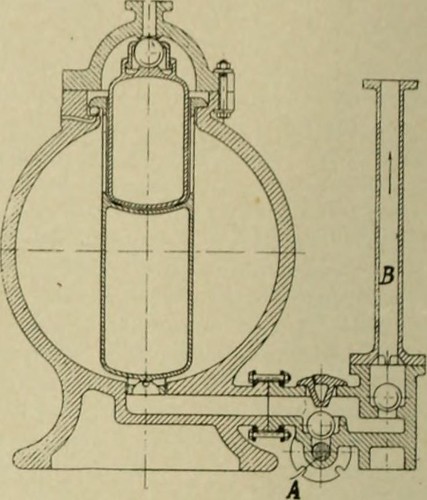

Image by World wide web Archive Book Photos
Identifier: electrochemicalm3190unse
Title: Electrochemical and metallurgical sector
Year: 1905 (1900s)
Authors:
Subjects: Electrochemistry Chemistry, Technical Metallurgy
Publisher: New York : [Electrochemical Pub. Co.]


View Book Web page: Book Viewer
About This Book: Catalog Entry
View All Pictures: All Photos From Book


Click right here to view book on the web to see this illustration in context in a browseable on the web version of this book.


Text Appearing Before Image:
FIC. four.—EXHAf.STES.


Text Appearing Following Image:
coming tins difficully is to make the axle of the stirringnu-cbani..m hollow, and insert in its interior the driving shaft,the space among the driving axle and the interior surface ofilie hollow shaft I becoming filled with sulphur or concrete. Fig. J shows a centrifugal machine in which the quantity ofrevolutions of the driim is 800 pi r iiiiiiiite. the internal diam-eter of the stone-ware drum being850 mm. Ill or-der to defend thedrum a g a i 11 s Icracking, it is cov-ered with a man-tle of sheet steel.. 11 interestingconclusion frome.xaot calculationis that a mantleif cast iron wouldi()t do, becauseu h e 11 revolvingwith the sames|)eed the cast-iron mantle wouldexpand morethan the stone-ware drum. sothat the latter would not be protected. I lie liquid rises along the walls ofthe drum and is thrown (jver the rim into the outer casing, theinternal surface of which is also produced of stoneware. Thetop of .this casing consists of an opening for tilling and lateral pipes for sucking off acidva


Note About Images
Please note that these images are extracted from scanned page photos that could have been digitally enhanced for readability – coloration and look of these illustrations may not completely resemble the original function.


Image from page 448 of “Electrochemical and metallurgical sector” (1905)
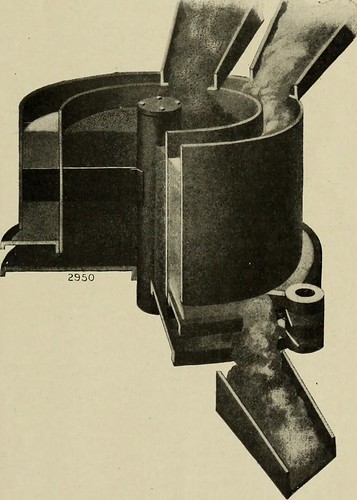

Image by Web Archive Book Images
Identifier: electrochemicalm3190unse
Title: Electrochemical and metallurgical business
Year: 1905 (1900s)
Authors:
Subjects: Electrochemistry Chemistry, Technical Metallurgy
Publisher: New York : [Electrochemical Pub. Co.]


View Book Web page: Book Viewer
About This Book: Catalog Entry
View All Photos: All Images From Book


Click right here to view book on-line to see this illustration in context in a browseable on the internet version of this book.


Text Appearing Ahead of Image:


Text Appearing Soon after Image:
.MEASURING AND MIXING MACHINE. where each batch weighed might be diverse, provided that themeasuring apparatus does its perform accurately. Prior to the invention of the Trump measuring machine,measurement was not regarded sufficiently accurate, princi-pally due to the fact of inaccuracies introduced by the measuring de-vice itself. Rolls with pockets typically did not clear themselves completely, KLF.rTI^« M IIIMK l. AND M I- rAl.I.URGICAL Sector. (Vol. III. N… .1. .mil r.i a lot of situations have been alTicUii li llu &ltliiilli &ltii m.iuriil inthe overhead hoppi-rs, wliich caused a variable density. Screw feeds wore to smaller sized diameters quite quickly withgritty suhstaiices. and so decreased the amounts fed out.With fine, powdery components they would Mmutimes flushthrough, regardless of the screw, and somelunes hang back.Even at its greatest the screw ilelivered pulsating feed. Years ago a device was invented consisting of a circularrevolving table, on which was a conical pile of material to bemeasured, th


Note About Images
Please note that these photos are extracted from scanned web page pictures that may possibly have been digitally enhanced for readability – coloration and look of these illustrations might not completely resemble the original operate.


Image from page 18 of “Electrochemical and metallurgical market” (1905)
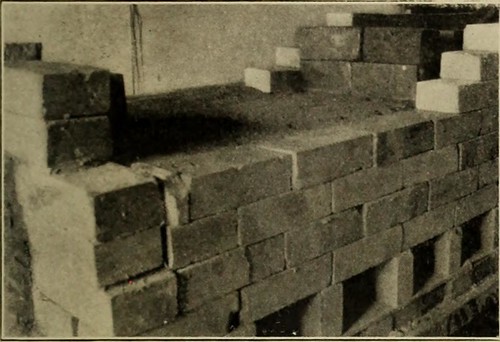

Image by Internet Archive Book Images
Identifier: electrochemicalm3190unse
Title: Electrochemical and metallurgical industry
Year: 1905 (1900s)
Authors:
Subjects: Electrochemistry Chemistry, Technical Metallurgy
Publisher: New York : [Electrochemical Pub. Co.]


View Book Page: Book Viewer
About This Book: Catalog Entry
View All Photos: All Images From Book


Click here to view book on-line to see this illustration in context in a browseable on the internet version of this book.


Text Appearing Before Image:
the quantity of turns by a switching device,therefore varying the voltage of the secondary. A very good instance of the initial strategy is discovered at the worksof the International Acheson Graphite Company, where 750-kw. resistance furnaces are utilized. The present is supplied at2200 volts and is brought to a 25-cycle, 800-kw. transformerwhich delivers a secondary present at 140 volts. The regula-tor is a six-pole, 560-kw., 25-cycle apparatus with 140 volts pri-mary, and 60-volt, 9350-ampere secondary. By implies of theregulator the voltage of the existing delivered to the furnacescan be raised or lowered by 60 volts, therefore giving either 3740amperes at 200 volts, or 9350 amperes at 80 volts, or the cor-responding current at any intermediate voltage. The stick to-ing description of the regulator was kindly furnished to thewriter by Mr. W. S. Moody of the General Electric Co., whobuilt the apparatus. The punchings and windings of the regulator are assem-bled in a substantial oil-tight, cast-iron case getting a semi-


Text Appearing After Image:
FIG. 4.—.RR.XGEMEXT OF RHEOST.XT. spherical cover which is made absolutely tight, so as to pre-vent dust and dirt receiving into the gearing and operatingmechanism. » Both the stationary and movable cores arebuilt up strong of very carefully annealed sheet-iron, supplied witha big quantity of slots for the winding. The windings con-sist of formed copper bars cautiously insulated and assembledin these slots. The ends of the windings_^ are brought out bymeans of versatile cables to a set of vertical bus-bars broughtthrough the center of the cover. In order to avoid an ex-cessive impedance in the device, and get as excellent a powerfactor on the program as feasible, the windings are sub-dividedand the bus-bars of each transformer and regulator are ar-ranged so that the alternate bars are of the exact same polarity.The sub-division of the regulator windings is obtained byconnecting all of the 6 poles of the machine in parrallel, andthe incredibly low impedance so obtained, collectively with theexceptionally


Note About Photos
Please note that these pictures are extracted from scanned page pictures that may have been digitally enhanced for readability – coloration and appearance of these illustrations may possibly not perfectly resemble the original function.


(Posted by a CNC machining China Company and precision CNC machined parts China manufacturer)

Wednesday, October 1, 2014

Cool Electrochemical Machining pictures

Verify out these electrochemical machining pictures:


Image from web page 53 of “Electrochemical and metallurgical market” (1905)


Image by Web Archive Book Images
Identifier: electrochemicalm3190unse
Title: Electrochemical and metallurgical industry
Year: 1905 (1900s)
Authors:
Subjects: Electrochemistry Chemistry, Technical Metallurgy
Publisher: New York : [Electrochemical Pub. Co.]


View Book Page: Book Viewer
About This Book: Catalog Entry
View All Pictures: All Images From Book


Click right here to view book on-line to see this illustration in context in a browseable on the internet version of this book.


Text Appearing Ahead of Image:
the wheels arc utilized as drivers, hence securing a max-imum tractive efTort and a duplication of mechanism. TheI- made by the Wcstinghousc Electric Co., their clcc- t- ■ iicy Ixring high. In the Electrical energy Kuilding the comj&gtany was exhibiting ar.i-Kht-linc electric hoist, with each other with photographs ofwhich have been equipped with their coal-handling ma-ry, a line of manufacture in which the business was thepioneer. LIEBIG S LABOUATOKV IN (.KK.MAN (.IIE.MKAL EXIIIHITION. Co., St. Louis Lidgerwood Manufacturing Co., New York,Niles-Bement-Pond Co., New York Robbins Conveying BeltCo., New York Westingliousc Machine Co., Pittsburg, Pa.R. D. Wood &amp Co., Philadelphia, Pa. Henry R. Worthing-ton. New York. Gold Medals.—Buffalo Forge Co., Buflfalo, N. Y. BuildersIron Foundry, Providence, R. I. A. S. Cameron Steam PumpCo.. New York Carbonnidum Co.. Niagara Falls, N. Y.Dearborn Drug &amp Chemical Organization, St. Louis De LavalSteam Turbine Co.. Lombard Governor Co.. Bostcin, Mass.


Text Appearing After Image:
EXIIIIIIT OF GOLDSl H.MIDT THERMIT CO. Lunkenheimer Co., Cincinnati Aug. Mietz, New York Mictz&amp Weiss, Nfw York Norton Emery Wheel Co., Worcester,Mass. Otto Gas Engine Co., Philadelphia Weber Gas &ampGasoline Engine Co., Kansas City, Mo. Societc De Laval,Paris, France. .fint-s and Mctallurgy. Grand Prizes.— E. G. Acheson,Niagara Falls, N. Y. Allis-Chalmcrs Co.. Chicago. III.: Amer-ican Coal Items Co., New York Austin ManufacturingCo.. Chicago, III. Baker &amp Co., Newark, N. J.: Bethlehem.Steel Co., South Bethlehem, Pa. Canadian Copper Co., Sud-bury. Ontario: Dubois, Pinard et Cie.. Sougland, par Saint-Michel, Arsne. Goldschmidt Thermit Co., New York Inter- January, 1905.] ELECTROCHEMICAL AND METALLURGICAL Market. national Acheson Graphite Co., Niagara Falls InternationalNickel Co., New York Julian Kennedy, Pittsburg, Pa.Koenigliche Porzellan Manufaktur, Berlin, Germany LanyonZinc Co., St. Louis, Mo. A. Leschen &amp Sons Rope Co., St.Louis, Mo. Mangane


Note About Pictures
Please note that these photos are extracted from scanned web page pictures that may have been digitally enhanced for readability – coloration and appearance of these illustrations may not perfectly resemble the original operate.


Image from web page 251 of “Electrochemical and metallurgical business” (1905)


Image by Internet Archive Book Pictures
Identifier: electrochemicalm3190unse
Title: Electrochemical and metallurgical industry
Year: 1905 (1900s)
Authors:
Subjects: Electrochemistry Chemistry, Technical Metallurgy
Publisher: New York : [Electrochemical Pub. Co.]


View Book Page: Book Viewer
About This Book: Catalog Entry
View All Photos: All Images From Book


Click right here to view book online to see this illustration in context in a browseable on the internet version of this book.


Text Appearing Ahead of Image:
erts the plate in the charging opening of the furnace,holding it there in proper position until the repairs arecompleted, when it is withdrawn and detached from theram of the charging machine.The arch-plate serves a double purpose.Very first, it types a shield against the heat from theinterior of the furnace, hence enabling the operate of re-pairing the arch to be carried on without shutting downthe furnace. In the old approach of repairing arches ithas been necessary to build a temporary defending wallor bulkhead of brick, and on account of the heat thismust be carried out with extended-handled tools, creating the pro-cess not only awkward and tedious, but also expensive,as it necessarily delays the furnace. The use of theJohnson arch-plate does away with all this. Second, the Johnson arch-plate serves as a kind onwhich the arch can be expeditiously relaid, supportingit for the duration of construction. The flange serves as a quit forthe brick in laying the arch. Perform which would ordinarilv call for hours in the old way


Text Appearing Soon after Image:
JOHN&gto .K( H-IM..TK IN I SE. can. by employing this arch-pfate. be accomplished in a tiny fraction ofthe time, even though the charge of steel is being melted down andwithout anv delav to the furnace. An Improved .Multiple-Rider Carrier. The accompanying illustration shows an improved numerous-nder carrier for button balances, just placed on the market place byWilliam .-Ninsworth &amp Sons, of Denver, Col The weights or riders are each and every carried by an individual arm June, 1905.] ELECTROCHF.^^TC.L AND METALLURGTCAI. Market. 245 and cannot grow to be displaced except by means of gross careless-ness. The arms are numbered in their front surfaces to corre-spond with the weight of the rider carried, and pivoted atthe rear, so as to just swing clear of the comb-shaped barbelow the stirrup, andare operated by asingle rod with athumb piece on theend of it extendingthrough the case.When the arms areup the riders are auto-ried 1) them farenough above thecomb-shaped bar soas not to interferewith the oscillationsof the


Note About Photos
Please note that these images are extracted from scanned page photos that could have been digitally enhanced for readability – coloration and look of these illustrations may possibly not perfectly resemble the original operate.


Image from page 429 of “Electrochemical and metallurgical sector” (1905)


Image by Net Archive Book Photos
Identifier: electrochemicalm3190unse
Title: Electrochemical and metallurgical sector
Year: 1905 (1900s)
Authors:
Subjects: Electrochemistry Chemistry, Technical Metallurgy
Publisher: New York : [Electrochemical Pub. Co.]


View Book Web page: Book Viewer
About This Book: Catalog Entry
View All Images: All Photos From Book


Click here to view book online to see this illustration in context in a browseable on-line version of this book.


Text Appearing Ahead of Image:
type. Nevertheless,the general procedure is to vaporize the quantity of waterremaining by a slow heat and leave the briquettes in the hard,bone-dry state in which the greatest efficiency is shown. Should of the niacliuies knead the i)consume as it is taken fromthe bog, taking it up in an elevator or chain of buckets tothe mixer, and then it is forced by way of a mouth piece, whichgives it the shape of the briquette and chops them off at agiven length. This block is referred to as compressed peat (Ger-man prcsstorf). It is wet and soft, and is passed on in thisstate to a drying table or plain. The initial of these machineswas constructed in 1861. by C. Schlickcysen, in Berlin. Themodern machines are all modifications of his design and style. The Schlickcysen method may be described as follows:Raw turf comes up on an endless belt running in the long,sloping trough which leads to the peat bog (for these ma-chines are normally transportable, and set up on the edge of thebog and moved from a single pari to (he f)tlKr as the function of


Text Appearing After Image:
SCHLICKEYSEN BRIQUETTE MACHINE. taking the peat out progresses). From the summit of theelevator the raw material drops into the machine, exactly where itis kneaded, cut, torn and compressed into about two-thirds ofits original bulk, and delivered at the mouth of the machinein blocks or bricks of any desired size or shape. These arefirst dried till they drop about two-thirds of their water, andthen the drying is continued by artificial means till they arebone-dry. Jhe principle upon which this machine is operateddepends on the reality that peat is nearly 80 per cent water in its(.riginal state, of which 4-fifths is held in mechanicalsuspension amongst the hairy fibers, and the remaining fifthis contained in the capillary tube running by means of the hairyvegetable fibers of the peat. Nine cubic feet Of raw peat istbus converted by this machine into 6 cubic feet of jireparcdpeat which nevertheless consists of 20 per cent water. This is furtherriried and compressed into i cubic foot of black, fossil-vege-ta


Note About Pictures
Please note that these photos are extracted from scanned page images that may have been digitally enhanced for readability – coloration and appearance of these illustrations may not completely resemble the original operate.


(Posted by a CNC machining China Company and precision CNC machined parts China manufacturer)

Saturday, August 30, 2014

Electrochemical machines


Electrochemical machines are employed for the precision machining at a nano level of virtually the entire spectrum of metals, such as hard alloys and nanostruc…
Video Rating: 5 / 5


This video explains the ECM procedure appropriate from the concept of Electric existing. The presentation was produced for a model making competitors (Anveshana 2012) for…


(Posted by a CNC machining China Company and precision CNC machined parts China manufacturer)

Friday, August 15, 2014

Cool Electrochemical Machining China images

A few nice electrochemical machining images I found:


Rusty wheels (explore)


Image by marco75 – dustandsilence.net
Dust and Silence | Facebook

**************************

Abandoned Electrochemical Plant.


Image from page 189 of “Electrochemical and metallurgical industry” (1905)


Image by Internet Archive Book Images
Identifier: electrochemicalm3190unse
Title: Electrochemical and metallurgical industry
Year: 1905 (1900s)
Authors:
Subjects: Electrochemistry Chemistry, Technical Metallurgy
Publisher: New York : [Electrochemical Pub. Co.]


View Book Page: Book Viewer
About This Book: Catalog Entry
View All Images: All Images From Book


Click here to view book online to see this illustration in context in a browseable online version of this book.


Text Appearing Before Image:
I Co/vriAfi/ousL) jgr cup SiEi^AToH To sroP/{q£ \ FIG. 8.—electrostatic SEP.\R.\T()R etc. The machine is chieflysections, and is really twoside or connected in tandem, to fill narrow space. ELECTROCHEMICAL AND ^tETALLITRGICAL INDUSTRY. [Vol. III. No. s- The si/0 of the machine is 12 feet liy 12 feet hv 7 feet (willian elevator 5 feel luRher, or 12 feet over all). The voltage re(|iiire<l is 350,000, and is furnished hy a specialinduction machine. The leakage is considerable, hut the totalpower expandetl per machine is only i horse-power. Most i)f tlic electrostatic separators now in practical useare used for separating pyrite or niarcasiic from zinc hleiide.This is done without roasting. Ndt oidy does the process remove the iron minerals fr(»mzinc bleixle, hut also lead, copper .lud other impurities. This


Text Appearing After Image:
FK;. g.—K.XTERN.M, VIEW OF ELECTROSTATK OKESElAK.VTOR. means that when complex sulphide ores are conceutratetl onjigs or tallies as a preliminary step to separating the middling-,it is not necessary to make a low-grade lead concentrate,carrying a high percentage of zinc and iron, in order to get a l AiuJ-; II Description Pro-ducts %Zinc. iJSd. Irmi. kcmurks Uadville. Col..Zinc middlin((SWilfli-y talJes Orig.Iron.Zinc. 30.489.0451.20 3.218.000.ti2 21.6035.11li.40 (20 mesh. (Combinrdf iron 4.87%)* ^ii|Jin. Mo.,/inr middlingsfriim ji(Cs Orig.Iron.Zinc. 49.532.92li2.31 2.529.92trace 10 7 ,s37.441.57 1 10 mesh. Lead pricf liially all removed ncnton. WLs..Zinc middlindsfrom jigs Orig.Iron.Zinc. 29.156.0758.40 5.168.400.23 20.9038.882.16 6 mesh. Iron sold (o^ acid burners Silvrrton. Col.,Zinc middlingsWilflcy tallies Orig.Iron.Zinc. 23.129.0449.73 8.0015.5)i2.0H 23Ji730.35 |24 mesh.» Idaho lead andzinc. laUeCuocrnt rales f)rig.Lead.Zinc 25.874.4545.11 20.4050.5X3>l 12.0216 147.40 IHigh


Note About Images
Please note that these images are extracted from scanned page images that may have been digitally enhanced for readability – coloration and appearance of these illustrations may not perfectly resemble the original work.


Cool Electrochemical Machining China images