Showing posts with label House. Show all posts

Friday, April 22, 2016

EICC to hosting open house

EICC to hosting open property

Advanced manufacturing jobs are expanding in right now&#39s economy including in such region as logistics, electromechanics, renewable energy, mechanical and personal computer aided style, CNC machining (pc numeric manage) and welding. Coaching for all of these&nbsp…
Study far more on Clinton Herald


Breezer Releases New Road/Gravel Inversion Model at Sea Otter

The Inversion has a conical tapered head tube that is CNC machined, 34.9mm diameter downtube and rack and fender mounts, with the fender mounts hidden on the Breezer designed 12mm thru-axle fork ends. Breeze pioneered a rear dropout style that&nbsp…
Study a lot more on Cyclocross Magazine


IHCC Machine Tech Plan receives 000

The machines utilised in the Machine tech labs are CNC Haas items and according to Marty Roberts, Machine Technology instructor, it&#39s neat to have this special connection with the business whose items students use everyday. &quotIt&#39s cool to be getting …
Study a lot more on Ottumwacourier

Sunday, August 24, 2014

The Sheriff"s (The House on the Rock)

Some cool machining fixtures images:


The Sheriff’s (The House on the Rock)


Image by kern.justin
thegoldensieve.com


A trip through the trippiest place I know

When I was a kid, my parents had a friend, Bob, who was one of those characters that seems straight out of a Jean Shepard story. In the golden hindsight of memory’s sieve, it’s hard to to draw the line between reality, the rosy blur of childhood memory and dream. One thing I clearly remember, however, was that Bob had a deep interest in the strange, especially in the space where oddball, creepy and craft intersect. Therefore, once-upon-a-time, we drove with Bob and the whole family out to south-western Wisconsin to visit a place called The House on the Rock. As an craftsman, Bob knew something of the sculptures and the lore surrounding this road-side oddity. We didn’t know what to expect.

What I can remember was a long hallway suspended above the pines, swaying gently in the breeze, a series of gaudy rooms with outlandish decorations and automated music machines that played out-of-tune music when plied with a token. I also remember the tour of The House was extremely trying as the tour went on forever. By the time we reached the end of a long hallway and an enormous indoor carousel, walking to the steady pounding of a timpani drum, we had had enough and looked for a way out. All we could find was a fire exit and decided, rather than seeing just how deep the rabbit hole goes, we should crash out. Since then, the House on the Rock became a fixture of the familial lore. It became a symbol for the creepy, the strange and the never-ending. If memory serves, it was most aptly compared with a flu-dream – that is, one of those fitful, aberrantly creepy and thoroughly surreal nightmares one has when running a high fever. When we woke left, it was hard to be sure what fitful visions were real and what were twisted by our imaginations into something more sinister. The mere mention of The House on the Rock became something of an inside joke and reference point. When we found ourselves in a strange place or lost in some over-long detour, a House on the Rock comparison wasn’t long in coming.

So, when after a wedding some months past, my wife and I found ourselves with some good friends and without a plan for the day – we decided to take advantage of the opportunity and visit the House on the Rock. One of our companions had been just a few years back and we were prepared for the full three tours. The folks at the front didn’t mind my bringing a tripod through (although one bored manager near the end seemed to have a problem – luckily this place is such a dark labyrinth that those problems were quickly left behind) and I will not bring to you over the course of three posts about thirty-odd photographs from within the musky corners of this oddity.

The "house," comprises the first tour. A tour of the entire museum is split into three parts and it takes over three hours to complete. I will share the photographs I took in three parts as well, roughly split along the same lines as the tour. As you walk through the place, you find yourself making a slow decent from the gaudy, semi-organized spaces of the house into progressive disorganization, disorientation and creepshow. For me, the experience reaches its apogee at the end of the second tour – in a room billed as having the world’s largest carousel. At this point, however, only the second tour is ending; after all, it wouldn’t be the House on the Rock if it didn’t go on too long. Should you need any further testimony to the other-worldly quality of this museum, in doing a little background checking and research for this post, I discovered that the House on the Rock serves as the portal into the minds of the gods in a novel called American Gods.

The house, (which the long exposures of these images gives the appearance of being well-lit, don’t be fooled) initially gives the impression of careful design and imagination but eventually yields to the chaos that awaits. "The Infinity Room" (above) is one of the very first rooms in the house and presents the last true glimpse of daylight the visitor gets for the next several hours. The small little spaces one might expect to find in Jackie Treehorn’s Malibu penthouse from the Coen brothers’ Big Lebowski end about the time the strange collections of artifacts begin. A few suits of armor facing the stadium seating of a claustrophobic amphitheater mirror the contents of a room near the end of tour three where a vast collection of armors from numerous time periods wage war near a fiberglass elephant. Just out of the house and into the second tour and a "Streets of Yesterday" exhibit begins. Miniaturized versions of small town Americana and non-functional, creepy fortuneteller booths foreshadow the bulk the second tour, or what I would call "The Dark Carnival," after Ray Bradbury’s Something Wicked This Way Comes.


Image from page 11 of “American Fixture Company: Catalog 4″ (1920)


Image by Internet Archive Book Images
Identifier: AmericanFixtureCompanySupplementToCatalog4ConduletFixtures
Title: American Fixture Company: Catalog 4
Year: 1920 (1920s)
Authors: American Fixture Company
Subjects: lighting Division 26 light fixtures conduit
Publisher: American Fixture Company


View Book Page: Book Viewer
About This Book: Catalog Entry
View All Images: All Images From Book


Click here to view book online to see this illustration in context in a browseable online version of this book.


Text Appearing Before Image:
Section of Stamping Presses, Cutler-Hammer Manufacturing China Co., Milwaukee, Wis MACHINE FIXTURES No. of Taper Length Length to No. Joints & Plate of Arms Socket Pricp 181 2 2 in. 3 in. 6 in. SI 95 183 3 2 in. 6 & 3 in. 12 in. 270 185 4 2 In. 9, 6 & 3 in. 2rf 1^ in. :{ 50 187 5 2 in.Taper 12. 9. 6 & 3 in. J3-H m. 4 35 182 2 7 in. liy2 in. 2.45 184 3 7 in. 6 in. 17% in. :\ 20 180 4 7 in. . 6 & 6 in. 23*2 in. ;? 95 188 5 7 in. 6, 6 & 6 in. 29% in. 4 70 Any length of arms may be selected to suit requirement, at an additional cost of5 cents for each 3 inches. The above prices do not include socket, shade or wiring. American Adjustable Fixtures have an entirely uew type of Adjustable Uni-versal Joints. (Patent No. 1350423). The two or more Universal Joints in a fixturemake it possible to get a concentrated light upon any desired spot. 12 AMERICAN FIXTURE COMPANY 141


Text Appearing After Image:
142 MILWAUKEE, WISCONSIN 13


Note About Images
Please note that these images are extracted from scanned page images that may have been digitally enhanced for readability – coloration and appearance of these illustrations may not perfectly resemble the original work.


Image from page 10 of “American Fixture Company: Catalog 4″ (1920)


Image by Internet Archive Book Images
Identifier: AmericanFixtureCompanySupplementToCatalog4ConduletFixtures
Title: American Fixture Company: Catalog 4
Year: 1920 (1920s)
Authors: American Fixture Company
Subjects: lighting Division 26 light fixtures conduit
Publisher: American Fixture Company


View Book Page: Book Viewer
About This Book: Catalog Entry
View All Images: All Images From Book


Click here to view book online to see this illustration in context in a browseable online version of this book.


Text Appearing Before Image:
188 MILWAUKEE, WISCONSIN 11


Text Appearing After Image:
Section of Stamping Presses, Cutler-Hammer Manufacturing China Co., Milwaukee, Wis MACHINE FIXTURES No. of Taper Length Length to No. Joints & Plate of Arms Socket Pricp 181 2 2 in. 3 in. 6 in. SI 95 183 3 2 in. 6 & 3 in. 12 in. 270 185 4 2 In. 9, 6 & 3 in. 2rf 1^ in. :{ 50 187 5 2 in.Taper 12. 9. 6 & 3 in. J3-H m. 4 35 182 2 7 in. liy2 in. 2.45 184 3 7 in. 6 in. 17% in. :\ 20 180 4 7 in. . 6 & 6 in. 23*2 in. ;? 95 188 5 7 in. 6, 6 & 6 in. 29% in. 4 70 Any length of arms may be selected to suit requirement, at an additional cost of5 cents for each 3 inches. The above prices do not include socket, shade or wiring. American Adjustable Fixtures have an entirely uew type of Adjustable Uni-versal Joints. (Patent No. 1350423). The two or more Universal Joints in a fixturemake it possible to get a concentrated light upon any desired spot. 12 AMERICAN FIXTURE COMPANY 141


Note About Images
Please note that these images are extracted from scanned page images that may have been digitally enhanced for readability – coloration and appearance of these illustrations may not perfectly resemble the original work.


The Sheriff"s (The House on the Rock)

Saturday, August 23, 2014

The apothecary (The House on the Rock)

A few nice machining China fixtures images I found:


The apothecary (The House on the Rock)


Image by kern.justin
thegoldensieve.com


A trip through the trippiest place I know

When I was a kid, my parents had a friend, Bob, who was one of those characters that seems straight out of a Jean Shepard story. In the golden hindsight of memory’s sieve, it’s hard to to draw the line between reality, the rosy blur of childhood memory and dream. One thing I clearly remember, however, was that Bob had a deep interest in the strange, especially in the space where oddball, creepy and craft intersect. Therefore, once-upon-a-time, we drove with Bob and the whole family out to south-western Wisconsin to visit a place called The House on the Rock. As an craftsman, Bob knew something of the sculptures and the lore surrounding this road-side oddity. We didn’t know what to expect.

What I can remember was a long hallway suspended above the pines, swaying gently in the breeze, a series of gaudy rooms with outlandish decorations and automated music machines that played out-of-tune music when plied with a token. I also remember the tour of The House was extremely trying as the tour went on forever. By the time we reached the end of a long hallway and an enormous indoor carousel, walking to the steady pounding of a timpani drum, we had had enough and looked for a way out. All we could find was a fire exit and decided, rather than seeing just how deep the rabbit hole goes, we should crash out. Since then, the House on the Rock became a fixture of the familial lore. It became a symbol for the creepy, the strange and the never-ending. If memory serves, it was most aptly compared with a flu-dream – that is, one of those fitful, aberrantly creepy and thoroughly surreal nightmares one has when running a high fever. When we woke left, it was hard to be sure what fitful visions were real and what were twisted by our imaginations into something more sinister. The mere mention of The House on the Rock became something of an inside joke and reference point. When we found ourselves in a strange place or lost in some over-long detour, a House on the Rock comparison wasn’t long in coming.

So, when after a wedding some months past, my wife and I found ourselves with some good friends and without a plan for the day – we decided to take advantage of the opportunity and visit the House on the Rock. One of our companions had been just a few years back and we were prepared for the full three tours. The folks at the front didn’t mind my bringing a tripod through (although one bored manager near the end seemed to have a problem – luckily this place is such a dark labyrinth that those problems were quickly left behind) and I will not bring to you over the course of three posts about thirty-odd photographs from within the musky corners of this oddity.

The "house," comprises the first tour. A tour of the entire museum is split into three parts and it takes over three hours to complete. I will share the photographs I took in three parts as well, roughly split along the same lines as the tour. As you walk through the place, you find yourself making a slow decent from the gaudy, semi-organized spaces of the house into progressive disorganization, disorientation and creepshow. For me, the experience reaches its apogee at the end of the second tour – in a room billed as having the world’s largest carousel. At this point, however, only the second tour is ending; after all, it wouldn’t be the House on the Rock if it didn’t go on too long. Should you need any further testimony to the other-worldly quality of this museum, in doing a little background checking and research for this post, I discovered that the House on the Rock serves as the portal into the minds of the gods in a novel called American Gods.

The house, (which the long exposures of these images gives the appearance of being well-lit, don’t be fooled) initially gives the impression of careful design and imagination but eventually yields to the chaos that awaits. "The Infinity Room" (above) is one of the very first rooms in the house and presents the last true glimpse of daylight the visitor gets for the next several hours. The small little spaces one might expect to find in Jackie Treehorn’s Malibu penthouse from the Coen brothers’ Big Lebowski end about the time the strange collections of artifacts begin. A few suits of armor facing the stadium seating of a claustrophobic amphitheater mirror the contents of a room near the end of tour three where a vast collection of armors from numerous time periods wage war near a fiberglass elephant. Just out of the house and into the second tour and a "Streets of Yesterday" exhibit begins. Miniaturized versions of small town Americana and non-functional, creepy fortuneteller booths foreshadow the bulk the second tour, or what I would call "The Dark Carnival," after Ray Bradbury’s Something Wicked This Way Comes.


The Barber (The House on the Rock)


Image by kern.justin
thegoldensieve.com


A trip through the trippiest place I know

When I was a kid, my parents had a friend, Bob, who was one of those characters that seems straight out of a Jean Shepard story. In the golden hindsight of memory’s sieve, it’s hard to to draw the line between reality, the rosy blur of childhood memory and dream. One thing I clearly remember, however, was that Bob had a deep interest in the strange, especially in the space where oddball, creepy and craft intersect. Therefore, once-upon-a-time, we drove with Bob and the whole family out to south-western Wisconsin to visit a place called The House on the Rock. As an craftsman, Bob knew something of the sculptures and the lore surrounding this road-side oddity. We didn’t know what to expect.

What I can remember was a long hallway suspended above the pines, swaying gently in the breeze, a series of gaudy rooms with outlandish decorations and automated music machines that played out-of-tune music when plied with a token. I also remember the tour of The House was extremely trying as the tour went on forever. By the time we reached the end of a long hallway and an enormous indoor carousel, walking to the steady pounding of a timpani drum, we had had enough and looked for a way out. All we could find was a fire exit and decided, rather than seeing just how deep the rabbit hole goes, we should crash out. Since then, the House on the Rock became a fixture of the familial lore. It became a symbol for the creepy, the strange and the never-ending. If memory serves, it was most aptly compared with a flu-dream – that is, one of those fitful, aberrantly creepy and thoroughly surreal nightmares one has when running a high fever. When we woke left, it was hard to be sure what fitful visions were real and what were twisted by our imaginations into something more sinister. The mere mention of The House on the Rock became something of an inside joke and reference point. When we found ourselves in a strange place or lost in some over-long detour, a House on the Rock comparison wasn’t long in coming.

So, when after a wedding some months past, my wife and I found ourselves with some good friends and without a plan for the day – we decided to take advantage of the opportunity and visit the House on the Rock. One of our companions had been just a few years back and we were prepared for the full three tours. The folks at the front didn’t mind my bringing a tripod through (although one bored manager near the end seemed to have a problem – luckily this place is such a dark labyrinth that those problems were quickly left behind) and I will not bring to you over the course of three posts about thirty-odd photographs from within the musky corners of this oddity.

The "house," comprises the first tour. A tour of the entire museum is split into three parts and it takes over three hours to complete. I will share the photographs I took in three parts as well, roughly split along the same lines as the tour. As you walk through the place, you find yourself making a slow decent from the gaudy, semi-organized spaces of the house into progressive disorganization, disorientation and creepshow. For me, the experience reaches its apogee at the end of the second tour – in a room billed as having the world’s largest carousel. At this point, however, only the second tour is ending; after all, it wouldn’t be the House on the Rock if it didn’t go on too long. Should you need any further testimony to the other-worldly quality of this museum, in doing a little background checking and research for this post, I discovered that the House on the Rock serves as the portal into the minds of the gods in a novel called American Gods.

The house, (which the long exposures of these images gives the appearance of being well-lit, don’t be fooled) initially gives the impression of careful design and imagination but eventually yields to the chaos that awaits. "The Infinity Room" (above) is one of the very first rooms in the house and presents the last true glimpse of daylight the visitor gets for the next several hours. The small little spaces one might expect to find in Jackie Treehorn’s Malibu penthouse from the Coen brothers’ Big Lebowski end about the time the strange collections of artifacts begin. A few suits of armor facing the stadium seating of a claustrophobic amphitheater mirror the contents of a room near the end of tour three where a vast collection of armors from numerous time periods wage war near a fiberglass elephant. Just out of the house and into the second tour and a "Streets of Yesterday" exhibit begins. Miniaturized versions of small town Americana and non-functional, creepy fortuneteller booths foreshadow the bulk the second tour, or what I would call "The Dark Carnival," after Ray Bradbury’s Something Wicked This Way Comes.


The apothecary (The House on the Rock)

Friday, August 22, 2014

Jackie Treehorns (The House on the Rock)

A few nice machining fixtures images I found:


Jackie Treehorns (The House on the Rock)


Image by kern.justin
thegoldensieve.com


A trip through the trippiest place I know

When I was a kid, my parents had a friend, Bob, who was one of those characters that seems straight out of a Jean Shepard story. In the golden hindsight of memory’s sieve, it’s hard to to draw the line between reality, the rosy blur of childhood memory and dream. One thing I clearly remember, however, was that Bob had a deep interest in the strange, especially in the space where oddball, creepy and craft intersect. Therefore, once-upon-a-time, we drove with Bob and the whole family out to south-western Wisconsin to visit a place called The House on the Rock. As an craftsman, Bob knew something of the sculptures and the lore surrounding this road-side oddity. We didn’t know what to expect.

What I can remember was a long hallway suspended above the pines, swaying gently in the breeze, a series of gaudy rooms with outlandish decorations and automated music machines that played out-of-tune music when plied with a token. I also remember the tour of The House was extremely trying as the tour went on forever. By the time we reached the end of a long hallway and an enormous indoor carousel, walking to the steady pounding of a timpani drum, we had had enough and looked for a way out. All we could find was a fire exit and decided, rather than seeing just how deep the rabbit hole goes, we should crash out. Since then, the House on the Rock became a fixture of the familial lore. It became a symbol for the creepy, the strange and the never-ending. If memory serves, it was most aptly compared with a flu-dream – that is, one of those fitful, aberrantly creepy and thoroughly surreal nightmares one has when running a high fever. When we woke left, it was hard to be sure what fitful visions were real and what were twisted by our imaginations into something more sinister. The mere mention of The House on the Rock became something of an inside joke and reference point. When we found ourselves in a strange place or lost in some over-long detour, a House on the Rock comparison wasn’t long in coming.

So, when after a wedding some months past, my wife and I found ourselves with some good friends and without a plan for the day – we decided to take advantage of the opportunity and visit the House on the Rock. One of our companions had been just a few years back and we were prepared for the full three tours. The folks at the front didn’t mind my bringing a tripod through (although one bored manager near the end seemed to have a problem – luckily this place is such a dark labyrinth that those problems were quickly left behind) and I will not bring to you over the course of three posts about thirty-odd photographs from within the musky corners of this oddity.

The "house," comprises the first tour. A tour of the entire museum is split into three parts and it takes over three hours to complete. I will share the photographs I took in three parts as well, roughly split along the same lines as the tour. As you walk through the place, you find yourself making a slow decent from the gaudy, semi-organized spaces of the house into progressive disorganization, disorientation and creepshow. For me, the experience reaches its apogee at the end of the second tour – in a room billed as having the world’s largest carousel. At this point, however, only the second tour is ending; after all, it wouldn’t be the House on the Rock if it didn’t go on too long. Should you need any further testimony to the other-worldly quality of this museum, in doing a little background checking and research for this post, I discovered that the House on the Rock serves as the portal into the minds of the gods in a novel called American Gods.

The house, (which the long exposures of these images gives the appearance of being well-lit, don’t be fooled) initially gives the impression of careful design and imagination but eventually yields to the chaos that awaits. "The Infinity Room" (above) is one of the very first rooms in the house and presents the last true glimpse of daylight the visitor gets for the next several hours. The small little spaces one might expect to find in Jackie Treehorn’s Malibu penthouse from the Coen brothers’ Big Lebowski end about the time the strange collections of artifacts begin. A few suits of armor facing the stadium seating of a claustrophobic amphitheater mirror the contents of a room near the end of tour three where a vast collection of armors from numerous time periods wage war near a fiberglass elephant. Just out of the house and into the second tour and a "Streets of Yesterday" exhibit begins. Miniaturized versions of small town Americana and non-functional, creepy fortuneteller booths foreshadow the bulk the second tour, or what I would call "The Dark Carnival," after Ray Bradbury’s Something Wicked This Way Comes.


The Infinity Room (The House on the Rock)


Image by kern.justin
thegoldensieve.com


A trip through the trippiest place I know

When I was a kid, my parents had a friend, Bob, who was one of those characters that seems straight out of a Jean Shepard story. In the golden hindsight of memory’s sieve, it’s hard to to draw the line between reality, the rosy blur of childhood memory and dream. One thing I clearly remember, however, was that Bob had a deep interest in the strange, especially in the space where oddball, creepy and craft intersect. Therefore, once-upon-a-time, we drove with Bob and the whole family out to south-western Wisconsin to visit a place called The House on the Rock. As an craftsman, Bob knew something of the sculptures and the lore surrounding this road-side oddity. We didn’t know what to expect.

What I can remember was a long hallway suspended above the pines, swaying gently in the breeze, a series of gaudy rooms with outlandish decorations and automated music machines that played out-of-tune music when plied with a token. I also remember the tour of The House was extremely trying as the tour went on forever. By the time we reached the end of a long hallway and an enormous indoor carousel, walking to the steady pounding of a timpani drum, we had had enough and looked for a way out. All we could find was a fire exit and decided, rather than seeing just how deep the rabbit hole goes, we should crash out. Since then, the House on the Rock became a fixture of the familial lore. It became a symbol for the creepy, the strange and the never-ending. If memory serves, it was most aptly compared with a flu-dream – that is, one of those fitful, aberrantly creepy and thoroughly surreal nightmares one has when running a high fever. When we woke left, it was hard to be sure what fitful visions were real and what were twisted by our imaginations into something more sinister. The mere mention of The House on the Rock became something of an inside joke and reference point. When we found ourselves in a strange place or lost in some over-long detour, a House on the Rock comparison wasn’t long in coming.

So, when after a wedding some months past, my wife and I found ourselves with some good friends and without a plan for the day – we decided to take advantage of the opportunity and visit the House on the Rock. One of our companions had been just a few years back and we were prepared for the full three tours. The folks at the front didn’t mind my bringing a tripod through (although one bored manager near the end seemed to have a problem – luckily this place is such a dark labyrinth that those problems were quickly left behind) and I will not bring to you over the course of three posts about thirty-odd photographs from within the musky corners of this oddity.

The "house," comprises the first tour. A tour of the entire museum is split into three parts and it takes over three hours to complete. I will share the photographs I took in three parts as well, roughly split along the same lines as the tour. As you walk through the place, you find yourself making a slow decent from the gaudy, semi-organized spaces of the house into progressive disorganization, disorientation and creepshow. For me, the experience reaches its apogee at the end of the second tour – in a room billed as having the world’s largest carousel. At this point, however, only the second tour is ending; after all, it wouldn’t be the House on the Rock if it didn’t go on too long. Should you need any further testimony to the other-worldly quality of this museum, in doing a little background checking and research for this post, I discovered that the House on the Rock serves as the portal into the minds of the gods in a novel called American Gods.

The house, (which the long exposures of these images gives the appearance of being well-lit, don’t be fooled) initially gives the impression of careful design and imagination but eventually yields to the chaos that awaits. "The Infinity Room" (above) is one of the very first rooms in the house and presents the last true glimpse of daylight the visitor gets for the next several hours. The small little spaces one might expect to find in Jackie Treehorn’s Malibu penthouse from the Coen brothers’ Big Lebowski end about the time the strange collections of artifacts begin. A few suits of armor facing the stadium seating of a claustrophobic amphitheater mirror the contents of a room near the end of tour three where a vast collection of armors from numerous time periods wage war near a fiberglass elephant. Just out of the house and into the second tour and a "Streets of Yesterday" exhibit begins. Miniaturized versions of small town Americana and non-functional, creepy fortuneteller booths foreshadow the bulk the second tour, or what I would call "The Dark Carnival," after Ray Bradbury’s Something Wicked This Way Comes.


Jackie Treehorns (The House on the Rock)

Friday, August 8, 2014

Shelburne Farms (1886) – Shelburne House (1899) - garden sculpture

Check out these quality machining China services images:


Shelburne Farms (1886) – Shelburne House (1899) – garden sculpture
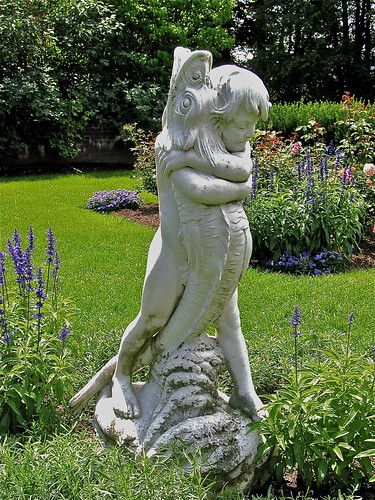

Image by origamidon

Shelburne, Vermont USA • Shelburne Farms is one of the finest examples in the nation of a late 19th – 20th Century model farm and country estate. Created for Dr. William Seward and Lila Vanderbilt Webb, the estate is noted for its exemplary agricultural, architectural, and landscape design achievements. – National Historic Landmark plaque.


A farm and country estate constructed from c.1886 to 1915, Shelburne Farms consists of approximately 1,300 acres of designed and agricultural landscape and significant wood-framed and masonry buildings representative of a combination of Shingle and Queen Anne styles. Four major buildings and 78 secondary buildings, structures, and sites are situated in functional groupings between broad expanses of cleared agricultural fields with rolling hills and isolated softwood plantations, hardwood and softwood forests, gardens, and rocky lakeshore. Eleven and a half miles of curvilinear interior roads and eight miles of walking trails traverse the varied farm and estate landscape, connect the resources, and provide views and vistas of Lake Champlain and the Adirondack Mountains to the west and the Green Mountains to the east. Shelburne Farms lies at elevations between approximately 95 feet and 392 feet a.m.s.l. [above mean sea level]. Lone Tree Hill, the highest point on the property, rises from the center of the property and features panoramic views over the fields and forests to the lake and mountain ranges – From the Landmark Nomination form.


Shelburne Farms is a nonprofit environmental education center and National Historic Landmark on the shores of Lake Champlain in Shelburne, Vermont. It is also one of the principal concert sites for the Vermont Mozart Festival.


Shelburne Farms was created in 1886 by Dr. William Seward Webb and Eliza Vanderbilt Webb as a model agricultural estate. They commissioned landscape architect Frederick Law Olmsted [and forester Gifford Pinchot,] to guide the layout of 3,800 acres (15 km2) of farm, field and forest, and New York architect Robert Henderson Robertson, to design the buildings. Shelburne Farms was incorporated as a nonprofit educational facility in 1972. Nearly 400 acres (1.6 km2) of sustainably managed woodlands received Green Certification from the Forest Stewardship Council in 1998.


The Shelburne Farms grass-based dairy supports a herd of 125 purebred, registered Brown Swiss cows. Their milk is made into an award-winning farmhouse cheddar cheese. The farm serves as an educational resource by practicing rural land use that is environmentally, economically and culturally sustainable. Visitors may enjoy the walking trails, children’s farmyard, inn, restaurant, property tours and special events. – From Wikipedia, the free encyclopedia


☞ On August 11, 1980, this Historic District was added to the National Register of Historic Places (#80000330).


☞ On January 3, 2001, the National Park Service designated this Historic District a National Historic Landmark (#80000330), making it the newest Landmark in Vermont.


National Historic Landmarks are nationally significant historic places designated by the Secretary of the Interior because they possess exceptional value or quality in illustrating or interpreting the heritage of the United States. Today, fewer than 2,500 historic places bear this national distinction. – [And one of only 17 in Vermont.] – Working with citizens throughout the nation, the National Historic Landmarks Program draws upon the expertise of National Park Service staff who work to nominate new landmarks and provide assistance to existing landmarks.


National Historic Landmarks are exceptional places. They form a common bond between all Americans. While there are many historic places across the nation, only a small number have meaning to all Americans — these we call our National Historic Landmarks. – from the National Park Service.


• More info: The GeoHack for 44°23′31.69″N 73°15′26.04″W. ∞ Here are the websites for Shelburne Farms, and The Inn at Shelburne Farms. ∞ Here’s a nice aerial shot from the Find a Museum page by folks at The Vermont Museum and Gallery Alliance.

= = = = = = = = = = = = = = = = = = = = = = = = = = = = = = = = = = = = = = = = = = = = = = = = = =

In July, 2010, I started a project to visit and document all seventeen Landmarks in Vermont. Here they are (in order of designation by the National Park Service):


[01] 09/22/60 – JUSTIN S. MORRILL HOMESTEAD, Strafford, Orange County

[02] 01/28/64 – TICONDEROGA (Side-paddle-wheel Lakeboat), Shelburne, Chittenden County

[03] 06/23/65 – CALVIN COOLIDGE HOMESTEAD DISTRICT, Plymouth Notch, Windsor County

[04] 12/21/65 – EMMA WILLARD HOUSE, Middlebury, Addison County

[05] 11/13/66 – ROBBINS AND LAWRENCE ARMORY AND MACHINE SHOP, Windsor, Windsor County

[06] 06/11/67 – GEORGE PERKINS MARSH BOYHOOD HOME, Woodstock, Windsor County

[07] 05/23/68 – ROBERT FROST FARM, Ripton, Addison County

[08] 12/30/70 – VERMONT STATEHOUSE, Montpelier, Washington County

[09] 11/28/72 – MOUNT INDEPENDENCE, Orwell, Addison County

[10] 12/20/89 – STELLAFANE OBSERVATORY, Springfield, Windsor County

[11] 11/04/93 – NAULAKHA (Rudyard Kipling House), Dummerston, Windham County

[12] 06/19/96 – OLD ROUND CHURCH, Richmond, Chittenden County

[13] 06/19/96 – ST. JOHNSBURY ATHENAEUM, St. Johnsbury, Caledonia County

[14] 12/09/97 – ROKEBY, Ferrisburgh, Addison County

[15] 05/16/00 – ROCKINGHAM MEETING HOUSE, Windham County

[16] 05/16/00 – SOCIALIST LABOR PARTY HALL, Barre, Washington County
[17] 01/03/01 – SHELBURNE FARMS, Shelburne, Chittenden County

= = = = = = = = =

☞ More photos of this and other National Historical Landmarks.


Shelburne Farms (1886) – Farm Barn (1888-90) – clock cupola


Image by origamidon

Shelburne, Vermont USA • Shelburne Farms is one of the finest examples in the nation of a late 19th – 20th Century model farm and country estate. Created for Dr. William Seward and Lila Vanderbilt Webb, the estate is noted for its exemplary agricultural, architectural, and landscape design achievements. – National Historic Landmark plaque.


A farm and country estate constructed from c.1886 to 1915, Shelburne Farms consists of approximately 1,300 acres of designed and agricultural landscape and significant wood-framed and masonry buildings representative of a combination of Shingle and Queen Anne styles. Four major buildings and 78 secondary buildings, structures, and sites are situated in functional groupings between broad expanses of cleared agricultural fields with rolling hills and isolated softwood plantations, hardwood and softwood forests, gardens, and rocky lakeshore. Eleven and a half miles of curvilinear interior roads and eight miles of walking trails traverse the varied farm and estate landscape, connect the resources, and provide views and vistas of Lake Champlain and the Adirondack Mountains to the west and the Green Mountains to the east. Shelburne Farms lies at elevations between approximately 95 feet and 392 feet a.m.s.l. [above mean sea level]. Lone Tree Hill, the highest point on the property, rises from the center of the property and features panoramic views over the fields and forests to the lake and mountain ranges – From the Landmark Nomination form.


Shelburne Farms is a nonprofit environmental education center and National Historic Landmark on the shores of Lake Champlain in Shelburne, Vermont. It is also one of the principal concert sites for the Vermont Mozart Festival.


Shelburne Farms was created in 1886 by Dr. William Seward Webb and Eliza Vanderbilt Webb as a model agricultural estate. They commissioned landscape architect Frederick Law Olmsted [and forester Gifford Pinchot,] to guide the layout of 3,800 acres (15 km2) of farm, field and forest, and New York architect Robert Henderson Robertson, to design the buildings. Shelburne Farms was incorporated as a nonprofit educational facility in 1972. Nearly 400 acres (1.6 km2) of sustainably managed woodlands received Green Certification from the Forest Stewardship Council in 1998.


The Shelburne Farms grass-based dairy supports a herd of 125 purebred, registered Brown Swiss cows. Their milk is made into an award-winning farmhouse cheddar cheese. The farm serves as an educational resource by practicing rural land use that is environmentally, economically and culturally sustainable. Visitors may enjoy the walking trails, children’s farmyard, inn, restaurant, property tours and special events. – From Wikipedia, the free encyclopedia


☞ On August 11, 1980, this Historic District was added to the National Register of Historic Places (#80000330).


☞ On January 3, 2001, the National Park Service designated this Historic District a National Historic Landmark (#80000330), making it the newest Landmark in Vermont.


National Historic Landmarks are nationally significant historic places designated by the Secretary of the Interior because they possess exceptional value or quality in illustrating or interpreting the heritage of the United States. Today, fewer than 2,500 historic places bear this national distinction. – [And one of only 17 in Vermont.] – Working with citizens throughout the nation, the National Historic Landmarks Program draws upon the expertise of National Park Service staff who work to nominate new landmarks and provide assistance to existing landmarks.


National Historic Landmarks are exceptional places. They form a common bond between all Americans. While there are many historic places across the nation, only a small number have meaning to all Americans — these we call our National Historic Landmarks. – from the National Park Service.


• More info: The GeoHack for 44°23′31.69″N 73°15′26.04″W. ∞ Here are the websites for Shelburne Farms, and The Inn at Shelburne Farms. ∞ Here’s a nice aerial shot from the Find a Museum page by folks at The Vermont Museum and Gallery Alliance.

= = = = = = = = = = = = = = = = = = = = = = = = = = = = = = = = = = = = = = = = = = = = = = = = = =

In July, 2010, I started a project to visit and document all seventeen Landmarks in Vermont. Here they are (in order of designation by the National Park Service):


[01] 09/22/60 – JUSTIN S. MORRILL HOMESTEAD, Strafford, Orange County

[02] 01/28/64 – TICONDEROGA (Side-paddle-wheel Lakeboat), Shelburne, Chittenden County

[03] 06/23/65 – CALVIN COOLIDGE HOMESTEAD DISTRICT, Plymouth Notch, Windsor County

[04] 12/21/65 – EMMA WILLARD HOUSE, Middlebury, Addison County

[05] 11/13/66 – ROBBINS AND LAWRENCE ARMORY AND MACHINE SHOP, Windsor, Windsor County

[06] 06/11/67 – GEORGE PERKINS MARSH BOYHOOD HOME, Woodstock, Windsor County

[07] 05/23/68 – ROBERT FROST FARM, Ripton, Addison County

[08] 12/30/70 – VERMONT STATEHOUSE, Montpelier, Washington County

[09] 11/28/72 – MOUNT INDEPENDENCE, Orwell, Addison County

[10] 12/20/89 – STELLAFANE OBSERVATORY, Springfield, Windsor County

[11] 11/04/93 – NAULAKHA (Rudyard Kipling House), Dummerston, Windham County

[12] 06/19/96 – OLD ROUND CHURCH, Richmond, Chittenden County

[13] 06/19/96 – ST. JOHNSBURY ATHENAEUM, St. Johnsbury, Caledonia County

[14] 12/09/97 – ROKEBY, Ferrisburgh, Addison County

[15] 05/16/00 – ROCKINGHAM MEETING HOUSE, Windham County

[16] 05/16/00 – SOCIALIST LABOR PARTY HALL, Barre, Washington County
[17] 01/03/01 – SHELBURNE FARMS, Shelburne, Chittenden County

= = = = = = = = =

☞ More photos of this and other National Historical Landmarks.


Shelburne Farms (1886) – Dairy Barn (1891)
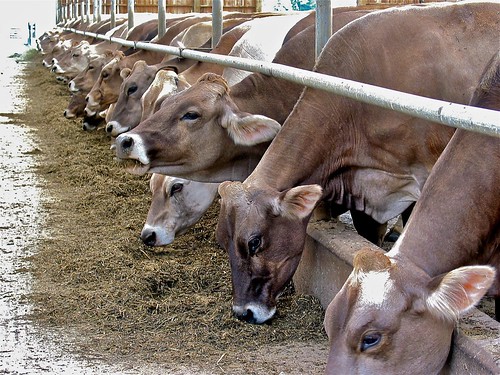

Image by origamidon

Shelburne, Vermont USA • Shelburne Farms is one of the finest examples in the nation of a late 19th – 20th Century model farm and country estate. Created for Dr. William Seward and Lila Vanderbilt Webb, the estate is noted for its exemplary agricultural, architectural, and landscape design achievements. – National Historic Landmark plaque.


A farm and country estate constructed from c.1886 to 1915, Shelburne Farms consists of approximately 1,300 acres of designed and agricultural landscape and significant wood-framed and masonry buildings representative of a combination of Shingle and Queen Anne styles. Four major buildings and 78 secondary buildings, structures, and sites are situated in functional groupings between broad expanses of cleared agricultural fields with rolling hills and isolated softwood plantations, hardwood and softwood forests, gardens, and rocky lakeshore. Eleven and a half miles of curvilinear interior roads and eight miles of walking trails traverse the varied farm and estate landscape, connect the resources, and provide views and vistas of Lake Champlain and the Adirondack Mountains to the west and the Green Mountains to the east. Shelburne Farms lies at elevations between approximately 95 feet and 392 feet a.m.s.l. [above mean sea level]. Lone Tree Hill, the highest point on the property, rises from the center of the property and features panoramic views over the fields and forests to the lake and mountain ranges – From the Landmark Nomination form.


Shelburne Farms is a nonprofit environmental education center and National Historic Landmark on the shores of Lake Champlain in Shelburne, Vermont. It is also one of the principal concert sites for the Vermont Mozart Festival.


Shelburne Farms was created in 1886 by Dr. William Seward Webb and Eliza Vanderbilt Webb as a model agricultural estate. They commissioned landscape architect Frederick Law Olmsted [and forester Gifford Pinchot,] to guide the layout of 3,800 acres (15 km2) of farm, field and forest, and New York architect Robert Henderson Robertson, to design the buildings. Shelburne Farms was incorporated as a nonprofit educational facility in 1972. Nearly 400 acres (1.6 km2) of sustainably managed woodlands received Green Certification from the Forest Stewardship Council in 1998.


The Shelburne Farms grass-based dairy supports a herd of 125 purebred, registered Brown Swiss cows. Their milk is made into an award-winning farmhouse cheddar cheese. The farm serves as an educational resource by practicing rural land use that is environmentally, economically and culturally sustainable. Visitors may enjoy the walking trails, children’s farmyard, inn, restaurant, property tours and special events. – From Wikipedia, the free encyclopedia


☞ On August 11, 1980, this Historic District was added to the National Register of Historic Places (#80000330).


☞ On January 3, 2001, the National Park Service designated this Historic District a National Historic Landmark (#80000330), making it the newest Landmark in Vermont.


National Historic Landmarks are nationally significant historic places designated by the Secretary of the Interior because they possess exceptional value or quality in illustrating or interpreting the heritage of the United States. Today, fewer than 2,500 historic places bear this national distinction. – [And one of only 17 in Vermont.] – Working with citizens throughout the nation, the National Historic Landmarks Program draws upon the expertise of National Park Service staff who work to nominate new landmarks and provide assistance to existing landmarks.


National Historic Landmarks are exceptional places. They form a common bond between all Americans. While there are many historic places across the nation, only a small number have meaning to all Americans — these we call our National Historic Landmarks. – from the National Park Service.


• More info: The GeoHack for 44°23′31.69″N 73°15′26.04″W. ∞ Here are the websites for Shelburne Farms, and The Inn at Shelburne Farms. ∞ Here’s a nice aerial shot from the Find a Museum page by folks at The Vermont Museum and Gallery Alliance.

= = = = = = = = = = = = = = = = = = = = = = = = = = = = = = = = = = = = = = = = = = = = = = = = = =

In July, 2010, I started a project to visit and document all seventeen Landmarks in Vermont. Here they are (in order of designation by the National Park Service):


[01] 09/22/60 – JUSTIN S. MORRILL HOMESTEAD, Strafford, Orange County

[02] 01/28/64 – TICONDEROGA (Side-paddle-wheel Lakeboat), Shelburne, Chittenden County

[03] 06/23/65 – CALVIN COOLIDGE HOMESTEAD DISTRICT, Plymouth Notch, Windsor County

[04] 12/21/65 – EMMA WILLARD HOUSE, Middlebury, Addison County

[05] 11/13/66 – ROBBINS AND LAWRENCE ARMORY AND MACHINE SHOP, Windsor, Windsor County

[06] 06/11/67 – GEORGE PERKINS MARSH BOYHOOD HOME, Woodstock, Windsor County

[07] 05/23/68 – ROBERT FROST FARM, Ripton, Addison County

[08] 12/30/70 – VERMONT STATEHOUSE, Montpelier, Washington County

[09] 11/28/72 – MOUNT INDEPENDENCE, Orwell, Addison County

[10] 12/20/89 – STELLAFANE OBSERVATORY, Springfield, Windsor County

[11] 11/04/93 – NAULAKHA (Rudyard Kipling House), Dummerston, Windham County

[12] 06/19/96 – OLD ROUND CHURCH, Richmond, Chittenden County

[13] 06/19/96 – ST. JOHNSBURY ATHENAEUM, St. Johnsbury, Caledonia County

[14] 12/09/97 – ROKEBY, Ferrisburgh, Addison County

[15] 05/16/00 – ROCKINGHAM MEETING HOUSE, Windham County

[16] 05/16/00 – SOCIALIST LABOR PARTY HALL, Barre, Washington County
[17] 01/03/01 – SHELBURNE FARMS, Shelburne, Chittenden County

= = = = = = = = =

☞ More photos of this and other National Historical Landmarks.


Shelburne Farms (1886) – Shelburne House (1899) - garden sculpture

Wednesday, August 6, 2014

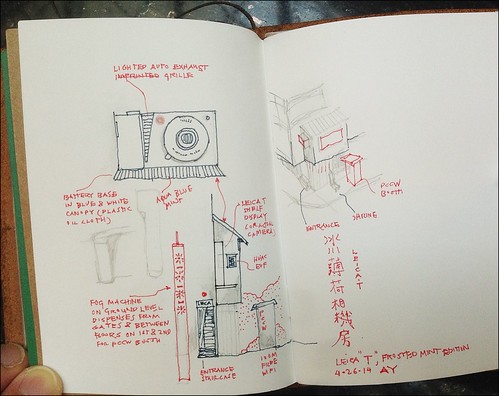
183. Leica T : Frosted Mint Camera House 冰川薄荷相機房

Check out these china machining images:


183. Leica T : Frosted Mint Camera House 冰川薄荷相機房


Image by atelier-ying


atelier ying, hk


definitely meant as a study in contrasts, a ghostly "aqua blue" fog emanates from just outside this local Mongkok enclosure (mechanically adapted from small portable fountains sold in Chinatown) to give an ethereal effect to this Leica shop just for the new Leica T system.


the old Mongkok architecture of terraced buildings frequently has tiny rooms (for storage, add-ons, etc) jutting out at the sides, like a back pocket.


Inside the custom-fitted enclosure is a dramatically lit shelf with a single Leica T, with a softly glowing auto grille exhaust styling in silver (rather than a green mint). A large window frames in the perfect display. Fog machines below the enclosure and under the free wifi PCCW phone booth below create the contrasting atmosphere.


Design, concepts, text and drawing are copyright 2014 by David Lo.


Great for the Kids!


Image by dcmaster


company toolshop China


Image by dcmaster


183. Leica T : Frosted Mint Camera House 冰川薄荷相機房